


From cell selection and battery pack architecture to BMS development, prototyping, testing and mass production, Yilai provides custom lithium battery solutions based on your voltage, capacity, current, dimensions, communication and certification requirements.
Yilai provides custom lithium battery pack design and manufacturing services for OEM equipment manufacturers, product developers and industrial system integrators. We support lithium-ion, lithium polymer, LiFePO4 and other rechargeable battery configurations, with customizable voltage, capacity, discharge current, dimensions, enclosure, connector, BMS and communication functions. Our engineering team can support projects from early-stage battery selection and feasibility review through prototype development, validation and volume production.



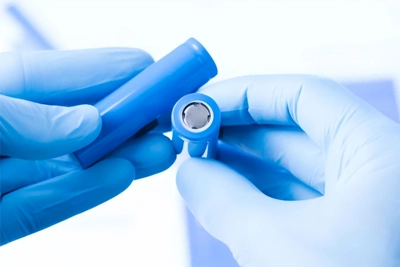
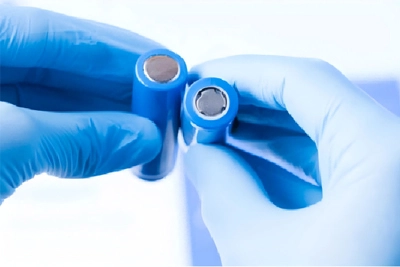
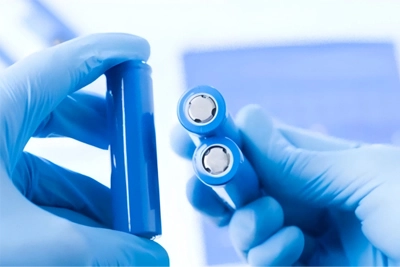


Every application has different requirements for runtime, output power, installation space, operating environment and regulatory compliance. Yilai develops custom lithium battery packs based on your electrical, mechanical and application-specific requirements.
From battery chemistry and cell configuration to BMS functions, enclosure design, connectors and certification support, each battery pack can be engineered to integrate with your equipment and production requirements.
| Customization Area | Available Customization Options |
| Battery Chemistry | Select from lithium-ion, lithium polymer and LiFePO4 battery technologies according to the required energy density, discharge performance, cycle life, operating temperature and safety requirements. Additional battery chemistries may be evaluated for specific projects. |
| Cell Format | Battery packs can be designed using cylindrical cells such as 18650 and 21700, pouch cells or prismatic cells. Cell format selection is based on available space, capacity, power output and mechanical structure. |
| Voltage | Nominal voltage and charging voltage can be customized through different series configurations to match the electrical input requirements of your equipment. |
| Capacity and Runtime | Battery capacity can be adjusted through cell selection and parallel configuration according to required runtime, available installation space, total pack weight and target energy output. |
| Discharge Current | Continuous discharge current, peak discharge current and discharge rate can be engineered around the starting current, operating load and peak power demand of the device. |
| Pack Configuration | Series and parallel configurations can be developed according to the required voltage, capacity, current and redundancy. The final configuration is confirmed after an engineering feasibility review. |
| BMS Functions | Available protection functions may include overcharge, over-discharge, overcurrent, short-circuit and temperature protection, as well as cell balancing, state-of-charge monitoring and fault detection. |
| Communication Protocols | Depending on the application, smart battery packs can support communication interfaces such as CAN, RS485, UART, SMBus or I²C for battery status monitoring and communication with the host system. |
| Mechanical Design | Available pack structures include heat-shrink wrapping, plastic housings, metal enclosures and application-specific custom housings. Mounting points, internal supports and component layout can also be customized. |
| Waterproofing and Environmental Protection | Sealing, potting, waterproof connectors, protective coatings and IP-rated enclosure designs can be evaluated for outdoor, marine, humid or dusty operating environments. |
| Connector and Cable Assembly | Connector type, wire gauge, cable length, terminal layout, fuse configuration and charging interface can be selected according to the equipment connection and installation requirements. |
| Temperature Performance | Battery packs can be designed for standard-temperature or low-temperature environments. Options such as low-temperature cells, temperature sensors and integrated heating functions may be considered where required. |
| Charger Compatibility | A matching charger can be selected or developed according to the battery chemistry, charging voltage, current, connector type and required charging time. |
| Certification Support | Project-based support may include UN38.3 transportation testing, IEC 62133, UL-related standards, CE, RoHS, REACH and other market-specific documentation. Certification requirements should be confirmed during the initial project evaluation. |
| Branding and Documentation | Custom labels, logos, packaging, user instructions, technical specifications, test reports and other project documentation can be prepared for OEM and private-label requirements. |
Not Sure Which Configuration Is Right for Your Application?
Provide your required voltage, capacity, continuous and peak current, maximum dimensions, operating temperature, communication requirements and estimated order quantity. Our engineering team will review the information and recommend a suitable custom battery pack design for further evaluation.
1.Highly Personalized Customization Solutions
1.1 Wide Compatibility with Various Devices
Whether it is a traditional device with a regular shape or a new device with a unique design, we can meet the battery customization requirements.
1.2 Precise Customization of Size and Shape
In response to the special appearance and internal space structure of customers' devices, we can accurately design the size and shape of lithium batteries.
Battery chemistry and cell configuration are selected according to the required voltage, capacity, discharge current, available installation space, operating temperature, cycle life and application environment.
Suitable for applications requiring balanced energy density, power output, runtime and pack flexibility. Cylindrical cells such as 18650 and 21700 can be arranged in customized series and parallel configurations.
Common applications: robotics, industrial equipment, smart devices and portable electronics.
View Lithium-Ion BatteriesPouch cells offer flexible dimensions and a lightweight structure for products with restricted internal space. Thickness, width, length, capacity, wires and connectors can be adapted to the device design.
Common applications: wearable devices, medical electronics, beauty devices and compact consumer products.
View Lithium Polymer BatteriesLiFePO4 configurations are considered for projects prioritizing cycle life, thermal stability and long-term operation. Packs can be designed with customized voltage, capacity, BMS and enclosure requirements.
Common applications: energy storage, mobility equipment, security systems and industrial power systems.
View LiFePO4 BatteriesSodium-ion batteries may be evaluated for suitable projects involving low-temperature operation, cost-sensitive systems or alternative battery chemistry requirements. Final selection depends on technical feasibility.
Potential applications: low-speed vehicles, backup power, industrial equipment and selected energy storage systems.
View Sodium-Ion BatteriesAfter the battery chemistry is selected, the pack architecture is developed around the equipment voltage, runtime, load profile, internal space and safety requirements.
Not sure which battery chemistry or cell configuration is suitable for your product?
Discuss Your Battery Requirements2.1 High-Performance Battery Materials and Technologies
We use high-quality electrode materials, separators, and electrolytes in lithium battery customization. These high-quality materials, combined with advanced manufacturing processes, endow our lithium batteries with characteristics such as high energy density and high voltage stability.
2.2 Strict Quality Inspection and Safety Standards
As a reliable custom battery manufacturer, Yilai Power ensures that each lithium battery undergoes multiple strict quality inspection procedures. From the inspection of raw materials to the performance testing of finished batteries, we follow the highest international standards.
FROM CONCEPT TO MASS PRODUCTION
Yilai supports OEM customers from initial requirement review and battery design to prototype validation and volume production.
Application, voltage, capacity and required runtime
Continuous current, peak current and available dimensions
Temperature, communication and certification requirements
Battery chemistry and cell format evaluation
Installation space, load profile and operating environment
Safety requirements and project feasibility review
Cell configuration, voltage and capacity design
BMS functions and communication protocol
Connector, wiring, enclosure and thermal management
Prototype battery pack assembly
Dimensional and electrical verification
Charging compatibility and equipment integration
Capacity and charge-discharge performance testing
BMS protection and communication verification
Temperature, aging and project-specific testing
Production planning and incoming material inspection
Battery pack assembly and quality control
Final testing, packaging and shipment
Please provide your application, voltage, capacity or runtime, current, dimensions, operating temperature, connector, communication protocol, certification needs and estimated order quantity.
Start Your Custom Battery Project →
Custom Battery Project Case
This project involved the development of a customized lithium-ion battery pack for an intelligent inspection robot. The battery needed to fit within a limited installation space while supporting the robot's runtime, peak-current demand, charging system and communication requirements.
Application: Intelligent inspection robot
Battery chemistry: Rechargeable lithium-ion
Nominal voltage: 14.8V
Battery capacity: Replace with the actual project capacity
Customization: Cell configuration, smart BMS, connector, wiring and protective enclosure
Stable operating voltage for the robot control system
Sufficient capacity for the required working time
Support for continuous and peak-current loads
Battery dimensions matched to the available installation space
BMS protection and communication functions
Customized cable, connector and enclosure
Compatibility with the customer's charging system
Based on the robot's electrical load, operating time and internal dimensions, Yilai evaluated the cell format and developed a customized series-parallel battery configuration. The pack design integrated the battery cells, BMS, wiring, connector and enclosure as one complete system.
Selected cells according to energy and discharge requirements
Designed the required series-parallel configuration
Integrated overcharge, over-discharge, overcurrent and temperature protection
Matched the BMS communication protocol to the robot controller
Customized the cable length, connector and pack dimensions
Evaluated charging compatibility before sample approval
Before the project moved toward production, the prototype battery pack was checked against the agreed electrical, mechanical and communication requirements.
Battery capacity and charge-discharge testing
Continuous and peak-current verification
BMS protection function testing
Communication protocol verification
Connector and charging compatibility testing
Temperature and aging evaluation
Dimensional and equipment installation verification
The prototype battery pack completed the agreed verification process and was evaluated for integration with the customer's robot system. Replace this paragraph with the actual sample approval, production status or measurable project result that Yilai can verify.
Yilai also develops intelligent robot battery packs for robotic equipment requiring customized voltage, runtime, BMS communication and mechanical structures.
 en
en
 English
  français
  Deutsch
  Español
  italiano
  português
