

Custom Battery Case Study
How Yilai Power developed a compact battery solution around startup current, runtime, installation space and operation in a high-humidity environment.
A portable water purification system does not place a simple, constant load on its battery. Pumps can draw a high current at startup, solenoid valves require stable voltage, and a cooling module may create short power peaks. At the same time, the complete battery pack must fit a restricted compartment and operate reliably in a humid environment.
For this project, Yilai Power worked with the customer to develop a custom lithium-ion battery pack for a portable water purifier. The engineering process covered load analysis, cell chemistry, mechanical layout, BMS protection, charger matching, documentation and prototype validation. The following case study explains the decisions involved without disclosing the customer's proprietary dimensions or electrical specification.
Project at a glance
Application: portable water filtration and purification equipment
Main loads: 24 V pumps, solenoid valve, cooling module and system controller
Key constraints: pump startup current, limited battery space, low weight and high humidity
Selected approach: a compact lithium-ion battery pack with a project-matched BMS and charger
Battery selection must begin with the purifier as a complete electrical system. Choosing a pack only by nominal voltage and amp-hour rating can overlook the short current surge required to start a pump, the combined load when several components operate together, or voltage drop at the end of discharge.
| System load | Electrical behavior | Battery design implication |
|---|---|---|
| 24 V pumps | Startup current was approximately three times the rated operating current. | Cells, interconnects and BMS had to tolerate the required peak current without an unwanted protection trip. |
| Solenoid valve | Relatively low power demand, but stable voltage was important for dependable actuation. | The usable voltage window had to remain compatible with the valve throughout discharge. |
| Cooling module | Produced the highest pulse-power demand and represented a major share of energy use. | Both peak power and total energy consumption influenced cell and pack sizing. |
| Controller | Coordinated the pumps, valve and cooling module. | Battery voltage and protection behavior needed to support stable system control. |
Before selecting cells, the engineering team clarified how the purifier would operate in normal and worst-case conditions. The required inputs included:
nominal and loaded operating voltage;
continuous current, maximum operating current and pump startup current;
required runtime per charge and the duty cycle of each load;
whether cooling or heating operates continuously or intermittently;
maximum battery dimensions, mounting method and weight limit;
ambient temperature, humidity, splash or water-ingress exposure;
charging location, charging time, connector and plug type; and
destination market and required test documentation.
This requirements-first approach is important because two purification systems with the same nominal voltage may require very different battery capacities, discharge capabilities and enclosure designs. For projects exposed to water or immersion, the complete pack, cable outlets and connectors require separate engineering evaluation. See Yilai Power's custom waterproof battery pack capabilities for those application-specific options.
LiFePO4 is often considered for industrial equipment where long cycle life and thermal stability are leading priorities. In this portable purifier, however, installation space and weight were tightly limited while the battery still needed sufficient energy and power. The team therefore selected lithium-ion cells for their higher energy density within the available pack envelope.
| Selection factor | Lithium-ion | LiFePO4 |
|---|---|---|
| Energy per unit weight and volume | Generally advantageous for compact, lightweight equipment | Typically requires more space or weight for comparable energy |
| Cycle-life priority | Depends strongly on cell, depth of discharge and thermal conditions | Often preferred when long cycle life is a primary requirement |
| Fit for this project | Selected because compact size and lower weight were critical | Considered, but not selected for the final portable design |
Samsung cells were selected for this customer project based on the agreed performance and compliance requirements. Cell brand alone does not determine pack quality: cell authenticity, matching, interconnection, thermal behavior, BMS settings and final pack validation all remain important.
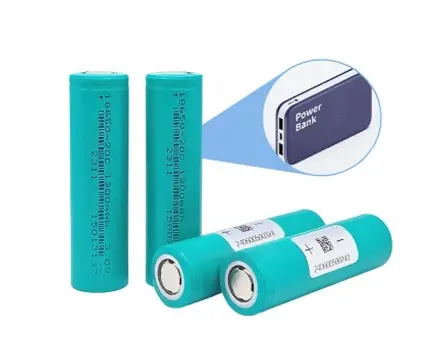
The available compartment required a compact arrangement of cylindrical cells. Yilai Power engineers developed a layout using cell holders and insulating epoxy-fiberglass board to support positioning, electrical insulation and resistance to movement. The mechanical structure was designed around the actual mounting space rather than forcing the customer to redesign the purifier around a standard off-the-shelf pack.
Important: operation in a humid environment is not automatically equivalent to an IP rating. If a purifier requires splash resistance, temporary immersion or continuous submersion, the required depth, duration, connector state and test method should be defined before design validation.
The battery management system was selected around the cell configuration and actual loads. Its current thresholds needed enough margin for pump startup and cooling-module pulses while still providing the required protection functions. Depending on the final specification, a custom pack may include overcharge, over-discharge, overcurrent, short-circuit and temperature protection.
Yilai Power also matched a charger to the battery chemistry, series configuration, maximum charge voltage and agreed charging current. The customer specified the desktop charger format, cable length, AC plug and battery-side connector. Charger protection included overvoltage, overtemperature and short-circuit protection, subject to the approved charger model and project specification.
A charger is part of the system design. A connector that physically fits does not make two chargers electrically interchangeable. Charge voltage, current profile, polarity, temperature limits and battery-management requirements must all match.
The project documentation plan included CE-related requirements, RoHS, REACH, CB and UN 38.3 according to the destination market and the customer's product-level compliance strategy. These items should not be treated as a single universal “battery certificate.” Their applicability depends on the battery, charger, end product, sales market and transport route.
For reference, UN 38.3 relates to testing lithium cells and batteries for transport. EU RoHS rules restrict specified hazardous substances in electrical and electronic equipment, while REACH addresses chemical substances in the EU. Final compliance requirements should always be confirmed for the complete product and target market.
Prototype validation for the portable purifier covered the agreed electrical and integration checks, including:
dimensional and connector verification;
capacity, charge and discharge checks;
operation under continuous load and peak-load events;
BMS protection-function verification;
charger compatibility and charging-behavior checks; and
on-equipment runtime and functional testing by the customer.
After sample evaluation and on-site testing, the pack operated the purification system stably and achieved a runtime above the customer's initial expectation under the evaluated test conditions.
| 01Define loads | 02Select chemistry | 03Build prototype | 04Validate in equipment |
This project shows why a portable water purifier battery should be treated as an engineered subsystem. The outcome depended on understanding simultaneous loads, startup current, runtime, usable space, environmental exposure and charging—not simply selecting an 18650 pack by voltage and capacity.
.webp "21700 battery")
Yilai Power battery pack shown in the original project case study.
The suitable battery depends on system voltage, continuous and startup current, runtime, available dimensions, weight, temperature, humidity and charging method. Lithium-ion may suit compact, lightweight designs, while LiFePO4 may be considered when cycle life and thermal stability have higher priority.
Sizing should account for the pump's operating power, startup current, duty cycle and required runtime, plus the energy used by valves, cooling or heating modules and controls. Conversion losses and an appropriate design margin should also be considered.
A motor-driven pump can briefly draw substantially more current when starting than during steady operation. If cells, conductors or the BMS cannot support that peak, voltage may sag or the protection circuit may interrupt power.
Not necessarily. High humidity, splashing and continuous immersion are different exposure conditions. The required ingress protection and validation method should be based on how and where the complete equipment will operate.
Yes, subject to engineering feasibility. Cell layout, enclosure dimensions, cable length and direction, power connector, charging connector, charger plug and BMS functions can be evaluated against the equipment specification.
Provide the application, nominal and operating voltage, continuous and peak current, required runtime, duty cycle, maximum dimensions and weight, connector details, operating environment, charging method, target market, estimated annual quantity and required certifications or reports.
Developing a Battery for Water Purification Equipment?
Send Yilai Power your load profile, runtime target, available space and environmental requirements for an engineering evaluation.
Discuss Your Custom Battery Project en
en
 English
  français
  Deutsch
  Español
  italiano
  português