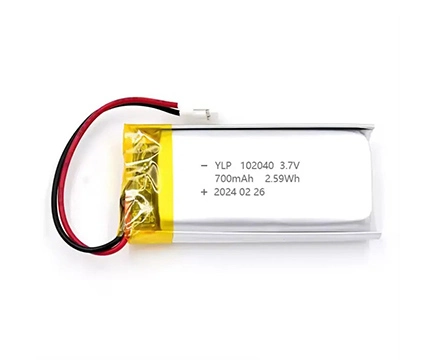


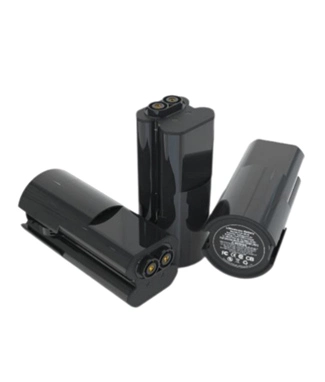
Yilai designs and manufactures custom IP68 waterproof lithium battery packs for underwater robots, marine equipment, water scooters, outdoor monitoring systems and other equipment operating in wet or submerged environments. Voltage, capacity, discharge current, BMS, enclosure, cable outlet, waterproof connector and sealing method can be customized according to the application and required immersion conditions.
Waterproof performance must be confirmed according to the complete battery assembly, connector condition, immersion depth, test duration and operating environment. Submit your equipment specifications for engineering evaluation.
Request a Waterproof Battery Evaluation
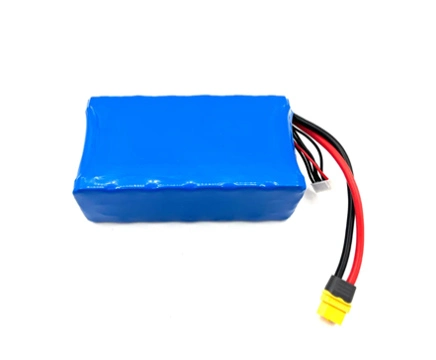
| Product Number | 14.4V 10Ah IP68 Waterproof Lithium-Ion Battery Pack 30m Submersible for Underwater Robots,Underwater Scooters |
| MAIN PARAMETER | |
| Nominal Capacity | 10Ah |
| Nominal volrage | 14.4V |
| Max Charge Voltage | 16.8V |
| Discharge cut-off voltage | 10V |
| Charging Current | 5A |
| Discharging Current | 60A |
| Cycle Life | 800 Cycles,80% DOD |
| Dimensions (T*W*H) | 73*73*153(mm) |
| Weight | 1200g |
| OTHERS | |
| Operating Temperature | Charging: 0~45℃/Discharging:-20 ~60℃ |
| Storage Temperature | -10 ~ 45℃ |
| Humidity | 8% to 90% relative humidity |
| Protection | Over-discharge protection,over-charge protection,over-current protection,short-circuit protection, etc. |
| Delivery period | 7-21 days, depending on stock and quantity. |
| Applications | |
| underwater robots, underwater scooter, seaflyer | |
CUSTOM WATERPROOF BATTERY ENGINEERING
Yilai develops waterproof battery packs according to the required voltage, runtime, load current, installation space and immersion conditions. Each battery structure is evaluated according to the actual equipment application.
| Customization Area | Available Options |
|---|---|
| Battery Chemistry | Lithium-ion, lithium polymer or LiFePO4 Selected according to energy, power and cycle-life requirements |
| Voltage and Capacity | Customized nominal voltage Capacity matched to runtime, dimensions and weight limits |
| Discharge Current | Continuous discharge current Peak current for motors, pumps, controllers and thrusters |
| BMS Protection | Overcharge and over-discharge protection Overcurrent, short-circuit and temperature protection Cell balancing where required |
| Communication | CAN, RS485 or UART subject to engineering evaluation Communication matched to the equipment controller |
| Battery Enclosure | Plastic, aluminum or stainless-steel enclosure Custom dimensions based on installation space |
| Waterproofing Method | Sealing gaskets and sealed enclosure structures Potting, protective coating or molded cable outlets |
| Connectors and Cables | Waterproof power and charging connectors Communication connectors and sealed cable glands |
| Immersion Conditions | Required water depth and immersion duration Freshwater or saltwater environment Connected, disconnected or operating state during immersion |
| Testing | Capacity and charge-discharge testing BMS protection and connector inspection Immersion or project-specific waterproof testing |
| Documentation | UN38.3 and IEC 62133 support subject to project requirements Technical specifications and agreed test documentation |
Important: Waterproof performance depends on the complete battery assembly, including the enclosure, connector, cable outlet and sealing structure. Please provide the required water depth, immersion time and operating environment for engineering evaluation.
WATERPROOF BATTERY FAQ
The waterproof rating, battery configuration and testing method should be evaluated according to the complete equipment application. The following answers explain the main factors involved in developing a custom waterproof lithium battery pack.
An IP68 waterproof battery pack is a complete battery assembly designed and evaluated for dust protection and continuous immersion under specified test conditions. The actual protection level depends on the enclosure, sealing structure, connector, cable outlet, charging interface, immersion depth and test duration. IP68 should not be interpreted as unlimited or permanent waterproof performance under every operating condition.
Yes. The nominal voltage can be adjusted through the series cell configuration, while capacity can be designed according to the required operating time, equipment load, battery dimensions and weight limits. Continuous current, peak current, BMS functions, connector and enclosure can also be evaluated as part of the custom battery design.
Please provide the equipment application, required voltage, capacity or runtime, continuous and peak current, maximum battery dimensions, operating temperature, water depth, immersion duration, freshwater or saltwater environment, connector requirements, communication protocol and estimated order quantity. These details help determine the battery chemistry, waterproofing structure and validation plan.
An IP68 rating alone does not confirm long-term suitability for saltwater. Marine applications also require evaluation of enclosure material, fasteners, waterproof connectors, cable outlets, sealing materials and corrosion resistance. Salt-spray or customer-defined environmental testing may be required depending on the project.
Underwater charging should not be assumed for a standard waterproof battery pack. It requires a charging connector, electrical isolation, sealing structure and complete charging system specifically designed and validated for submerged operation. In many projects, the battery is removed from the water or charged through a protected dry interface.
Testing may include enclosure and connector inspection, insulation resistance, capacity, charge and discharge performance, BMS protection, temperature, aging and immersion testing. For deeper underwater applications, pressure simulation or a customer-defined depth and duration test may also be required. The test plan should be agreed before prototype validation.
Lithium-ion cells are commonly considered for projects requiring a balance of energy density and discharge performance. Lithium polymer batteries may suit limited installation space, while LiFePO4 may be evaluated where cycle life and thermal stability are priorities. The final chemistry should be selected according to voltage, current, temperature, dimensions and service life requirements.
Yilai can evaluate customized battery chemistry, voltage, capacity, current, BMS, communication, enclosure, cable outlet and waterproof connector requirements. Projects requiring broader electrical and mechanical customization can also refer to our custom lithium battery pack development capabilities.
Battery Pack Verification
Waterproof battery validation should cover more than enclosure sealing. Yilai evaluates the battery pack as a complete system, including the cells, BMS, connector, cable outlet, enclosure and charging interface. The final test plan is prepared according to the agreed electrical requirements, immersion conditions and equipment application.
Waterproof performance is evaluated under defined conditions.
The required water depth, immersion duration, freshwater or saltwater environment, connector status and battery operating state should be confirmed before prototype testing.
Electrical testing verifies that the battery pack can support the required equipment load while maintaining the agreed protection and charging behavior.
Nominal voltage and operating voltage verification
Battery capacity and runtime testing
Continuous and peak discharge-current testing
Charge and discharge performance evaluation
Overcharge and over-discharge protection testing
Overcurrent and short-circuit protection testing
Temperature monitoring and protection verification
BMS communication testing where required
Waterproof testing focuses on the complete assembled battery pack rather than the enclosure alone. Connectors, cable outlets, charging ports and enclosure joints are included in the evaluation.
Enclosure and sealing-structure inspection
Waterproof connector mating inspection
Cable gland or molded cable-outlet inspection
Specified immersion-depth testing
Specified immersion-duration testing
Pressure simulation for deeper-water projects where required
Post-immersion insulation and electrical inspection
Internal moisture or water-ingress inspection
Environmental and mechanical tests are selected according to how the battery will be installed, transported and operated inside the customer's equipment.
Operating-temperature evaluation
High- and low-temperature testing where required
Temperature-cycle evaluation
Battery aging and repeated charge-discharge testing
Vibration testing based on installation conditions
Mechanical and dimensional verification
Connector retention and cable inspection
Salt-spray or corrosion evaluation for marine projects where required
Test results are reviewed against the agreed specification before the battery design moves toward sample approval or production preparation.
Prototype specification confirmation
Electrical-test result review
Waterproof-test condition confirmation
Connector and equipment-integration verification
Customer sample feedback and design adjustment
Final approved specification preparation
Production and quality-control requirement confirmation
| 01 Define Conditions | 02 Build Prototype | 03 Perform Testing | 04 Approve Design |
A project-specific validation plan is recommended.
Not every project requires the same test combination. Please provide the equipment application, water depth, immersion time, operating state, electrical load, temperature range and target market so the required verification items can be evaluated.
 en
en
 English
  français
  Deutsch
  Español
  italiano
  português