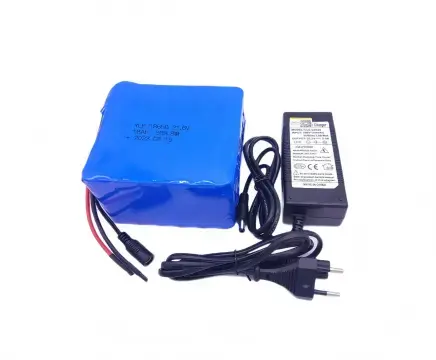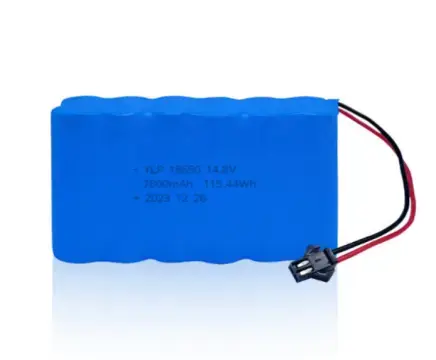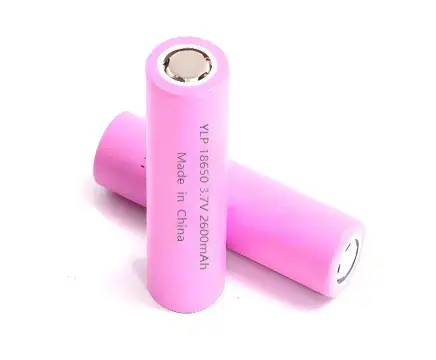


Many product managers and hardware engineers reach out to us and ask straightforwardly: “How much for a 14.8 V battery pack?” We usually do not give an immediate quotation. What they actually need is not merely a combination of series-parallel connected cells, but a power supply system that can operate reliably for years under harsh conditions including high temperature, vibration and severe electromagnetic interference.
This article will not go over basic concepts such as “what is a lithium-ion battery”. Instead, we focus on hidden costs that can make or break an industrial-grade custom battery pack project.
Many requirement documents only specify “12 V output required”. However, lithium-ion battery voltage gradually drops as capacity is consumed, which is reflected in its discharge curve. For devices highly sensitive to input voltage (e.g. precision sensors or motor drivers), you need to verify whether the battery can keep the equipment running even when voltage drops at 80 % remaining capacity.We once worked on a solution for an outdoor survey robot. The customer initially selected a 4S lithium-polymer pack with 14.4 V nominal voltage. In real-world testing, once remaining capacity dropped below 40 %, the pack voltage fell below 13 V and caused jitter in the gimbal motor. Instead of changing cells, we adjusted BMS discharge cut-off logic and added a constant-voltage output module.
The key takeaway:voltage matching should not rely solely on nominal values; you must evaluate the effective operating voltage window.
Theoretically, a 10 Ah battery pack running at 1 A load can last 10 hours. In practice, when discharge rate rises from 0.5 C to 2 C, some capacity-type cells may deliver only around 80 % of rated capacity (known as capacity fade under high-rate discharge). Worse still, high temperature accelerates self-discharge; at low temperatures such as −20 °C, usable capacity drops drastically and may behave as if “suddenly dead”.If you design for outdoor energy-storage equipment or devices used in cold northern regions, make sure to inform your supplier of minimum voltage and continuous current under extreme operating conditions at the requirement-definition stage. Otherwise, you may discover severe capacity loss during environmental chamber testing after samples arrive. Cell chemistry, BMS and even housing moulds will then require rework, resulting in out-of-control costs.
Although the BMS (Battery Management System) accounts for a small portion of total hardware cost in a pack, it is frequently blamed for field failures. Over-charge, over-discharge and short-circuit protection are standard features of most decent BMS solutions. Real-world differentiation lies in two easily-overlooked details:
Passive balancing (resistor-based) is low-cost, yet its balancing current is typically only tens of milliamps. For large-capacity packs (100 Ah and above) under frequent deep charge-discharge cycles, passive balancing can hardly eliminate cell-to-cell voltage drift. The bucket-effect will emerge over cycles. Under such operating conditions, active balancing is strongly recommended. Despite higher cost, it drastically reduces after-sales issues.
Many devices stay in long-term standby mode. The quiescent current of the BMS itself can drain the whole battery.
In one outdoor IoT case with limited charging access, the customer required a 12-month standby lifetime. In our design, we reduced BMS sleep current down to micro-ampere level and added a hardware physical cut-off switch. Instead of relying purely on software sleep logic, the switch completely cuts BMS power when the device is idle.
Market promotion often paints extreme pictures: LiFePO₄ is advertised as “100 % safe with 2000-year service life”, while ternary lithium is stereotyped as “prone to fire and explosion”. How should engineers make practical choices?
Consider LiFePO₄ for devices installed in enclosed spaces, hand-held medical devices close to human bodies, or applications with persistently high ambient temperature. Its thermal runaway onset temperature exceeds 500 °C, offering good safety performance.
However, its discharge voltage can drop as low as 2.8 V at end-of-discharge, which means more series-connected cells are required to achieve the same system voltage platform. It also delivers poor discharge performance under sub-zero temperatures.
Select ternary or Li-polymer cells when high energy density (higher capacity within given volume) or custom-shaped form factors (e.g. curved battery compartments) are needed — scenarios where LiFePO₄ is less suitable.
Do not fear ternary systems by default. With robust BMS hardware protection plus structural measures such as anti-compression design and thermal-insulation padding, ternary-based packs can work reliably.
Lithium-ion cells experience minor expansion and contraction during charge-discharge cycles, especially for Li-polymer pouch cells. Inexperienced engineers sometimes clamp cells tightly inside housings with zero clearance. After dozens of cycles, squeezed cells may deform internally, damage separators and cause internal short circuits.Reserve 0.5 mm ~ 2 mm expansion clearance and use elastic foam for fixture. Though the assembly may look less compact, this is hard-won practical experience to guarantee mechanical integrity through hundreds of cycles.
As a battery solution provider, we recommend purchasers focus on two key evaluation items when auditing suppliers:
Check whether spot-welds between nickel tabs and cell terminals are solid and free of sharp burrs. Poor welding causes intermittent disconnection under vibration. Review tensile-test reports rather than trusting sales-side verbal claims.
Confirm whether the vendor supports 100 % full-pack ageing before delivery. Some small-scale manufacturers skip full ageing to save electricity costs and perform only random sampling. Some battery packs end-up “bloated” (cell swelling failure) two months after end-customer deployment, which brings far-higher hidden costs.
Battery-pack design is fundamentally an exercise of compromise: striking a subtle balance among energy, power, safety, cost and usage habits. There are no perfect cells, only well-matched system solutions.If you are puzzled over choosing between 14.8 V Li-polymer packs or 48 V LiFePO₄ systems, or confused by BMS communication options (CAN / RS485 / SMBus), feel free to share your real-world operating conditions: discharge rate, temperature range and installation dimensions.
Yilai Power’s engineering team focuses on practical, deployable engineering solutions instead of generic selection tables.
Q1: Our equipment has motors with high inrush starting current. Why does the supplied BMS keep triggering cut-off during motor start-up?
A:First, communicate with your BMS supplier to confirm whether an “inrush-current immunity” feature is available (some BMS solutions support a logic configuration that does not trigger protection during short-term overcurrent). If the hardware solution is fixed, you can connect a large capacitor in parallel across the battery output terminals, relying on the capacitor's instantaneous discharge to absorb the starting surge.
Q2: Which communication protocol should I choose for BMS, CAN or RS485?
A: For industrial and quasi-automotive applications, CAN is preferred for strong anti-interference performance. If only simple fuel-gauge readout is needed, SMBus or I2C will suffice. Do not pay extra for high-speed buses that you will never use.
Q3: A battery has been stored for half a year and cannot be charged afterwards. Is the pack dead?
A: In most cases, the BMS enters deep-sleep lock-out, or cell voltage drops below under-voltage threshold due to self-discharge. Well-designed BMS supports zero-voltage pre-charge or low-current wake-up charging. You may specify this function as a mandatory requirement when selecting suppliers.
Q4: Must custom-built battery packs use cells from the exact same manufacturer and batch?
A: Not mandatory. However, avoid mixing cells from different brands or batches whose internal-resistance deviation exceeds ±5%. The weakest cell will degrade first under the bucket effect and drag down the whole pack. Strict internal-resistance and voltage sorting must be performed before each mass production run — this step cannot be skipped.
 en
en
 English
  français
  Deutsch
  Español
  italiano
  português