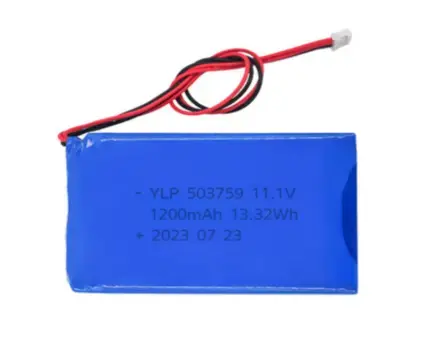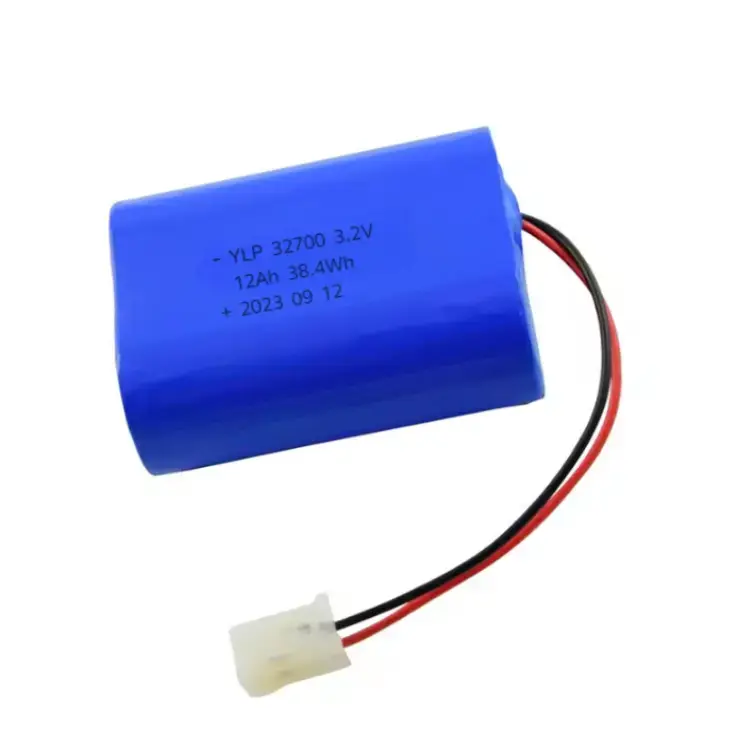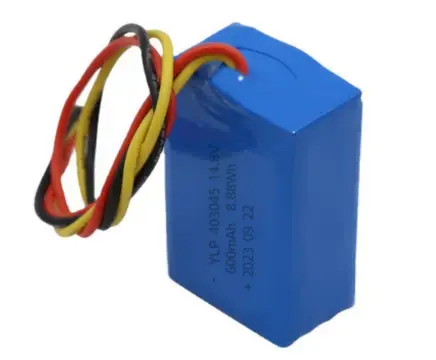


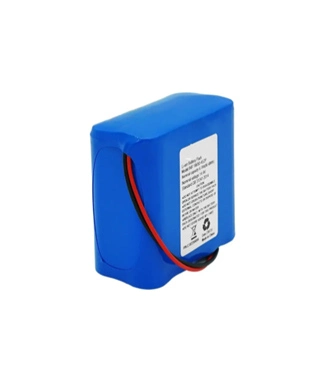
Yilai develops custom lithium battery packs for intelligent robots, AGVs, AMRs, robotic vacuum cleaners, inspection robots and other automated equipment. Battery voltage, capacity, continuous and peak current, cell configuration, BMS, communication interface, connector, cable and enclosure can be evaluated according to the robot platform and operating requirements.
A robot battery pack should be selected according to the motor and controller voltage, required runtime, acceleration and peak-load current, charging method, installation space, operating temperature and communication requirements. Submit your equipment specifications for battery feasibility assessment.
Request a Robot Battery Evaluation Send us your voltage, runtime, load current, dimensions and robot application.
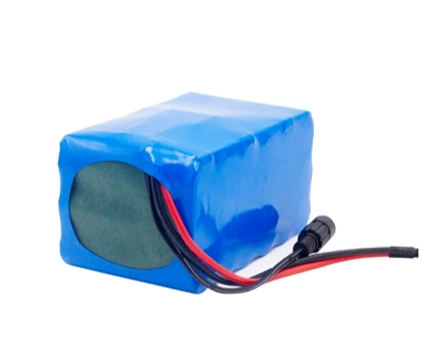
| Product Number | 4s2p 14.4v 6700mAh Lithium Battery Pack 18650 Cells Customization Capacity for Sweeping Robot,Intelligent robot |
| MAIN PARAMETER | |
| Nominal Capacity | 6700mAh |
| Nominal volrage | 14.4v |
| Max Charge Voltage | 16.8V |
| Discharge cut-off voltage | 11V |
| Charging Current | 0.5C |
| Discharging Current | 1C |
| Cycle Life | 800 Cycles,80% DOD |
| Dimensions (T*W*H) | 148*65*36mm |
| Weight | 450g |
| OTHERS | |
| Operating Temperature | Charging: 0~45℃/Discharging:-20 ~60℃ |
| Storage Temperature | -10 ~ 45℃ |
| Humidity | 8% to 90% relative humidity |
| Protection | Over-discharge protection,over-charge protection,over-current protection,short-circuit protection, etc. |
| Delivery period | 7-21 days, depending on stock and quantity. |
| Applications | |
| Smart robots, robotic vacuum cleaners, vacuum cleaners, home floor scrubbers, outdoor camping lights, work lights, toys, remote-controlled airplanes, remote-controlled cars, blood pressure monitors, small massagers, physiotherapy devices, outdoor warning lights, etc. | |
| Customization Area | Options |
|---|---|
| Battery Chemistry | Lithium-ion, LiPo or LiFePO4 subject to application |
| Voltage | Matched to motor, controller and charging platform |
| Capacity | Designed around required runtime and installation space |
| Current | Continuous, peak and startup current |
| Cell Format | 18650, 21700, pouch or other feasible formats |
| BMS | Overcharge, over-discharge, overcurrent, short-circuit and temperature protection |
| Communication | CAN, RS485, UART or other interfaces subject to feasibility |
| SOC Monitoring | Battery status and remaining-capacity reporting |
| Connector | Power, charging and communication connectors |
| Enclosure | Heat-shrink, plastic, aluminum or custom enclosure |
| Charging | Standard charging, dock charging or removable pack evaluation |
| Temperature | Standard or low-temperature cell options |
| Certification | Project-dependent certification and documentation support |
ROBOT BATTERY SELECTION GUIDE
Selecting a robot battery pack requires more than matching voltage and capacity. The battery must also support the robot's continuous load, peak current, required operating time, charging method, installation space and communication system. The following factors should be confirmed before a custom battery design is developed.
The nominal battery voltage should match the motor, controller, sensors and charging system. Common robot platforms may use 7.4V, 11.1V, 14.8V, 24V, 36V or other voltage levels. The maximum charging voltage and discharge cut-off voltage should also be confirmed before the battery configuration is selected.
Battery capacity should be estimated from the robot's average power consumption and required operating time. A basic energy estimate is:
Required Battery Energy (Wh) ≈ Average Robot Power (W) × Required Runtime (h)
Additional allowance may be needed for conversion losses, peak loads, temperature, battery aging and the required remaining capacity at the end of each operating cycle.
Motors, pumps, lifting mechanisms and rapid acceleration can create short periods of high current demand. The battery cells, BMS, connector and wiring must support both the normal continuous load and the maximum peak current. Providing only the average current may result in voltage drop, BMS shutdown or insufficient robot performance.
The available length, width, height and mounting position affect the cell format and pack structure. Weight is also important for mobile robots because it influences payload, energy consumption and movement stability. Equipment drawings or internal installation dimensions can help determine a practical battery configuration.
Robot batteries may use an external charger, removable battery design, charging dock, automatic contact charging or other charging systems. The charger voltage, charging current, connector, polarity and charging-control method should be matched to the battery pack and BMS.
A robot battery BMS may include overcharge, over-discharge, overcurrent, short-circuit, temperature and cell-balancing functions. CAN, RS485, UART or other communication interfaces may also be evaluated for battery status, state-of-charge reporting, fault information and coordination with the robot controller.
Temperature, vibration, dust, moisture and outdoor exposure can affect the battery chemistry, enclosure, connector and validation plan. Low-temperature, waterproof or mechanically reinforced battery designs should be evaluated according to the actual robot application.
Robot type and application
System voltage and charging voltage
Required operating time
Average, continuous and peak current
Maximum battery dimensions and weight
Charging method and charger specifications
BMS and communication requirements
Operating temperature and environmental conditions
Required certification and target market
Estimated prototype and production quantity
 en
en
 English
  français
  Deutsch
  Español
  italiano
  português