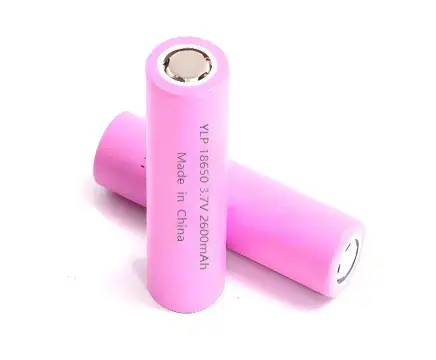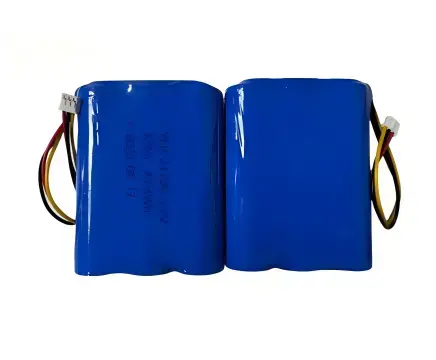


3.7V lithium-ion batteries feature a stable nominal voltage of 3.7V, high energy density, low self-discharge rate, and long cycle life. They can be adapted to a variety of low-power to medium-low-power devices, with stable electrical characteristics and good environmental adaptability.
The 18650 lithium battery, as a typical representative of 3.7V lithium-ion batteries, in addition to having the above-mentioned common features, also has a cylindrical shape. Its standardized size facilitates unified design and installation. The capacity is usually between 1200 and 4000 mAh, and it has a relatively strong power output capacity. It performs excellently in devices such as high-intensity flashlights and laptop battery packs. Its mature production process and extensive market applications result in relatively good cost control and supply stability.
3.7V lithium-ion batteries exhibit excellent operating characteristics. Their nominal voltage of 3.7V is suitable for a wide range of low-power to medium-low-power devices, and the discharge cut-off limit effectively protects the batteries. There are various capacity specifications available, which can flexibly meet the energy requirements of different devices, showing stability in the relationship between capacity and usage time. They have relatively strong adaptability to the environment. The cycle life generally can reach two to three years and can be further extended with proper use. They are highly competitive in the field of energy supply for miniaturized and portable devices, providing reliable, efficient and long-lasting power solutions for numerous electronic products.
Lithium-ion batteries have a longer cycle life, usually ranging from two to three years.How long a 3.7V lithium-ion battery can be used depends on various factors:
Battery Capacity: The larger the capacity, for example, the common 2000mAh one will have a longer theoretical usage time than the 1000mAh one. However, the actual usage time will be shortened due to efficiency losses.
Power Consumption of Devices: Devices with low power consumption (such as electronic watches) consume electricity slowly, so they have a long usage time; while devices with high power consumption (such as small drones) consume electricity quickly, resulting in a short usage time.
Charge-Discharge Cycles: Generally, lithium-ion batteries can withstand a certain number of cycles. As the number of cycles increases, the battery capacity decays and the usage time shortens.
Environmental Factors: Both excessively high and low temperatures will affect the usage time, and high humidity can also cause damage.
When sourcing 3.7V lithium-ion batteries for industrial, medical, or robotics applications, understanding the precise technical parameters is essential for optimal device performance and safety. As a leading manufacturer and supplier in China, Yilai Power provides both standardized cells and fully customized multi-cell battery packs to meet your exact engineering requirements.
Below is a comprehensive technical specification chart comparing industry standards with Yilai’s advanced custom manufacturing capabilities:
| Specification | Typical Range | Yilai Custom Capabilities |
| Nominal Voltage | 3.7V (Fully charged at 4.2V) | Support series & parallel combination, custom pack voltage such as 7.4V, 11.1V, 14.8V etc. |
| Cell Dimensions | 18650, 21700, Prismatic | Custom dimensions and form factors based on your device's strict space restrictions. |
| Capacity Range | 1200mAh to 5000mAh (Per Cell) | High-capacity industrial pack assembly up to 12Ah, 20Ah+, or custom multi-amp-hour configurations. |
| Cycle Life | 500 - 1000 Cycles | High-grade cell selection and optimized pack design to meet your required cycle life target. |
| Protection (BMS) | Overcharge, overdischarge, overcurrent, short-circuit, and over-temperature protection | Equipped with smart BMS, supporting SMBus, I2C, HDQ, RS485 communication protocols and real-time monitoring function. |
| Operating Temperature | Charge: 0°C to 45°C | Wide-temperature cell sourcing for extreme environments (Low temp down to -40°C or High temp up to 85°C). |
| Discharge: -20°C to 60°C |
Need a specific battery dimension, voltage, or safety certification for your project?
Whether you need custom parallel/series configurations, a specialized enclosure, or strict compliance with international shipping standards, Yilai Power has you covered. Contact our engineering team for custom configurations today to receive a free technical assessment, engineering drawings, and a factory-direct wholesale quote.
Many procurement teams mistakenly assume all 3.7V 18650 or 21700 cells are identical. In reality, low-cost consumer-grade cells (often found in budget power banks) and industrial-grade cells manufactured by Yilai Power differ drastically across performance, safety thresholds, and structural integrity.
Below is a detailed engineering comparison showing why industrial-grade 3.7V systems are required for professional equipment:
| Comparison Dimension | Industrial-Grade 3.7V Cells (Yilai Power) | Consumer-Grade 3.7V Cells (Standard Power Banks) | B2B Sourcing Impact |
| Discharge Rate Capabilities | Supports high-drain continuous discharge (5C, 10C, or up to 20C) for heavy motor loads without thermal spikes. | Typically limited to max 0.5C–1C discharge rates; pulling higher current triggers rapid voltage drops. | High-Drain Stability: Prevents system shutdowns during high-surge robotic or industrial tool operations. |
| Internal Resistance (IR) Sorter Control | Strictly matched using Statistical Process Control (SPC) with a tight IR deviation of ≤2mΩ. | Sourced in loose batches with wide IR deviations, often leading to unmonitored cell variance. | Anti-Barrel Effect: Eliminates localized cell degradation, ensuring over 95% pack capacity utilization. |
| Raw Material Purity & Chemistry | Utilizes premium, thick-coated Nickel-Cobalt-Manganese (NMC) or structured LFP with high-grade chemical binders. | Built with lower-purity chemical formulations and thinner separators to maximize initial capacity at minimal cost. | Thermal Safety: Minimizes the risk of internal micro-short circuits and significantly extends operational life. |
| Operating Temperature Range | Fully operational in extreme environments ranging from -20°C up to 60°C (Special wide-temp lines reach -40°C to 85°C). | Optimized strictly for indoor room-temperature use; experiences severe performance failure below 0°C or above 40°C. | Environmental Resilience: Crucial for outdoor IoT sensors, telematics, and high-heat field deployment. |
| Lifespan & Longevity (1C/1C Cycles) | Engineered to retain ≥80% capacity after 500 to 1,000+ full charge-discharge cycles depending on the specific profile. | Rapidly degrades within 200 to 300 cycles, exhibiting sudden capacity fade and accelerated aging. | Lower TCO: Reduces long-term product recall, warranty claims, and battery replacement costs for OEMs. |
| Traceability & Compliance | Full batch traceability with comprehensive documentation (UN38.3, IEC 62133, UL2054). | Little to no structural traceability; rarely carries formal system-level compliance reports for commercial use. | Market Access: Streamlines international shipping approval and global medical/industrial compliance auditing. |
Robotics & AGV Systems: Requires high-surge current capabilities to handle motor startup torque. We recommend our high-rate 21700 or 18650 multi-series packs combined with intelligent BMS communication (SMBus/I2C) for real-time robotic telemetry.
Portable Medical Devices: Zero-downtime tolerance. Requires dual-channel redundant protection boards and cells that meet strict medical outgassing and thermal testing tolerances.
Smart IoT & Telematics Sensors: Requires low self-discharge rates. For devices that sleep for months and wake up to transmit data, we customize 3.7V cell formulas optimized for low continuous drains and extended shelf-life retention.


High-current fast charging can accelerate the degradation of 3.7V li-ion batteries due to increased thermal stress and potential lithium plating on the negative electrode. To optimize this trade-off, Yilai Power utilizes premium cells with low internal resistance and integrates advanced Battery Management Systems (BMS) for precise thermal regulation. This configuration allows for controlled rapid charging cycles while maintaining a typical service longevity of 2 to 3 years (or over 500-1000 full charge-discharge cycles) under standard industrial operational conditions.
Yes. Whether you are designing a single-cell high-capacity module or a complex multi-cell series-parallel battery pack, a built-in BMS is strictly required to ensure safety and system reliability. A customized BMS prevents hazardous conditions such as thermal runaway, over-charging, deep over-discharging, and short-circuits. All of Yilai’s wholesale lithium battery packs come fully integrated with custom-engineered BMS boards, fully compliant with international shipping and safety standards including UN38.3, IEC 62133, and MSDS.
A 18650 lithium battery is a cylindrical rechargeable cell measuring ~18.0 mm in diameter and ~65.0 mm in length. It is significantly larger and operates at a much higher voltage (3.7V nominal) than a standard AA battery (which measures 14.5 mm × 50.5 mm and operates at 1.2V–1.5V).Due to their superior energy density and strong power output capabilities, 18650 and 21700 cells are the industry standard for high-drain applications like robotics, medical devices, and custom industrial power packs. They cannot be used interchangeably with AA batteries due to differences in size, voltage, and electrical specifications.
Extreme environmental conditions directly impact the capacity delivery and cycle life of lithium batteries. Operating below 0°C increases internal resistance, temporarily reducing available capacity and shortening runtime, while charging below freezing can cause permanent damage to the negative electrode due to lithium plating. Conversely, high ambient temperatures (especially above 45°C during charging) accelerate capacity decay and increase the risk of thermal instability. Yilai solves these environmental challenges by sourcing specialized wide-temperature industrial cells that support safe discharge from -40°C up to 85°C for demanding projects.
 en
en
 English
  français
  Deutsch
  Español
  italiano
  português