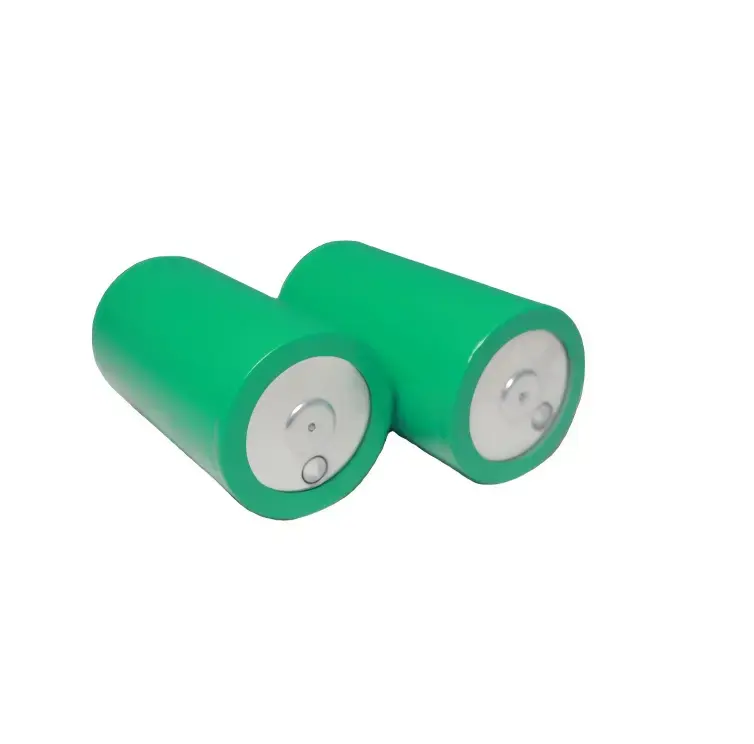


With the surging demand in scenarios such as energy storage, heavy-duty equipment, and high-end electric vehicles, two cylindrical battery models—32140 (ultra-large capacity) and 4680 (innovative technology)—have gradually become the focus. They are exclusively optimized for "large-scale fixed scenarios" and "high-performance mobile scenarios" respectively. This article will analyze their core characteristics, market status, and selection logic, while integrating the 18650 and 21700 models mentioned in the previous part to help you establish a complete cylindrical battery selection framework and understand the future direction of the industry.
.png "Cylindrical_Power_Lithium-Ion_Batteries(下).png")
Leveraging its "ultra-large size + super strong durability," the 32140 battery has become the exclusive choice for large-scale energy storage, heavy-duty equipment, and other scenarios, filling the gap of small and medium-sized cylindrical batteries in meeting ultra-large capacity demands.
• Ultra-large single-cell capacity, reducing assembly complexity: The 32140 battery has a diameter of 32mm and a height of 140mm, with a single-cell capacity of 10-15Ah (3-4 times that of the 18650 and 2-3 times that of the 21700). For large-scale energy storage systems (e.g., 100kWh base station energy storage), only hundreds of 32140 batteries are needed, whereas tens of thousands of 18650 batteries would be required. This significantly reduces the use of auxiliary components such as brackets and connecting wires, lowering assembly difficulty and failure rates.
• High power tolerance, suitable for heavy-duty equipment: Adopting a thickened electrode design, reinforced casing, and mostly using the lithium iron phosphate (LFP) material system, the 32140 battery can withstand a continuous discharge rate of 5C and a peak discharge rate of 10C (e.g., a 10Ah battery can continuously output 50A current). It can easily drive the motors of heavy-duty equipment such as forklifts and floor sweepers, and its performance degradation rate is 30% slower than that of small and medium-sized batteries during frequent start-stop and heavy-load operations. Additionally, the LFP material used in most 32140 batteries offers better thermal stability than ternary lithium systems.
• Long cycle life, reducing operation and maintenance costs: Benefiting from its large-capacity design and stable chemical system (mostly LFP material), the 32140 battery achieves a cycle life of 1500-2000 cycles under 1C charge-discharge conditions (2-3 times that of the 18650). For example, in a home energy storage system, the 32140 battery can achieve a service life of over 10 years, eliminating the need for frequent battery replacement and significantly reducing operation and maintenance costs.
• Large volume and weight, limited applicable scenarios: A single 32140 battery weighs approximately 300g (6-7 times that of the 18650 and 4-5 times that of the 21700) and has a much larger volume than small and medium-sized batteries. It cannot be adapted to scenarios sensitive to weight and space, such as drones and small electric vehicles, and is only suitable for fixed installations (e.g., energy storage cabinets) or heavy-duty equipment (e.g., forklifts).
• High production and transportation costs: The ultra-large size requires specialized winding and packaging equipment for the production of 32140 batteries. Moreover, customized shockproof packaging is needed during transportation to prevent bending damage of long-sized cells. The single-cell cost is 20%-30% higher than that of the 21700, making it more suitable for scenarios with low cost sensitivity but extremely high capacity demands.
Launched by Tesla in 2020, the 4680 battery has attracted significant industry attention since its debut. It has achieved major breakthroughs in multiple aspects, balancing "high performance" and "large-scale potential."
• Large size for higher energy density: With a diameter of 46mm and a height of 80mm, the 4680 battery has a larger size than the 21700. Larger cells can accommodate more active materials, significantly increasing single-cell capacity and total energy. At the battery pack level, fewer cells are required, reducing the proportion of non-active components such as metal casings. This significantly improves the system energy density of the battery pack (expected to be 10%-20% higher than that of 21700 battery packs), providing strong support for electric vehicles to achieve longer range.
• Full-tab design optimizing performance: Unlike traditional batteries with only two tabs, the 4680 battery adopts a full-tab design. This design greatly increases current paths, shortens the tab spacing, and significantly reduces battery internal resistance. Lower internal resistance brings multiple advantages: first, a substantial increase in output power—output power is 50%-100% higher than that of the 21700 in specific high-power scenarios; second, significantly improved heat dissipation performance—cylindrical batteries mainly dissipate heat axially, and the 4680 battery’s expanded tab area widens heat transfer channels, resulting in much better heat dissipation than traditional cylindrical batteries and higher safety; third, greatly enhanced fast-charging performance—electrons move more smoothly inside the battery, increasing current rate and accelerating charge-discharge speed.
• Dry electrode technology enhancing efficiency and cost advantages: The dry electrode technology eliminates organic solvents used in traditional electrode manufacturing. Instead, it directly mixes active materials with solid binders and rolls them into electrodes, omitting steps such as solvent addition, coating, and drying. The production speed is 7 times that of traditional wet processes, reducing solvent and equipment costs. Additionally, it reduces material reactions, optimizes interface bonding, lowers the first-cycle capacity loss by 5%-10%, and improves energy density.
Currently, the 4680 battery has been applied in some Tesla models (e.g., Model Y, Cybertruck) and energy storage products. Many automakers and battery enterprises, such as CATL and EVE Energy, have also laid out plans for this battery. However, the 4680 battery still faces challenges in mass production: the tab collection process for full-tab production is complex (e.g., tab kneading is prone to short circuits, tab cutting leads to uneven surfaces, and multi-tab folding is difficult); the laser welding technology requirements for connecting full-tabs to current collectors or casings are extremely high. Currently, the battery yield has increased to approximately 90%, and the stability of the laser welding process has been significantly improved.
It is predicted that by the end of 2025, the global market demand for large cylindrical batteries will reach 144.2GWh to 235GWh. In China, the 4680 cylindrical battery is regarded as the preferred solution for the mid-to-high-end electric vehicle sector in the next 5-10 years. By 2025, the overall market share of 4680 and other large cylindrical cells in China will exceed 30%, with a market scale of approximately 43.26GWh to 70.5GWh. Currently, more than 50 enterprises worldwide have laid out plans for large cylindrical battery products and capacity expansion, among which over 15 enterprises have planned GWh-level capacity. Tesla and EVE Energy have planned capacities of 210GWh and 130GWh respectively, while CATL, Panasonic, and Samsung have planned capacities exceeding 30GWh each.
Combining the 18650 and 21700 from the previous part with the 32140 and 4680 in this part, these four battery models cover all scenarios from entry-level to high-end, and from consumer-grade to industrial-grade. The core of selection is to "match scenario priorities":
Battery Model | Core Advantages | Applicable Scenarios | Key Selection Factors |
18650 | Lowest cost, mature technology | Entry-level power tools, small home energy storage, small drones, low-cost equipment | Limited budget, low performance requirements |
21700 | Strong endurance, fast charging, balanced cost | Mid-to-high-end drones, power tools, small-to-medium energy storage/home energy storage | Pursuit of balance between performance and cost |
32140 | Ultra-large capacity, long service life | Large-scale energy storage (base stations/commercial & industrial energy storage), heavy-duty equipment (forklifts) | Capacity priority, fixed installation or heavy-duty scenarios |
4680 | High energy density, high power | High-end electric vehicles, high-end mobile energy storage | Extreme performance needs, high-end equipment matching |
For example:
• If you are a power tool manufacturer, you can choose the 18650 for entry-level models to control costs and the 21700 for high-end models to improve endurance.
• If you are an energy storage operator, use the 21700 for small-scale energy storage and the 32140 for large-scale base station energy storage for better cost-effectiveness.
• If you are a new energy automaker, equipping high-end models with the 4680 can highlight advantages in range and fast charging.
From the "foundation laying" of the 18650, to the "mainstream popularization" of the 21700, then to the "scenario deepening" of the 32140 and "technological breakthrough" of the 4680, the development logic of cylindrical batteries is "precision matching for segmented scenarios":
• 18650: It will continue to occupy the entry-level market in the short term. As the cost of the 21700 decreases, it will gradually shrink to "ultra-low-cost, specific small scenarios" (e.g., mini power tools, small remote controls).
• 21700: It will remain the mainstream in the next 3-5 years. With expanded production capacity, its cost will further decrease, and it will gradually replace the 18650 as the first choice for consumer-grade and small-to-medium industrial equipment.
• 32140: It will grow rapidly with the booming energy storage demand, especially in the fields of "long-duration energy storage" and "heavy-duty equipment," forming differentiated competition with prismatic batteries.
• 4680: It will achieve gradual large-scale application after 2025, becoming a benchmark in the high-end electric vehicle and high-performance energy storage fields, and driving the overall technological upgrading of the industry.
The four battery models are not in a "substitution relationship" but rather "synergistic and complementary," collectively meeting the diversified power needs of new energy equipment. If you encounter problems in selecting, customizing, or optimizing solutions for these four battery models, please feel free to contact us—we can provide end-to-end support from cell selection to battery pack design based on your equipment parameters, cost budget, and scenario needs, helping you find the most suitable power solution.
 en
en
 English
  français
  Deutsch
  Español
  italiano
  português