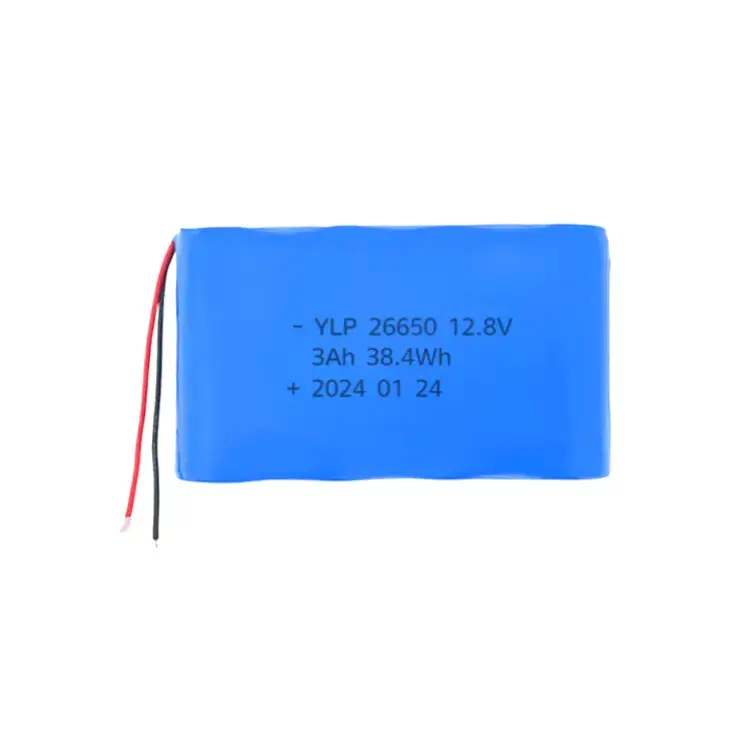


After lithium-ion batteries undergo formation and grading in the factory, they can still lose charge quietly even when not in use—a phenomenon known professionally as "self-discharge." Understanding the two types of self-discharge (chemical and physical) helps us predict battery shelf life, reduce warranty claims, and design safer battery packs. Below is a detailed breakdown of the science behind self-discharge, common pitfalls in testing, and proven mitigation strategies.
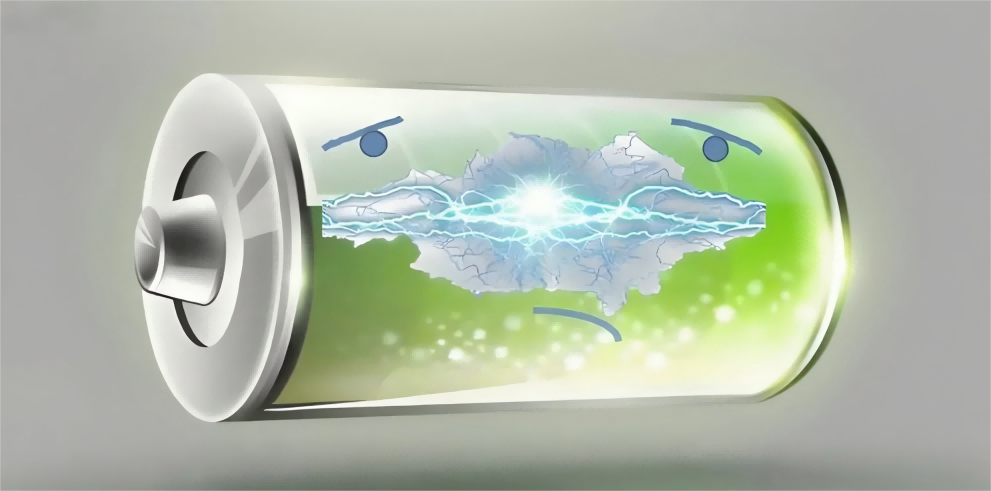
Self-discharge rates vary across different battery chemistries: lithium iron phosphate (LFP) has a monthly self-discharge rate of 2%-3%, nickel manganese cobalt (NMC) 3%-5%, and lithium polymer (LiPo) 3%-4%. These differences become more pronounced in low-temperature environments. Self-discharge is not a single issue; it is primarily categorized into chemical and physical self-discharge, each with distinct causes and consequences that require targeted solutions.
Chemical self-discharge occurs due to spontaneous chemical reactions between internal battery materials, similar to food spoiling over time. The lost capacity typically cannot be restored through recharging. There are 5 common causes, each closely linked to the battery’s "core components":
The cathode is critical for storing electrical energy in the battery. If cathode material particles are uneven in size (e.g., excessively large particles or excessive fine powder), they are prone to reacting with the electrolyte. For instance, with lithium manganate (LMO) cathodes, large particles may pierce the "separator" that isolates the cathode and anode, while fine powder increases the contact area with the electrolyte—intensifying the reaction and ultimately leading to charge loss.
Experimental evidence supports this: In the production of a lithium cobalt oxide (LCO) battery, the defect rate (due to self-discharge and low voltage) was 7.25% without process optimization; after adjusting the slurry filtration screen, the rate dropped to 3.49%; further optimizing the homogenization process (to sink large particles inside the electrode sheet) reduced the defect rate to just 1.82%. This confirms that controlling cathode particle size is key to reducing self-discharge.
A "solid electrolyte interphase (SEI) film" forms on the anode surface, acting like a protective shield to prevent excessive reaction between the anode and electrolyte. However, this film is not "lifetime-proof": if it is not dense enough during initial charging or becomes damaged during subsequent use, the electrolyte will continuously react with the anode—consuming charge like a "slowly leaking balloon."
To address this, manufacturers now add additives such as vinylene carbonate (VC) and ethylene sulfate (DTD) to the electrolyte to strengthen the SEI film, minimizing this type of self-discharge at the source.
The electrolyte acts as the "energy transporter" in the battery, responsible for moving lithium ions. If the electrolyte is contaminated with carbon dioxide, oxygen, or residual impurities from production, these substances will react with lithium ions first—wasting electrical energy on "useless reactions" and reducing the usable charge for the device.
Trace metal impurities (e.g., iron, copper, chromium) are unavoidable in battery raw materials. During charging, these impurities migrate: they are oxidized at the cathode, then migrate with lithium ions to the anode, where they are reduced and accumulate. Over time, this forms "metal dendrites"—sharp, needle-like structures that can pierce the separator, causing direct contact between the cathode and anode. This not only accelerates self-discharge but also poses serious safety risks.
As a result, the industry enforces strict controls on such metal impurities: critical impurities (e.g., iron, copper) typically require a content of no more than 30ppm (equivalent to 30 grams in 1 ton of material). For high-end materials like high-nickel NMC and silicon-based anodes, some impurity limits are tightened to 10ppm to meet the higher safety and cycle life requirements of power batteries.
Moisture is the battery’s worst enemy! If humidity is not properly controlled during production, moisture reacts with key electrolyte components (e.g., LiPF₆) to form corrosive hydrofluoric acid (HF). HF damages the anode’s SEI film and reacts with other materials to produce gases like carbon dioxide, causing the battery to swell. The generated moisture then re-enters the reaction—creating a "vicious cycle" of "moisture → corrosion → more moisture" that exacerbates self-discharge.
Physical self-discharge is not caused by material reactions but by "unintended internal short circuits"—e.g., tiny particles piercing the separator, allowing direct contact between the cathode and anode. Electrons flow internally without passing through an external circuit, consuming charge. However, as long as no permanent damage occurs (e.g., the separator puncture does not expand), the charge can mostly be restored through recharging. There are 3 common causes:
During factory production, equipment wear (e.g., metal shavings from stainless steel components), airborne dust, and even tiny particles on workers’ anti-static clothing can enter the battery. If these particles are hard and sharp enough, they may pierce the separator, causing a short circuit and self-discharge.
A battery teardown case illustrates this: a thin metal shaving pierced the separator, and the high current from the short circuit melted part of the shaving. However, the small hole in the separator remained, leading to continuous self-discharge. Today, manufacturers prevent this through three measures: using wear-resistant materials for equipment, filtering workshop air to Class 100,000 or Class 50,000 cleanliness standards, and having workers wear specialized cleanroom clothing.
The cathode and anode are thin metal foils (aluminum foil for the cathode, copper foil for the anode) that require cutting during production. Small "burrs" often form on the cut edges. If a burr is longer than half the separator thickness or has a sharp shape "parallel to the electrode sheet," it may pierce the separator. Additionally, these burrs can be drawn between the electrode and separator during electrolyte filling or formation, worsening self-discharge.
Manufacturers regularly inspect the condition of cutting blades (avoiding new or worn blades) and optimize cutting parameters to minimize burrs as much as possible.
The separator’s core function is to "isolate the cathode and anode while allowing lithium ions to pass through." If the separator itself has microholes, pinholes, or is damaged by impact during production, problems of varying severity occur: minor holes cause partial weak conduction (only accelerating self-discharge), while larger holes lead to direct cathode-anode contact and internal short circuits. To prevent this, manufacturers use technologies like optical inspection to rigorously test separators, ensuring no defective products enter production.
Sometimes, batteries do not actually self-discharge quickly; test result "distortion" is caused by poor control of test conditions. These 4 common scenarios require special attention:
After charging, batteries experience "polarization" (similar to rapid breathing after exercise), leading to a temporary "false high" voltage. If voltage is tested immediately, then remeasured one day later, the voltage may actually rise—creating the illusion of "negative self-discharge." In reality, this is just the disappearance of polarization, not true zero self-discharge.
Solution: Allow the battery to stand after charging (20 hours at 25% state of charge (SOC), 14 hours at 50% SOC, at a constant 25°C) until the voltage stabilizes before testing.
Temperature has a direct impact on batteries: voltage measured at low temperatures is higher than at high temperatures; moreover, higher temperatures accelerate internal reactions and self-discharge. Typically, for every 10°C increase in temperature, the chemical self-discharge rate increases by approximately 1.5-2 times. The exact multiplier varies by battery chemistry—LFP systems are relatively stable, while NMC systems are more temperature-sensitive. If the temperature difference between two tests is too large (e.g., 20°C for the first test, 30°C for the second), it may lead to misjudgment of "negative self-discharge."
Recommendation: Control the test environment temperature at 25°C ± 2°C, and avoid extreme temperatures when storing batteries.
Immediately after grading, batteries self-discharge faster in the first few days. As standing time increases, the self-discharge rate gradually slows and eventually stabilizes. Testing only 1-2 days after grading may incorrectly suggest severe self-discharge, when the battery would normalize with longer standing. Manufacturers balance "test efficiency" and "accuracy" by typically evaluating batteries after 5-10 days of standing.
Batteries exhibit different self-discharge behaviors at different SOC levels: full charge (100% SOC) makes physical self-discharge defects easier to detect (due to higher short-circuit risk); while at "plateau voltage" (e.g., 3.6V for NMC batteries, 3.2V for LFP batteries), the battery is in the most stable state, ensuring accurate test results. For this reason, SOC is adjusted to this range during testing to reduce interference.
Manufacturers "target solutions" based on self-discharge type when screening abnormal batteries. The logic is easy to understand:
Self-Discharge Type | Key Screening Methods | Notes |
Physical Self-Discharge | Stand at full charge (longer standing = easier detection) or charge/discharge 2-3 times at 0.5C | Charge/discharge can "repair" minor short circuits, slowing self-discharge; batteries with a voltage drop >30mV/day after 5-10 days of standing require focused inspection |
Chemical Self-Discharge | Stand at 40°C-60°C and 50% SOC for 5-7 days | High temperatures accelerate chemical reactions; batteries with a voltage drop >50mV after standing are deemed abnormal and should be rejected |
In the industry, a dual-index evaluation system of "K-value (voltage drop rate, unit: mV/day) + capacity fading" is commonly used. This checks both how quickly voltage drops and how much capacity is lost, avoiding misjudgment from a single index. For example, professional testing solutions use these two indices to quickly screen individual batteries with inconsistent self-discharge, ensuring stable battery pack performance.
The above strategies focus on factory production. End-users also need to manage self-discharge through scientific methods during use and storage—refer to the mitigation measures in Part 4 for details.
• Avoid long-term storage at full charge/empty charge: For devices like phones and power banks, maintain 30%-50% SOC when not in use for extended periods (e.g., ~40% for phones). Do not store at full charge (100%) for more than 1 week or empty charge (<10%) for more than 3 days—this prevents SEI film damage and exacerbated self-discharge. Storage at <5% SOC for over 3 days may cause irreversible damage and should be avoided.
• Control storage environment: Store batteries in a dry environment at 15-25°C with humidity <60%. Avoid balconies (high-temperature exposure), refrigerators (low-temperature humidity), or areas near heat sources (e.g., heaters, stoves). Low temperatures slow electrolyte ion conduction, while high temperatures accelerate chemical self-discharge.
• Pre-charge to "safe SOC" before shipment: When supplying batteries for equipment, pre-charge them to 40%-50% SOC (not full charge) before delivery. This reduces self-discharge losses during transportation and storage, and prevents customers from receiving batteries with excessively low voltage due to long-term storage.
• Regular sampling inspection of inventory batteries: For bulk-stored batteries, sample 10% of inventory every 2 months and measure voltage with a multimeter (NMC batteries should have a voltage ≥3.5V, LFP batteries ≥3.1V). If voltage falls below the threshold, recharge to 40% promptly to prevent irreversible capacity fading.
• Choose a "low self-discharge environment": Prioritize storage in sealed moisture-proof containers with desiccants (e.g., silica gel packs). Replace silica gel when it changes color (e.g., from blue to pink). For large quantities of batteries, use a temperature-humidity data logger to monitor environmental parameters in real time (temperature fluctuation ≤±5°C, humidity ≤50%).
• Staged recharging: Recharge to 50% SOC at 3 months and again at 6 months to avoid complete charge depletion from prolonged storage. Use 0.2C slow charging (e.g., 400mA for a 2000mAh battery) when recharging to minimize impact on the SEI film.
Lithium-ion battery self-discharge is a normal phenomenon; the key lies in "controlling its magnitude" and "ensuring consistency." As long as the self-discharge rate is within a reasonable range and batteries in the same pack have similar self-discharge speeds, device runtime and safety can be guaranteed. Whether through factory process optimization or end-user scientific management, the core is to reduce the impact of self-discharge via "source control + process management," extending battery lifespan. This is critical for the safe and efficient application of lithium-ion batteries.
Under standard room temperature conditions (25°C), a healthy 24V LiFePO4 battery cell exhibits an ultra-low monthly self-discharge rate of approximately 1.5% to 3%. In contrast, standard Nickel Manganese Cobalt (NMC) and Lithium Polymer (LiPo) formulations range slightly higher, averaging 3% to 5% capacity loss per month. If you are integrating a multi-cell fleet where spatial constraints require alternative chemical baselines to mitigate initial costs, explore our comprehensive technical review on the best lithium and sodium-ion batteries for robotics (Internal Reference Link) to chart specific chemistry selections.
Battery self-discharge is fundamentally driven by parasitic chemical reactions inside the cell. According to the Arrhenius chemical kinetic equation, internal reaction rates scale exponentially with thermal energy. Every 10°C rise in ambient temperature roughly doubles chemical kinetics, causing cells to leak capacity up to four times faster at 45°C than at 25°C. For industrial facilities deploying localized grid clusters or automated manufacturing floors under intense ambient heat, routing your hardware into a heavy-duty, thermally managed power and energy storage battery framework is highly recommended to suppress this thermal leakage curve.
Generally, no. If severe self-discharge forces a lithium-based cell down to absolute 0V, permanent irreversible damage occurs because the copper current collectors dissolve directly into the liquid electrolyte. To completely eliminate the severe copper dissolution and transit fire risks associated with low-voltage dormancy, major fleet operators are pivoting to alternative chemistries. Reviewing a detailed comparison between sodium-ion batteries vs lithium-ion for energy storage illustrates how newer systems can be safely discharged down to 0V for extended periods without experiencing micro-structural degradation.
Industrial scale sorting relies on a dual-index framework checking both the K-value (voltage drop rate in mV/day) and total capacity fading over a specific resting window. For advanced applications requiring extreme chemical consistency under sub-zero or hazardous conditions, deploying an engineered more sodium battery array or highly screened LFP blocks ensures the entire integration remains perfectly balanced throughout its operational cycle.
If you need a customized self-discharge testing solution (e.g., cell/module-level testing, high-temperature standing process optimization), please contact our professional team for one-stop battery performance solution support.
 en
en
 English
  français
  Deutsch
  Español
  italiano
  português