

When pets are running and playing outdoors, a pet tracker acts as a "safety rope" for their owners. However, the reliability of this "safety rope" largely depends on the battery's ability to sustain power. Many pet owners have worried: what if the tracker suddenly runs out of battery at a critical moment, making it hard to find their beloved pet? This article breaks down the "life cycle" of pet tracker batteries—from characteristics and usage scenarios to maintenance tips—helping you avoid common battery life myths and keep your pet safe.

The battery life of a pet tracker is essentially a "safety window." Imagine this: if your dog slips out of the neighborhood when the door is open, and the tracker just happens to die, a distance that could be covered in 10 minutes might turn into hours of anxious searching.
Battery life matters for three key reasons:
• Emergency response efficiency: In case of sudden loss, even a 1-hour difference in battery life could cause the pet to move far from the safe area.
• Usability: Frequent charging is not only troublesome but may also lead to device failure if charging is forgotten.
• Functional stability: At low power, GPS positioning accuracy decreases, and alarm messages may even fail to send.
That’s why choosing the right battery and using it correctly is far more important than chasing high-end features.
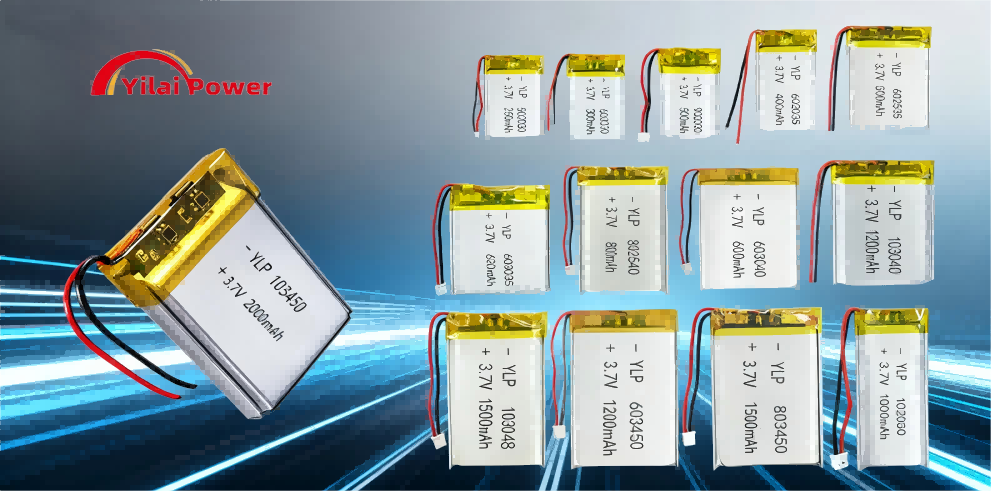
Pet tracker batteries on the market mainly fall into three categories, each with distinct characteristics and suitable for different scenarios:
• Core features: Uses gel electrolyte, shaped like thin sheets, and can be customized to fit device space. It is about 20% lighter than other batteries of the same capacity; its energy density is at the mainstream consumer level, typically 350–420Wh/L, balancing safety and portability.
• Suitable for: Mini trackers for cats and small dogs (such as Teddy bear, Bichon Frise), as it won’t burden the pet, offering a discreet and lightweight wearing experience.
• Notes: Poor low-temperature adaptability—battery life decreases by about 30% when the temperature is below 0°C; the casing is relatively soft, so avoid squeezing or puncturing to prevent bulging or leakage.
• Core features: Moderate energy density (200-350Wh/L), affordable, making it a mainstream choice for consumer-grade trackers; it has a charge-discharge cycle life of about 300-500 times, meeting daily usage needs.
• Suitable for: Medium-sized dogs that go for daily walks (such as Golden Retrievers, Border Collies), as its battery life matches daily positioning requirements, balancing cost and performance.
• Notes: Long-term storage at full charge accelerates aging—we recommend charging to around 80% for daily use; self-discharge rate increases significantly in high-temperature environments (>45°C).
• Core features: Excellent safety—resistant to fire even in puncture or high-temperature environments; ultra-long cycle life of over 2000 times, 3-4 times that of ordinary batteries; wide operating temperature range (-20°C to 60°C), but lower energy density (150-200Wh/L).
• Suitable for: Working dogs (such as police dogs, search and rescue dogs) and large dogs that often run outdoors (such as Alaskan Malamutes), as it can stably power the tracker in complex environments.
• Notes: Due to its lower energy density, it is 20-30% larger in volume and heavier than lithium polymer batteries of the same capacity. Small trackers may not be compatible, so check device space compatibility before choosing.
Bought a tracker claiming "7-day battery life" but it only lasts 3 days? Getting less battery life than promised? The problem may lie in these details:
• Impact: A tracker that positions every 10 seconds consumes 5 times more power than one that positions every 5 minutes.
• Optimization suggestion: Use "smart mode" (positioning every 5-10 minutes) daily; switch to "fast mode" (positioning every 10-30 seconds) when suspecting the pet is lost.
• Impact: In signal-dead zones like basements or mountainous areas, the device continuously searches for satellites or cell towers, increasing power consumption by 40%.
• Solution: Enable "offline caching" in such environments; sync data after returning to a signal area to reduce real-time signal searching energy consumption.
• Impact: When pets run or jump, motion sensors frequently activate the device, consuming 20% more power than when the pet is stationary.
• Tip: Choose a tracker with "dynamic sleep" function, which automatically reduces sensor sensitivity after the pet is stationary for 10 minutes.
• Impact: Battery self-discharge rate increases when the environment temperature exceeds 40°C; capacity drops by 20-40% at below -10°C ("halving" may occur only if the temperature stays below -20°C).
• Protection measures: Avoid exposing the tracker to direct sunlight in high temperatures (e.g., don’t hang it outside the pet cage); use a thermal silicone cover in low temperatures to reduce temperature fluctuations.
• Impact: Features like constant LED lights, frequent sound alarms, and continuous Bluetooth searching consume an additional 10%-15% of power.
• Streamlining plan: Turn on the LED light only at night; set alarms to trigger "when leaving the safe zone"; turn off Bluetooth when not pairing.
Master these tips to extend battery life without replacing the device:
• Long-term charging to 100% or draining to below 10% accelerates electrode aging. We recommend charging to 80% daily and recharging when the remaining power is around 20%.
• When not in use for a long time (e.g., pet is sick at home), store with 30%-50% power and recharge every 3 months.
• Turn off non-essential features: such as "step counting" and "calorie calculation" that are irrelevant to safety positioning.
• Optimize network mode: Prioritize "GPS + cell tower" dual-mode positioning in urban areas; use only GPS in remote areas (to reduce cell tower signal searching energy consumption).
• For small batteries below 500mAh, use a 5V/1A charger (takes about 2 hours to fully charge); for batteries above 1000mAh, a 5V/2A charger is sufficient (takes about 3 hours to fully charge).
• Avoid fast chargers (e.g., 18W phone fast chargers), as high-voltage fast charging causes battery heating and shortens lifespan.
• Clean the charging interface: Wipe the contacts with a cotton swab monthly to avoid poor charging contact due to dust (false charging affects battery activity).
• Check device sealing: If the tracker is waterproof, regularly confirm the sealing ring is intact to prevent water vapor from entering the battery compartment and causing a short circuit.
Just like pets, batteries also have a "retirement age." Replace the battery if these signs appear:
• Sudden drop in battery life: Actual usage time after full charge is over 50% shorter than when the device was new (e.g., originally 7 days, now only 3 days).
• Abnormal charging: Charging time is more than doubled, or the charger shows "full" but the power drops quickly after unplugging (may be due to battery bulging or cell aging).
• Appearance deformation: Battery casing bulges or cracks, or the device heats abnormally (even if still usable, it poses safety risks).
Replacement tips:For trackers with built-in batteries, we recommend contacting the manufacturer for replacement; for basic devices using disposable lithium-manganese button batteries like CR2032 (an independent chemical system, not belonging to the three rechargeable lithium battery types mentioned above), choose genuine batteries of the same specification to avoid leakage from low-quality batteries damaging the device.
Pet Type | Activity Range | Recommended Battery Type | Reference Battery Life (Normal Mode) |
Indoor cats, small dogs | Home + neighborhood walks | Lithium Polymer Battery | 2–4 weeks (Bluetooth mode) |
Medium-sized dogs | Suburbs, parks | Lithium-Ion Battery | 5–7 days (GPS mode) |
Large working dogs | Outdoors, mountainous areas | Lithium Iron Phosphate Battery | 10–15 days (strong signal) |
Farm livestock | Large-scale free-range | Lithium Iron Phosphate Battery | 1–3 months (low-power mode) |
Addressing the core needs of pet trackers—"small size, long battery life, high safety"—Yilai Technology provides customized battery solutions covering mainstream application scenarios:
• Mini lithium polymer batteries: As thin as 0.5mm and weighing only 3-5g, they are suitable for small cat trackers. With a 50mAh capacity, they support over 2 weeks of battery life in Bluetooth mode. Passing rigorous extrusion and drop tests, they ensure safe wearing for pets.
• Temperature-resistant lithium-ion batteries: Maintaining ≥85% capacity retention at -10°C to 45°C, they are designed for outdoor tracking of medium-sized dogs. With a 150mAh capacity, they support 7 days of battery life in GPS mode. Equipped with low self-discharge technology (monthly self-discharge rate <3%), they reduce idle power consumption.
• Customized BMS adaptation: For high-frequency positioning scenarios, built-in intelligent power management chips automatically adjust discharge current based on motion status, extending battery life by 20% compared to ordinary batteries. They also support overcharge, over-discharge, and short-circuit protection, complying with EU CE and US FCC safety standards.
Yilai Technology's pet tracker batteries are trusted by over 20 global pet device brands. From cell selection to packaging design, the entire process is controllable. Customized solutions are available based on device size and power needs, ensuring stable and reliable positioning every time.
A1: Basic models (such as collar-style simple trackers) mostly use disposable lithium-manganese button batteries like CR2032, which can be replaced by yourself; smart GPS trackers mostly have built-in sealed batteries (such as lithium polymer or lithium-ion batteries), and we recommend contacting the manufacturer for replacement (self-disassembly may damage waterproof performance).
A2: No. Lithium batteries have reduced electrolyte ion conduction speed at low temperatures (<0°C), which is a normal phenomenon. Battery life will partially recover when the temperature rises (usually 70%-80% recovery).
A3: Not necessarily. Adaptability is key: installing a large-capacity battery in a small tracker may cause poor heat dissipation due to volume mismatch, resulting in faster power consumption. Choosing a battery matching the device's power requirements is better than blindly pursuing "high-priced large capacity."
A4: Yes. Long-term deep discharge of lithium batteries (power below 10%) can cause irreversible damage to electrode materials. We recommend recharging when the remaining power is around 20% and avoid charging after the battery is completely depleted.
A5: Yes. The number of charge-discharge cycles is a core factor affecting battery life. Higher usage frequency (e.g., daily charge-discharge) consumes cycles faster, relatively shortening lifespan; however, proper maintenance (such as scientific charging and avoiding extreme temperatures) can reduce wear and tear and extend the actual service time.
The battery of a pet tracker is like a pet's "second lifeline"—choosing the right one and using it properly ensures uninterrupted safety protection. By selecting a battery based on your pet's habits and activity range, combined with scientific usage methods, you can enjoy every outdoor trip with peace of mind. For customized pet tracker battery solutions, contact Yilai Technology for technical support to make battery life better fit your pet-raising needs.
 en
en
 English
  français
  Deutsch
  Español
  italiano
  português