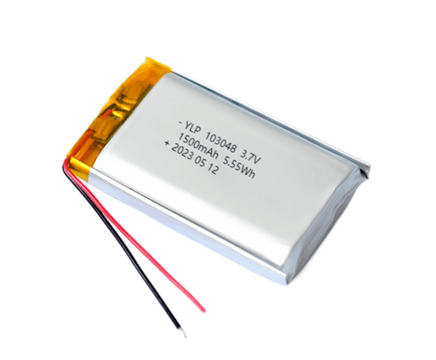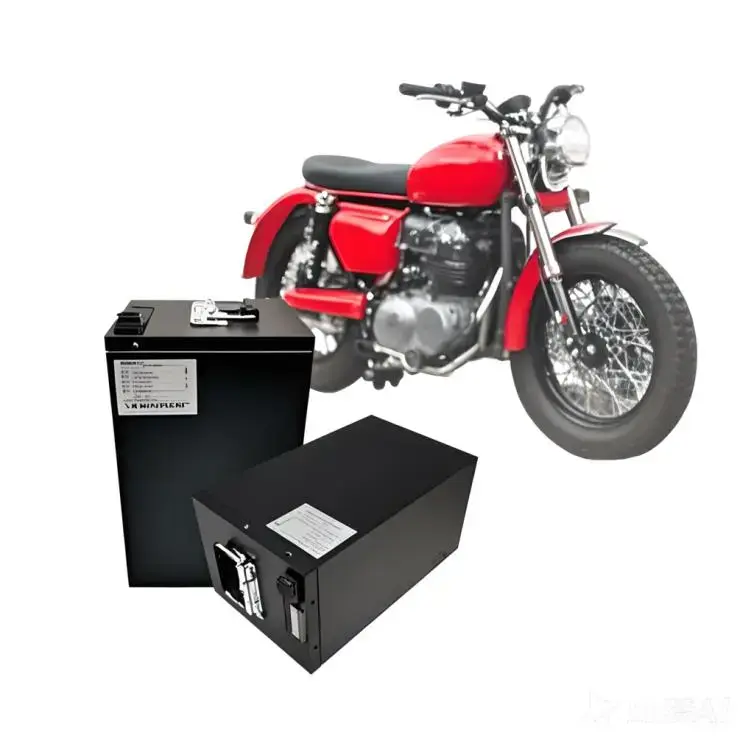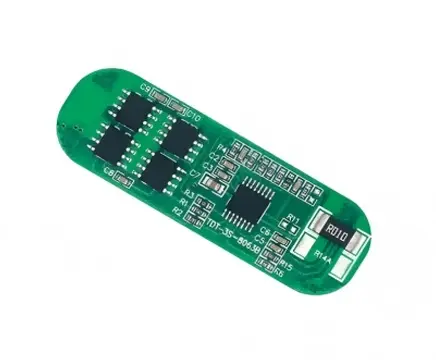


With the widespread application of lithium batteries in consumer electronics, new energy equipment and other fields,self-discharge from long-term storage has grown increasingly common. When the cell voltage is too low, the battery will enter a "dormant" state, manifesting as the inability to charge or start up. To help users restore battery usability while ensuring safety, this article systematically sorts out the key points of low-current activation, charge-discharge testing and safe operation for lithium batteries of different chemical types, providing professional guidance for practical operations.
Lithium batteries are widely used due to their advantages of high energy density and long service life. However, they are prone to self-discharge when left idle for a long time (e.g., more than 3 months). If the cell voltage is lower than the safety threshold, ordinary chargers will trigger low-voltage protection and refuse to charge. It should be noted that not all over-discharged batteries can be activated. For batteries with bulging, liquid leakage or other damages, forced activation may trigger safety risks. This article is applicable to lithium polymer batteries (LiPo), lithium iron phosphate batteries (LiFePO4) and nickel-metal hydride batteries (NiMH). Please confirm the battery type and appearance before operation.
LiPo batteries are extremely sensitive to over-discharge. When the voltage of a single cell is lower than 3.0V, ordinary chargers may refuse to charge. It is necessary to activate the battery with low current slowly before regular charging.
Step 1: Detect Cell Voltage (Must Be Done Before Activation)
·Tool: Use a multimeter (DC voltage range) or a balance charger with voltage display to measure the voltage of each cell one by one through the battery balance connector (do not only measure the total voltage to avoid missing single-cell over-discharge).
·Judgment and Handling:
· If the voltage of a single cell is ≥ 3.0V: No activation is needed. Directly perform balance charging with a low current of 0.5C (e.g., for a 5000mAh battery, set the charging current to 2.5A) to restore normal operation.
· If the voltage of a single cell is < 3.0V (especially < 2.5V): First check the battery appearance. If there is bulging, liquid leakage or shell damage, activation is prohibited and the battery must be scrapped; if the appearance is normal, proceed to the activation process.
Step 2: Low-Current Activation Methods
Method A: Activation with Specialized Intelligent Charger (Recommended, High Safety)
·Applicable Equipment: Chargers that support LiPo balance charging and activation functions (e.g., IMAX B6, HOTA D6 Pro).
·Operation Parameters:
· Charging Current: 0.1C - 0.2C (e.g., set to 0.5A - 1A for a 5000mAh battery);
· Charging Mode: Select the "LiPo Balance Charging Mode" to ensure synchronous charging of multiple cells;
·Duration: Continue for 10 - 30 minutes and observe the voltage in real time. When the voltage of a single cell rises to ≥ 3.0V, immediately switch to regular balance charging (0.5C - 1C) until the battery is fully charged (the full-charge voltage of a single cell is 4.2V).
Method B: Manual Current-Limiting Activation (For Experienced Users Only When No Specialized Equipment Is Available)
· Tool: An adjustable constant current source (which needs to support voltage monitoring).
· Operation Points:
· Set the current limit to 0.1C (e.g., set to 0.2A for a 2000mAh battery) to avoid cell damage caused by excessive current;
· Keep an eye on the battery throughout the activation process, and check the battery temperature (must not exceed 35℃) and voltage changes every 5 minutes;
·When the voltage of a single cell rises to ≥ 3.0V, stop manual charging immediately and use a regular balance charger to complete the subsequent process.
【Yilai Power Safety Tip】: Manual current-limiting activation has high risks (cell overheating may occur due to current out of control). Users without professional experience are advised to prioritize the use of specialized chargers. The operation should be carried out in a well-ventilated environment without open flames and away from flammable and explosive materials.
LiFePO4 batteries have better tolerance to over-discharge than LiPo batteries. The nominal voltage of a single LiFePO4 cell is 3.2V, and the voltage may drop to around 2.5V after long-term storage. No special activation mode is required, and ordinary LiFe chargers can be adapted.
Activation Steps:
2.2.1 Voltage Detection: Use a multimeter to measure the voltage of each cell one by one. If the voltage of a single cell is < 2.8V, proceed to the low-current charging process;
2.2.2 Low-Current Start: Use a charger that supports the "LiFe Mode" and charge with a current of 0.2C - 0.5C (e.g., set to 2A - 5A for a 10000mAh battery);
2.2.3 Switch to Regular Charging: After charging for 30 minutes, if the voltage of a single cell rises to ≥ 3.0V, switch to regular charging at 1C (e.g., set to 10A for a 10000mAh battery);
2.2.4 Full-Charge Verification: After full charging (the full-charge voltage of a single cell is 3.6V), check that the battery has no bulging and the voltage is stable, then it can be used normally.
NiMH batteries have good tolerance to over-discharge and there is no strict concept of "activation". It only needs to restore the voltage through low-current trickle charging.
Operation Points:
·Initial Charging: Use a NiMH-specific charger and perform trickle charging with a low current of 0.1C for 1 - 2 hours (e.g., set to 0.2A for a 2000mAh battery);
·Regular Charging: After the voltage rises, switch to regular charging at 0.5C - 1C (e.g., set to 1A - 2A for a 2000mAh battery), and the battery can be used after being fully charged;
·Notes: NiMH batteries have a slight memory effect (much weaker than nickel-cadmium batteries). There is no need to deliberately "discharge completely before charging". Charging as needed in daily use can extend the service life.
· Pretreatment Inspection:
Before activation, the battery appearance must be checked. Batteries with bulging, liquid leakage, shell deformation or oxidized metal contacts are prohibited from being activated and must be recycled by qualified institutions;
· Environmental Requirements:
The operation environment should be well-ventilated and cool (temperature: 15 - 25℃), away from heat sources (such as heating systems, stoves) and open flames. Operation in enclosed spaces (such as drawers, cabinets) is prohibited;
· Safety Tools:
Use a fireproof bag (to wrap LiPo batteries) and an insulated fireproof tray (to place the battery to avoid conductive short circuits). Direct contact between the battery and a metal tray is prohibited;
· Personnel Supervision:
Someone must be on duty throughout the activation process and must not leave for more than 5 minutes. If the battery is found to be heating (temperature > 35℃), smoking or giving off an unusual smell, cut off the power immediately and move the battery to an open area to cool down;
· Equipment Compliance:
Chargers/constant current sources must meet the national 3C certification standards. The use of damaged, aged charging cables or modified equipment is prohibited.
Whether the activation is successful should be comprehensively judged from four aspects: voltage, charging status, electricity storage capacity and appearance. Meeting a single condition is not considered successful:
Battery Type | Minimum Safe Voltage of Single Cell | Ideal Voltage Range | Cell Balance Requirements |
LiPo | ≥3.0V | 3.3V~3.8V | Voltage difference between cells ≤ 0.1V |
LiFePO4 | ≥2.5V | 3.0V~3.4V | Voltage difference between cells≤0.1V |
NiMH | ≥1.0V | 1.2V~1.3V | Voltage difference between cells≤0.05V |
· The charger status changes from "low-voltage protection", "error" or "no response" to "stable charging", and displays the normal current (e.g., when charging at 0.5C, the current is consistent with the set value);
· For multi-cell series batteries (such as 3S, 4S LiPo), they must successfully enter the "balance charging mode", and the voltage of each cell must rise synchronously (no stagnation of single-cell voltage).
·After the battery is fully charged, disconnect the power supply and re-measure the voltage after standing for 10 minutes: LiPo ≥ 4.1V, LiFePO4 ≥ 3.5V, NiMH ≥ 1.2V, and the voltage drop within 10 minutes ≤ 0.3V (if the voltage drop is too large, there may be cell short circuit or aging);
· If conditions permit, conduct a light discharge test: Connect the battery to the corresponding equipment (such as a drone, flashlight), use it at low power for 1 - 2 minutes, and there should be no sudden voltage drop (voltage drop ≤ 0.2V) of each cell, and the balance should still be maintained.
·During the activation and charging process, the battery has no heating (temperature ≤ 35℃), bulging, liquid leakage or shell deformation.
If the following phenomena occur during the activation process, it indicates that the battery is damaged or the activation is ineffective. Continued use is prohibited, and the battery must be recycled in compliance with regulations:
·No Voltage Rise: After 1 - 2 hours of activation, the voltage of a single cell is still < 3.0V (for LiPo) or < 2.5V (for LiFePO4);
·Abnormal Heating: The battery shell temperature rises rapidly to above 40℃, or local parts become hot to the touch;
·Structural Damage: Bulging, liquid leakage (LiPo may exude jelly-like substances) or shell cracking occur after activation;
·Severe Cell Imbalance: The voltage difference between cells is > 0.2V, and the gap continues to widen (no narrowing trend) during charging.
·Service Life Tip: Even if severely over-discharged batteries (e.g., LiPo single cell < 2.0V) are activated, their cycle life will decrease by 30% - 50%. It is recommended to reduce the frequency of use (e.g., only use them in low-power equipment) and shorten the charge-discharge depth (avoid charging to 100% or discharging to below 20%);
·Storage Requirements: For batteries that are not used for a long time after activation, charge them to the "storage voltage" (LiPo 3.8V/cell, LiFePO4 3.3V/cell, NiMH 1.2V/cell), place them in a cool and dry place (temperature: 10 - 25℃), and recharge them every 3 months;
·Recycling Specifications: Scrap batteries must be handled by institutions with the "Hazardous Waste Operation Permit" (you can contact the local environmental protection department or battery manufacturer). Random disposal or incineration is prohibited.
Shenzhen Yilai Power Technology Co., Ltd. is a high-tech enterprise focusing on the R&D, production and safety solutions of lithium batteries. With more than 10 years of experience in lithium battery safety technology, it can provide technical support such as battery maintenance and activation guidance for individual users and corporate customers.
· Official Website: https://www.yilaipower.com (Click to view more lithium battery safety guides)
·Technical Consultation: support@yilaipower.com (Online response from 9:00 to 18:00 on working days)
Q1: Within how long is the success rate of activating an over-discharged lithium battery the highest?
A1: It is recommended to attempt activation within 72 hours after discovering over-discharge. The longer the storage time, the more severe the aging of the electrolyte inside the cell and the intensification of polarization, which will significantly reduce the activation success rate.
Q2: What impact will poor contact of the balance connector have when activating a LiPo battery?
A2: Poor contact of the balance connector will lead to uneven charging of single cells. Some cells may be overcharged while others remain in a low-voltage state, which may cause bulging or fire in severe cases. Before activation, ensure that the contacts of the balance connector are clean and free of oxidation.
Q3: Is it normal for a NiMH battery to heat up during charging after activation?
A3: A NiMH battery will generate slight heat (temperature ≤ 30℃) during charging, which is a normal phenomenon. If the temperature exceeds 35℃, stop charging immediately and check whether the charger is compatible (avoid using a LiPo charger to charge a NiMH battery).
 en
en
 English
  français
  Deutsch
  Español
  italiano
  português