

In scenarios like drones, remote-controlled (RC) cars, and DIY electronic devices, the 11.1V Lithium Polymer (LiPo) battery stands out as a preferred power source for its ability to "deliver strong power in a compact size." While most users recognize its performance, many lack an understanding of how it adapts to high-power devices, safe usage practices, and tips for extending its lifespan. This guide breaks down the core advantages, application scenarios, and key usage points of the 11.1V LiPo battery in plain language, starting from basic principles, balancing professionalism with practicality to help you fully grasp this "high-energy battery."
Many users wonder why the 11.1V battery does not have a whole-number voltage. In fact, this voltage stems from the "cell series" design logic, which can be clearly understood through two core points:
A single LiPo cell has a fixed nominal voltage of 3.7V (similar to the fixed 1.5V of an AA battery). To increase the voltage for higher-power devices, multiple cells must be connected in series—just like 3x 1.5V AA batteries connected in series to power a 4.5V flashlight:
• 1x 3.7V cell: Suitable for low-power devices such as headphones and smartwatches;
• 2 cells in series (2S configuration): Total voltage of 7.4V, ideal for small RC cars and basic toys;
• 3 cells in series (3S configuration): Total voltage = 3.7V × 3 = 11.1V—the 11.1V LiPo battery focused on in this guide, which meets the power needs of medium-to-high-power devices like drones and high-performance RC cars.
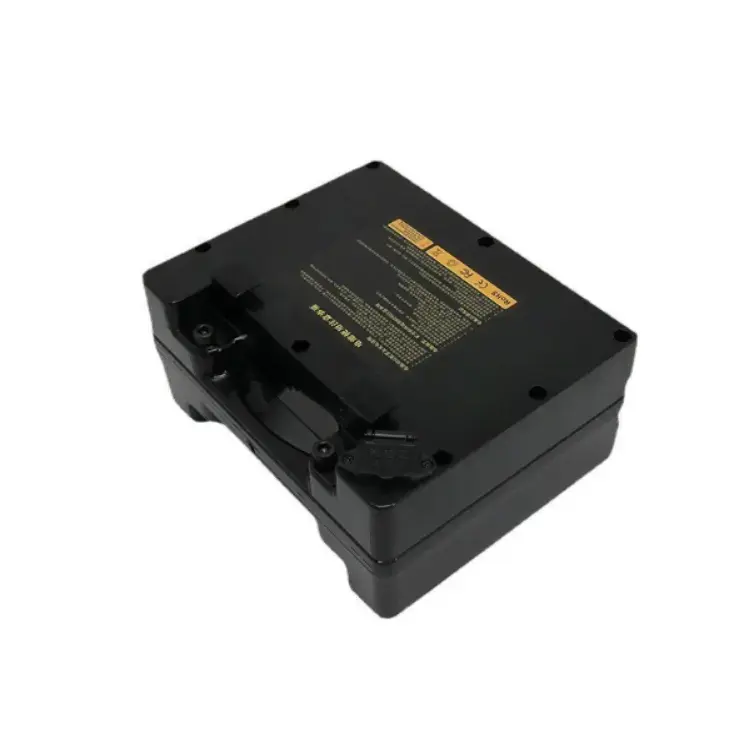
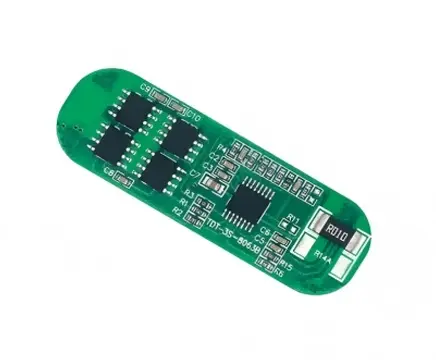
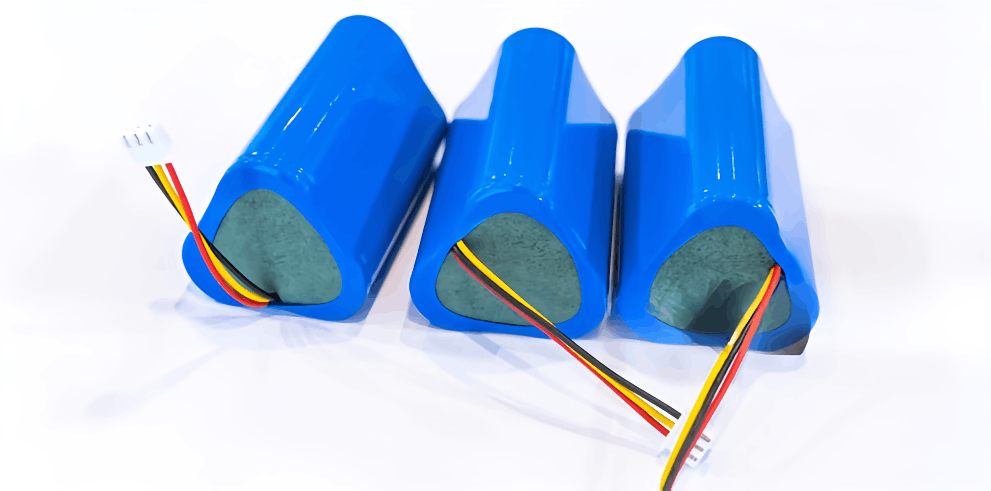
The 11.1V LiPo battery is an integrated system consisting of "3 cells + a protection circuit," each with distinct roles:
• Cells: Responsible for energy storage. Each cell has a safe voltage range of 3.0V (discharge cutoff, cannot be used further) to 4.2V (fully charged). Thus, the fully charged voltage of an 11.1V battery is 4.2V × 3 = 12.6V, and discharge must stop when the voltage drops to 9.0V (3.0V × 3)—otherwise, permanent cell damage will occur;
• Protection Circuit: Core function is risk prevention. It provides overcharge protection (cuts power if voltage exceeds 12.6V), over-discharge protection (cuts power if voltage drops below 9.0V), and short-circuit protection (cuts current in milliseconds). This is the key reason it is safer than traditional NiMH batteries.
Compared to traditional Nickel-Metal Hydride (NiMH) and Nickel-Cadmium (NiCd) batteries, the 11.1V LiPo battery has significant advantages in key areas like "power, weight, and size," making it especially suitable for scenarios with specific performance requirements:
With the same volume, the energy density of an 11.1V LiPo battery is 3-4 times that of a NiMH battery. For example, a palm-sized 11.1V 5000mAh LiPo battery has the same energy as 3 NiMH batteries of the same size. When installed in a drone, it avoids increasing the device’s weight while effectively extending flight time.
Drones and quadcopters are extremely sensitive to weight—every 10g increase can reduce flight time by approximately 5 minutes. The 11.1V LiPo battery uses aluminum-plastic film packaging (replacing traditional steel casings), making it 40% lighter than a NiMH battery of the same capacity. This reduces "extra load" during device operation and further optimizes battery life.
Scenarios like RC car acceleration and drone takeoff require instant high-current output for power. The 11.1V LiPo battery supports high discharge rates—for instance, a 5000mAh battery with a 5C discharge rate can instantly output 25A (5 × 5A), easily driving motors to run at high speeds. Traditional NiMH batteries struggle to achieve such high instantaneous power output.
If left idle for a long time, NiMH batteries can have a monthly self-discharge rate of 20%-30%, often leading to insufficient power for startup when reused. In contrast, the 11.1V LiPo battery has a monthly self-discharge rate of only about 5%. Even after 2 months of inactivity, it retains over 90% of its power and can be used normally without frequent recharging.
With proper use and maintenance, the 11.1V LiPo battery can complete 300-500 charge-discharge cycles. Calculated at a frequency of "1 charge per week," its service life can reach 5-10 years. Compared to frequent replacement of disposable batteries or low-lifespan batteries, it offers lower long-term usage costs.
From hobby toys to professional equipment, the 11.1V LiPo battery has a wide range of applications. Below are 6 of the most common scenarios to intuitively demonstrate its value:
Drones’ dual needs for "lightweight + high power" perfectly match the characteristics of the 11.1V LiPo battery. For example, a small aerial photography drone equipped with an 11.1V 5000mAh battery can support 25-30 minutes of flight—10 minutes longer than a 7.4V battery—while stably powering the camera module.
High-speed RC cars (over 50km/h) require strong power for acceleration and climbing. The 11.1V LiPo battery provides continuous high-power output, enabling fast acceleration response and strong climbing ability. Its lightweight design also does not compromise maneuverability.
High-performance airsoft guns require fast energy supply to ensure trigger response speed and firing rate. The 11.1V LiPo battery can reduce trigger response time to less than 0.1 seconds, increasing the firing rate by 20%-30% compared to a 7.4V battery—ideal for outdoor competitive scenarios.
When building small robots or automated devices, DIY electronics enthusiasts often face the challenge of "irregular internal device space." The 11.1V LiPo battery can be customized into ultra-thin (thickness ≤1mm), curved, or other irregular shapes, easily fitting into tight spaces while providing stable power for motors and sensors.
Small medical devices (such as portable pulse oximeters and handheld ultrasound probes) have strict requirements for "safety stability" and "battery life." The 11.1V LiPo battery’s protection circuit effectively prevents overcharge and over-discharge risks, ensuring continuous and stable device operation. Its lightweight design also facilitates portability.
Handheld testing equipment in factories (such as circuit testers and environmental sensors) is often used in complex environments like workshops or outdoors. The 11.1V LiPo battery has excellent vibration resistance and a wide operating temperature range (-20℃ to 60℃), withstanding dust, minor impacts, and other environmental factors to ensure normal device operation.
Although the 11.1V LiPo battery has excellent performance, improper use can lead to swelling, fire, and other issues. Master the following tips to balance safety and lifespan:
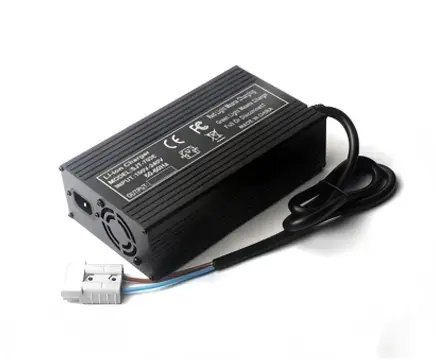
• Strictly prohibit non-specialized chargers: Must use a LiPo-specific charger (such as a balance charger). Ordinary chargers lack cell voltage balancing functions, which can cause voltage imbalance among the 3 cells—shortening lifespan at best, or causing swelling at worst;
• Strictly prohibit overcharging: The voltage of a single cell must not exceed 4.2V (total voltage ≤12.6V). Unplug the charger immediately after it indicates "full charge" to avoid long-term full-voltage trickle charging;
• Strictly prohibit unattended charging: Place the battery in a fireproof bag during charging and monitor the process throughout. If smoke, swelling, or abnormal heating occurs, cut off the power immediately.
• Maintain ~50% charge: When storing for a long time, charge the battery to 11.4V (3.8V per cell). Avoid storing it fully charged (accelerates aging) or completely discharged (causes irreversible cell damage);
• Environment control: Store in a cool, dry, and well-ventilated area at 15-25℃. Keep away from balconies (high-temperature exposure), refrigerators (humidity), and heaters/stoves (high-temperature heat sources);
• Isolation protection: Store the battery alone in a fireproof bag, away from metal objects like keys and coins to prevent short circuits;
• Regular inspection: Check the battery status monthly. If cell swelling, leakage, or casing damage is found, stop using it immediately.
• Avoid over-discharging: Stop using the battery when the total voltage drops to 9.0V (e.g., land the drone promptly when it indicates "low power"). Do not wait for the device to shut down completely, as this will damage the cells;
• Avoid exceeding discharge rate limits: Use the battery according to its marked "maximum discharge rate." For example, a 5C battery’s maximum output current must not exceed 25A. Do not power over-powered devices (e.g., using a 5000mAh battery to drive a motor over 300W).
No. Mismatched voltage will directly burn the device’s circuit board. For example, connecting an 11.1V battery to a 7.4V RC car may damage the motor and control module instantly. Always select a battery with a voltage matching the device.
Swelling is a clear sign of internal cell short circuits—do not continue using the battery. Correct handling steps: ① Fully discharge the battery using a dedicated discharge tool; ② Submerge it in salt water (5%-10% concentration) for 3 days to neutralize residual power; ③ Seal it and send it to a professional battery recycling center. Do not discard it in regular trash.
With a 1C charger (5A current), it takes approximately 40 minutes to charge to 80% and 1.5 hours to fully charge. With a 0.5C slow charger (2.5A current), it takes about 3 hours to fully charge. Slow charging reduces cell heating and is more beneficial for extending battery life.
Low temperatures (<0℃) cause battery capacity attenuation (e.g., a 5000mAh battery may only output 3500mAh). Solutions: ① Preheat the battery in a warm environment (e.g., your pocket) for 10 minutes before charging; ② Use the battery in environments above 10℃ as much as possible to reduce the impact of low temperatures on cell activity.
Replace the battery promptly if: ① Its power drops by over 50% within 30 minutes of full charge; ② It heats up severely during charging (temperature exceeds 45℃); ③ Cells are swollen or leaking, or a multimeter detects a voltage difference of over 0.3V between individual cells.
From design and production to quality control, our 11.1V LiPo batteries are optimized around "safety, durability, and adaptability" to provide reliable power support for various devices:
Each battery is equipped with a high-precision protection circuit with a voltage detection accuracy of ±5mV (industry average: ±10mV). It responds quickly to risks such as overcharge, over-discharge, and short circuits, with a short-circuit cutoff time of <5ms—offering a higher safety factor than ordinary batteries.
We support custom battery parameters based on device characteristics: capacity (2000mAh-20000mAh), size (ultra-thin/curved/irregular), and discharge rate (2C-10C). Samples can be provided for testing within 7 days, solving adaptation challenges such as "limited device space" and "special power requirements."
The entire product line has passed international certifications including UL, CE, RoHS, and IEC 62133, meeting safety standards in regions such as Europe, America, and Southeast Asia. It can be directly used for supporting exported devices. We also provide a 2-year warranty—free replacement or refund for quality issues.
For detailed model parameters, customization plans, or technical support, feel free to contact us at any time to get exclusive selection advice and sample testing services!
 en
en
 English
  français
  Deutsch
  Español
  italiano
  português