

Whether you’re using an 1800mAh battery to power a Bluetooth headset, drive an RC car, or extend the flight time of a small drone, “how long it actually lasts” is always the top concern. Behind this seemingly simple capacity number lies a range of influencing factors, including device power consumption, battery characteristics, and usage environment. This guide combines professional technical principles with practical daily tips to explain both “why battery life varies” and “how to make the battery last longer,” helping you easily understand the battery life logic of 1800mAh batteries.
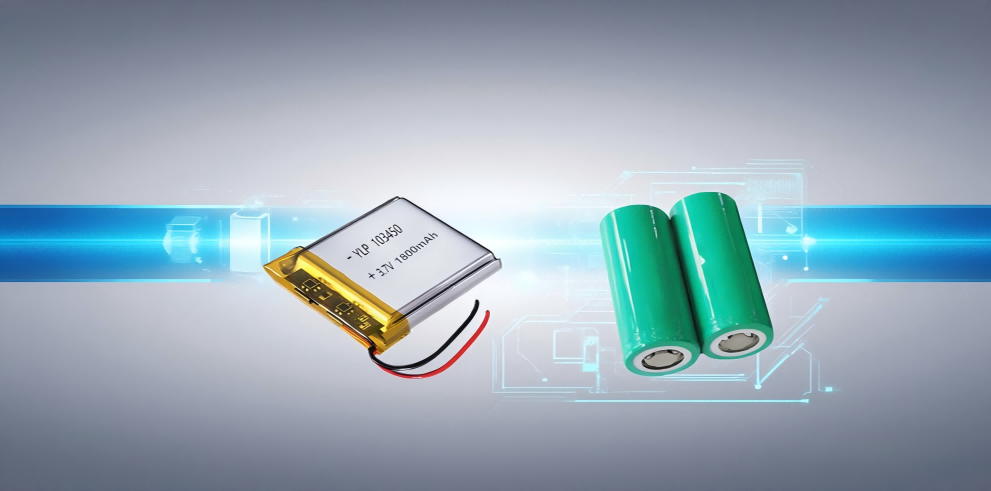
Many people mistakenly believe “1800mAh = 1 hour of battery life,” but this is a misunderstanding of the capacity unit. Let’s break down the basic concepts first to help you grasp the battery’s “real power reserve” at a glance:
mAh (milliampere-hour) measures a battery’s ability to discharge at a constant current, similar to “the size of a water bucket”:
• If a device draws a constant current of 1800mA (1.8A), the theoretical battery life is 1 hour;
• If the current drops to 900mA (0.9A), the theoretical battery life extends to 2 hours (Formula: Battery Life = Capacity ÷ Discharge Current).
However, this is only an “ideal value.” Actual battery life also depends on voltage and energy. Taking a common 3.7V lithium battery as an example, the actual energy corresponding to 1800mAh is:
Energy (Wh) = Voltage (V) × Capacity (Ah) = 3.7V × 1.8Ah = 6.66Wh
The device’s “power consumption (W)” is the key to determining battery life. For instance, if a headset consumes 0.3W during playback, the theoretical battery life is 6.66Wh ÷ 0.3W ≈ 22 hours—this is a more practical calculation method.
When a battery discharges, its “usable capacity” is less than the labeled 1800mAh, mainly due to three factors:
• Internal Resistance Loss: Batteries have internal resistance (e.g., 18650 cells have an internal resistance of approximately 20-50mΩ). High-current discharge generates heat and wastes power—for example, during 5A high-current discharge, the hourly energy loss is about 7-10%, meaning 1800mAh is reduced to only 1530mAh of usable capacity;
• Temperature Impact: At 0℃, lithium battery capacity drops to 70%-80%; at -10℃, ternary lithium batteries plummet to 50%, while lithium iron phosphate batteries maintain 60% (this explains why smartphones lose power quickly in winter);
• Discharge Rate: If discharged rapidly at 5 times the rated current (9A), the actual capacity may only be 70%-80% of the labeled value, and battery aging will also accelerate.
Not all 1800mAh batteries are the same! A battery’s “chemical composition” directly affects its life and battery life. There are 3 common types—choosing the right one ensures it matches your device’s needs:
Battery Type | Core Advantages | Suitable Devices | Notes |
Lithium-Ion (Li-ion) | High energy density, fast charging | Smartphones, Bluetooth headsets, small drones | Avoid overcharging/over-discharging; 300-500 charge cycles |
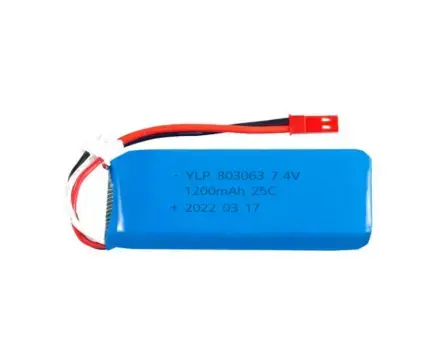
Lithium Polymer (LiPo) | Flexible shape, high discharge rate | RC cars, toys, ultra-thin devices | Store in fireproof containers; avoid extrusion and swelling |
Nickel-Metal Hydride (NiMH) | Safe (no fire risk), low cost | Flashlights, basic toys | Bulky; high self-discharge rate (20% monthly loss) |
For example, when choosing a battery for an RC car, prioritize Lithium Polymer (LiPo)—it can withstand high-current discharge for strong instant power. For children’s toys, NiMH batteries are safer. For daily-use headsets and watches, lightweight Li-ion batteries are ideal.
In addition to capacity, voltage cannot be chosen randomly:
• 3.7V: Standard voltage for single-cell lithium batteries, suitable for small devices like smartphones and headsets;
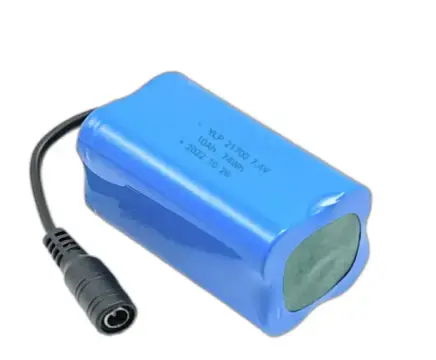
• 7.4V/11.1V: Formed by connecting multiple cells in series (e.g., 2×3.7V cells in series for 7.4V), suitable for high-power devices like RC cars and drones;
• 1.2V/1.5V: Common voltages for NiMH/alkaline batteries, often used in flashlights and remote controls.
Using an 11.1V battery to power a 3.7V headset will directly burn the device; conversely, a 3.7V battery cannot start an 11.1V drone at all.
We’ve calculated the actual battery life of 1800mAh batteries in common scenarios to give you an intuitive reference:
• Device Power Consumption: 0.05W (standby), 0.3W (playback at medium volume);
• Theoretical Battery Life: ~22 hours (playback), ~133 hours (standby);
• Actual Battery Life: ~18-20 hours (playback), 10%-15% less than theoretical, due to Bluetooth connection fluctuations and volume changes;
• Optimization Tip: Choose batteries with “dynamic power adjustment” to reduce current surges when switching between standby and playback modes—this can extend battery life by 1-2 hours.
• Device Power Consumption: 5W (no load), 10W (high-load running);
• Theoretical Battery Life: ~1.3 hours (high-load running), calculated as (7.4V×1.8Ah) ÷ 10W;
• Actual Battery Life: ~0.9-1.2 hours, affected by high-current discharge and cell inconsistency;
• Optimization Tip: Choose battery packs with “balance protection” to ensure consistent power between the two cells—this stabilizes battery life at 1.1 hours or more.
• Device Power Consumption: 1W (high brightness), 0.2W (low brightness);
• Theoretical Battery Life: ~2.2 hours (high brightness), ~11 hours (low brightness), calculated as (1.2V×1.8Ah) ÷ corresponding power;
• Actual Battery Life: NiMH batteries have high self-discharge—after being fully charged and stored for a week, only 80% of the power remains, reducing battery life accordingly.
To maximize the life of your 1800mAh battery (both single-use battery life and overall lifespan), remember these 5 key points:
Lithium batteries last longest with “shallow charging and shallow discharging”:
• Charge when the battery level drops to 20%-30%, and stop when it reaches 80% (this is how smartphone “optimized charging” works);
• Avoid letting the battery drain to automatic shutdown (over-discharging causes a sharp increase in internal resistance and permanent capacity loss);
• Use the original charger: For example, an 1800mAh battery takes 1.8-2 hours to fully charge with a 1A charger. Avoid fast chargers (long-term fast charging accelerates aging).
For long-term storage (e.g., storing an RC car during off-seasons):
• Charge the battery to 50% capacity first (≈3.8V for 3.7V batteries); never store it fully charged or completely discharged;
• Store in a cool place (10-25℃); avoid car trunks (high temperatures in summer cause swelling);
• Place LiPo batteries in fireproof bags, away from metal objects like keys and coins (to prevent short circuits).
• In summer, don’t leave devices in direct sunlight (e.g., smartphones in cars)—high temperatures accelerate capacity loss;
• For devices like RC cars and drones, avoid long-term full-load operation (e.g., continuous full-speed driving) to reduce high-current discharge.
• Inspect the battery before each charge: If a LiPo battery swells or a NiMH battery leaks, stop using it immediately (risk of fire);
• Replace batteries that are over 1 year old if their battery life is 30% shorter than when new (e.g., a headset that once lasted 20 hours now only lasts 14 hours).
1800mAh battery packs are equipped with a “Protection Circuit Module (PCM)”. A high-quality PCM reduces unnecessary power loss:
• Overcharge Protection: Automatically cuts power when voltage exceeds 4.25V to avoid swelling;
• Over-discharge Protection: Cuts discharge when voltage drops below 2.75V to prevent damage;
• Balancing Function: Ensures consistent power across cells when multiple cells are in series (e.g., voltage difference ≤5mV between 2 cells), extending overall lifespan by 10%-30%.
Yes! As long as the voltage matches (e.g., both 3.7V), the 1800mAh battery will last longer—for example, a 1500mAh headset lasts 18 hours, while an 1800mAh one lasts 22 hours.
With a 1A charger (common for smartphones), it takes about 1.8-2 hours; with a 0.5A slow charger, it takes about 3.6 hours. Slow charging is gentler on the battery.
Use the battery in environments above 10℃ whenever possible; warm it in your pocket before going out. For outdoor devices (e.g., drones), add an insulation cover—this can increase battery life by 30% at -10℃.
Absolutely not! Swelling is a sign of internal short circuits—continued use may cause fires. Recycle it through professional facilities (do not throw it in regular trash).
Test capacity consistency: Use professional equipment to discharge the battery—if the actual capacity is below 1620mAh (90% of the labeled value), it’s a fake. You can also check battery life—for example, if a headset’s theoretical battery life is 22 hours but only lasts less than 15 hours, the battery may be counterfeit.
To maximize the “battery life and lifespan” of 1800mAh batteries, we’ve optimized 3 key aspects from design to quality control:
1. Precision Protection: Our PCM has a voltage detection accuracy of ±5mV (industry average: ±10mV) and fast response to overcharging/over-discharging, minimizing power loss;
2. Customized Adaptation: We adjust discharge strategies for different devices (e.g., low-power optimization for headsets, high-rate optimization for RC cars);
3. Global Compliance: The entire product line is UL, CE, and RoHS certified, ensuring safety for both domestic use and export.
If you need customized 1800mAh battery solutions or have questions about battery selection, contact our technical team for exclusive support!
 en
en
 English
  français
  Deutsch
  Español
  italiano
  português