

In the wave of miniaturization of wearable devices, smart rings have become a new market favorite due to their portability and versatility. Lithium polymer batteries (Li-Polymer Battery), with their high energy density, morphological plasticity, and safety stability, have become the ideal power solution for smart rings. This article will analyze how polymer batteries meet the technical requirements of smart rings, and serves as a professional reference for customers by combining application scenarios and selection guidelines.
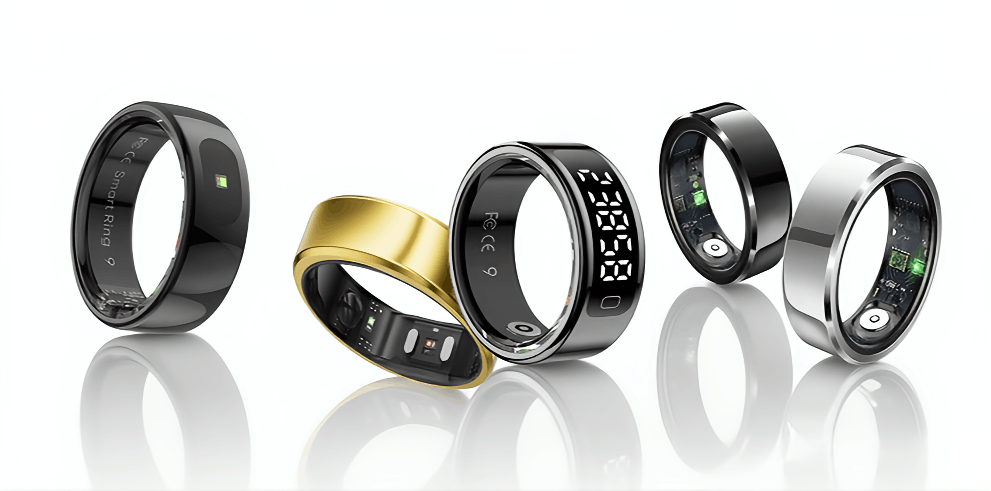
Smart rings, limited by millimeter-level space and lightweight requirements (usually weighing <10g), impose strict demands on the battery's volume, flexibility, and safety. The characteristics of lithium polymer batteries perfectly match these needs:
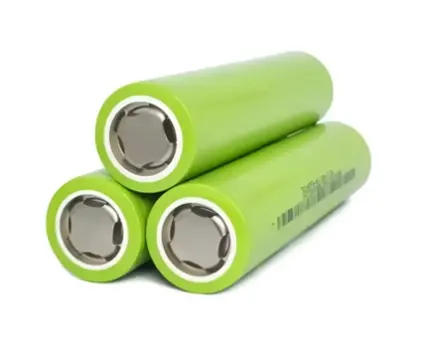
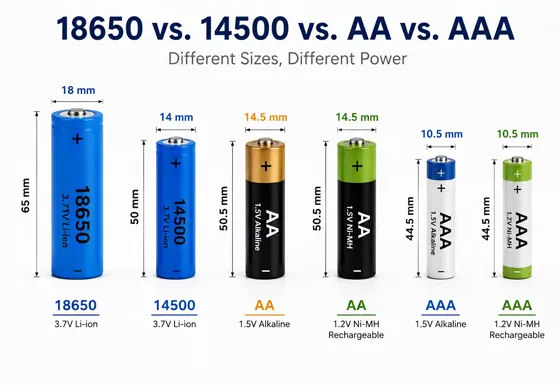
Polymer batteries using lamination processes can achieve an energy density of 220-280Wh/L, significantly higher than that of same-volume cylindrical batteries (approximately 200Wh/L for 18650 batteries). For example, a 15mAh (3.7V) battery can provide 0.0555Wh of energy, delivering 3-7 days of battery life for a typical smart ring (with an average power draw of 0.3-0.5mW) and enabling high-frequency functions such as heart rate monitoring (instantaneous power consumption of 3mW) and Bluetooth data transmission (peak power of 5mW).
• Ultra-thin and flexible design: Can be made into arc-shaped cells with a thickness of ≤0.5mm. Through winding processes, they fit the inner curvature of the ring. When the bending radius is ≥8mm, the capacity retention rate exceeds 95%, complying with international safety standards for wearable device batteries. Performance does not degrade with finger movement during wear.
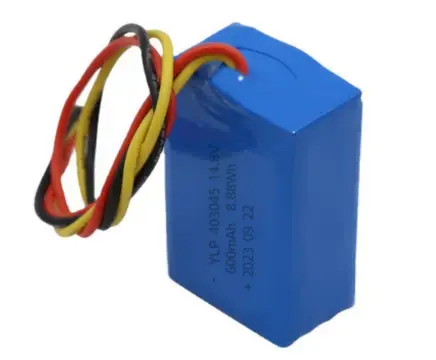
• Miniaturized size: The smallest size can reach 1.5mm×10mm×20mm (e.g., model YLP151020), occupying <30% of the internal space of the ring, freeing up space for sensors and processors.
• The battery PACK integrates a PCBA protection circuit (e.g., DW01+FS8205 chipset), achieving triple protection:
· Overcharge protection: Charging is cut off when voltage >4.3V±0.05V;
· Over-discharge protection: Discharging is cut off when voltage <2.5V±0.05V;
· Over-temperature protection: Protection is triggered when temperature >60℃.
• Adopting aluminum-plastic film packaging (replacing steel casings), there is no risk of electrolyte leakage during puncture or extrusion, complying with the IEC 62133 safety standards for wearable devices.
• Supports 2C fast charging (a 15mAh battery can reach 80% charge in 30 minutes and full charge in 40 minutes). Equipped with magnetic charging (charging contact area of 0.5cm²), it solves the problem of difficult charging for miniaturized devices.
• Monthly self-discharge rate <5%, resulting in minimal loss of charge during storage, which is better than nickel-metal hydride batteries (monthly self-discharge rate of 20-30%).
Smart rings with different functions have significantly different requirements for battery capacity and size. Below are adapted solutions for three mainstream product types:
• Core requirements: Supports a 12MP camera (instantaneous power consumption of 30mW, including image processing) and Bluetooth 5.0 transmission (peak power of 5mW), requiring a balanced performance in capacity, size, and operational stability.
• Recommended battery: 3.7V 15mAh YLP500618 (size: 5mm×6mm×18mm)
• Performance: A single charge supports 120 photos or 30 minutes of continuous video recording, with a 5-day battery life (calculated based on 50 photos, 5 minutes of video, and 24-hour standby per day).
• Core requirements: Drives energy-saving LED displays (0.3mW when lit, 0.01mW in sleep mode), prioritizing long-term usage to reduce charging frequency.
• Recommended battery: 3.7V 10mAh YLP151222 (thickness: 1.5mm, bending radius: 12mm)
• Performance: Under regular use (daily time checking, activated by a twist gesture), the battery life can reach 3 months, supporting stable use for approximately 5 years.
• Core requirements: Supports a blood oxygen sensor (intermittent monitoring, 1mW for a single 10-second monitoring, once per hour) and IP68 waterproofing, withstanding daily washing, swimming, and other scenarios.
• Recommended battery: 3.7V 18mAh YLP160732 (arc-shaped design, IP68 waterproof rating)
• Performance: 5-day battery life in daily health monitoring mode, supporting real-time power check via APP, and stable use for approximately 4 years.
• Capacity estimation: Required capacity (mAh) = Average power consumption of the device (mW) × Target battery life (hours) ÷ Battery voltage (3.7V) ÷ 0.8 (discharge efficiency)
Example: For a heart rate ring with an average power consumption of 1mW and a target battery life of 7 days (168 hours), the required capacity = 1×168÷3.7÷0.8≈58mAh. It is recommended to include a 20% safety margin in actual selection, so a 70mAh battery is recommended (e.g., model YLP700520).
• For ring-shaped devices, prioritize arc-shaped cells (bending radius = inner diameter of the ring - 1mm) to avoid discomfort caused by sharp edges;
• Thickness ≤1/3 of the total thickness of the ring (e.g., if the ring thickness is 3mm, the battery thickness ≤1mm) to ensure overall lightness.
• Must comply with UN38.3, CE, RoHS, and other relevant certifications;
• Medical-grade smart rings (e.g., heart rate monitoring) must pass the IEC 60601 medical device safety certification.
YLP's polymer batteries dedicated to smart rings have three core competitive strengths:
• Customization capability: Supports 0.3-0.5mm ultra-thin cells and arc/ring-shaped designs, with samples available for testing within 7 days to meet specialized product requirements.
• Integrated solutions: Provides supporting magnetic charging modules (92% efficiency) and power monitoring Apps (Bluetooth BLE 5.0 communication), streamlining the customer development process. We have provided customized solutions to over 50 smart ring manufacturers, with a sample testing pass rate of over 90%.
• Global compliance guarantee: The entire product series has passed UL, CE, and KC certifications, facilitating direct entry into mainstream markets such as Europe, America, Japan, and South Korea.
Contact us now to obtain exclusive battery selection manuals and sample testing services!
 en
en
 English
  français
  Deutsch
  Español
  italiano
  português