

The robotics revolution in 2026 demands unprecedented power density, fast opportunity-charging, and architectural safety from industrial energy storage systems. Whether deploying Automated Guided Vehicles (AGVs) in smart manufacturing plants, deep-learning autonomous mobile delivery drones, or heavy-duty collaborative robots (Cobots), selecting the exact battery chemistry defines your equipment's operational uptime and Total Cost of Ownership (TCO).
Today, the industrial procurement debate centers not just on premium lithium variants, but on the disruptive commercial entry of sodium-ion technology into cost-sensitive, high-reliability robotic clusters. This engineering guide evaluates the optimal power choices to future-proof your upcoming robotic hardware integrations.
Different robotic environments mandate entirely different electrochemical metrics. An aerial drone values gravimetric energy density ($Wh/kg$) above all else to maximize flight times, while a warehouse logistics robot operates continuously under a strict cycle-life model, prioritizing thermal stability and rapid charging. For manufacturers developing advanced robotic platforms, selecting a reliable lithium ion battery for robot applications is essential to achieve consistent performance, longer operating hours, and safer power management across different working environments.
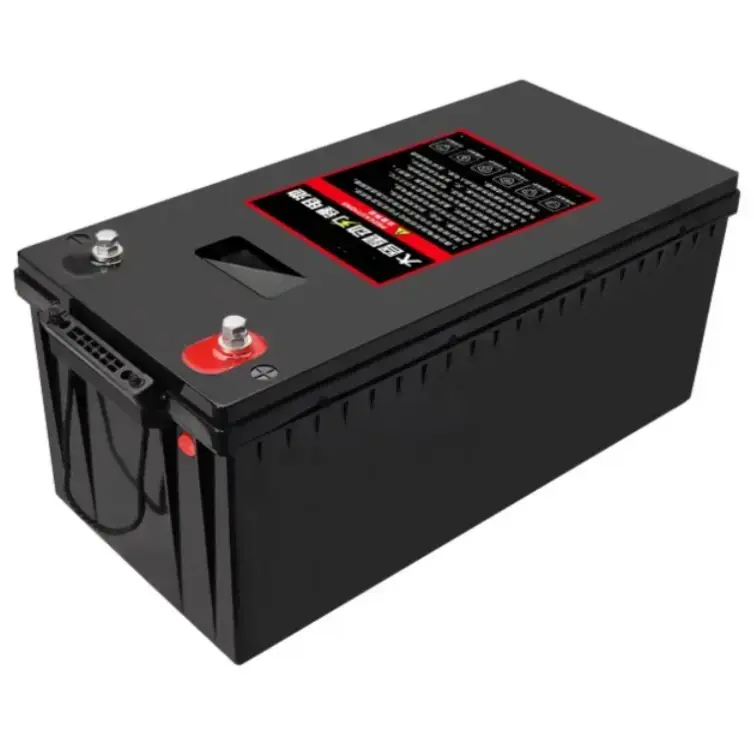
For industrial automation, LiFePO4 remains the absolute benchmark. Boasting exceptional thermal stability and up to 4,000–6,000 charge cycles, these cells eliminate thermal runaway risks in enclosed electronic bays. To ensure high-current heavy lifting remains efficient, automated hardware systems rely on heavy-duty 24V LiFePO4 battery packs for prolonged multi-shift operations.
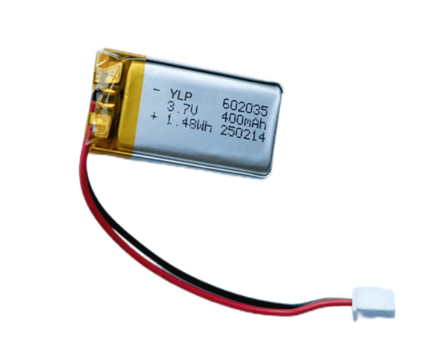
When spatial constraints restrict the battery footprint—such as in humanoid medical robots or micro-inspection crawlers—NMC variants offer a massive volumetric energy density advantage. For high-drain agile flight mechanics, choosing premium drone batteries built on customized lithium-polymer platforms balances low payload weight with elevated burst discharge rates.
Entering the mainstream in 2026, Sodium-ion chemistry acts as a strategic alternative for heavy ground-based autonomous systems. While marginally heavier than lithium alternatives, its extreme cold-weather operational integrity (retaining over 85% capacity at -20°C) and native resistance to thermal spikes make it an incredibly sustainable logistics asset.
Battery Specification Metric | Lithium Iron Phosphate (LiFePO4) | Lithium NMC / LiPo | Sodium-Ion (Na-Ion) |
Energy Density (Wh/kg) | 140 – 180 Wh/kg | 200 – 260 Wh/kg | 100 – 150 Wh/kg |
Cycle Life (80% DoD) | 3,500 – 6,000+ Cycles | 1,500 – 2,500 Cycles | 2,000 – 4,000+ Cycles |
Operating Temp Range | -20°C to 60°C | -20°C to 55°C | -40°C to 65°C |
Raw Safety & Stability | Excellent (Zero Runaway Risk) | Moderate (Requires Active BMS) | Exceptional (Non-flammable) |
Relative Cell Cost (2026) | Baseline Standard | Premium Pricing | 20% - 30% Lower than LiFePO4 |
Best Application Match | AGVs, AMRs, Warehouse Logistics | Humanoids, Aerial Drones | Outdoor Roaming Robots, Cold Storage |
For indoor fleets moving continuous payloads, downtime equates to direct financial loss. The ideal choice is LiFePO4. It supports heavy opportunity-charging (e.g., fast charging for 15 minutes during shift breaks without accelerating grid degradation).
Agricultural rovers, remote monitoring security bots, and sub-zero Arctic exploration systems often suffer massive voltage drops when utilizing lithium. For these environments, integrating a specialized more sodium battery architecture provides a significant competitive edge due to its resilient chemical kinetics under sub-zero temperatures and high-temperature spikes.
For a deeper dive into controlling cell degradation during downtime, read our companion technical analysis: "Lithium Battery Self-Discharge Explained: Causes, Rates, and Solutions for Long-Term Storage".
When scaling a fleet of thousands of urban last-mile delivery robots, battery acquisition costs can bottleneck production. Sodium-ion bridges this gap by decoupling your hardware supply chain from volatile cobalt and lithium market prices, ensuring stable capital expenditures.
To analyze how this economic pivot scales into heavy-duty setups, review our strategic analysis: "Sodium-Ion Batteries vs Lithium-Ion for Energy Storage and Cost-Sensitive Applications in 2026".
Robot Battery Engineering
Need a Battery Pack Matched to Your Robot Platform?
Robot battery selection should consider voltage, operating time, continuous and peak current, charging strategy, battery dimensions, weight, temperature range and BMS communication together. Yilai develops battery packs for intelligent robots, robotic vacuum cleaners, AGVs, AMRs and other automated equipment according to specific application requirements.
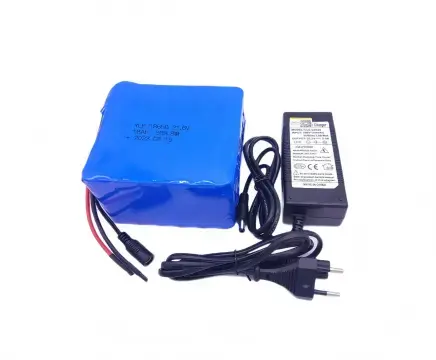
Explore Custom Robot Battery Pack SolutionsNo matter which chemistry you choose, your robot’s software layer must actively communicate with the pack. A properly engineered intelligent robot battery pack should match the robot controller, charging system, communication protocol and operating load. High-tier industrial integrations require an intelligent BMS featuring:
CANbus / RS485 Communication Protocols: Feeds real-time State-of-Charge (SoC) and State-of-Health (SoH) telemetry directly into the robot’s main ROS (Robot Operating System) controller.
Active Thermal Balancing: Prevents hot spots within the internal chassis, specifically protecting sensitive LiDAR and camera-processing boards from ambient radiant heat.
For turnkey utility deployment, choosing an enterprise manufacturer that matches advanced balancing circuits to heavy industrial loads is vital. Deploying a unified power and energy storage battery framework allows manufacturing facilities to manage both mobile automated fleets and centralized backup infrastructure under a cohesive energy node.
Answer: Yes, but with physical modifications. While sodium-ion cells provide excellent thermal safety and cost profiles, their lower volumetric density means the physical pack may be roughly 15% to 20% larger than an NMC or high-density LiFePO4 pack of identical capacity. Ensure your robot’s battery bay can accommodate the physical footprint variation.
Answer: Most industrial robotic LiFePO4 packs safely support a continuous 1C charge rate (full charge in 1 hour) and up to 2C–3C burst opportunity-charging profiles, provided the pack utilizes high-quality cells integrated with active thermal monitoring and balanced BMS boards.
Answer: Sodium-ion batteries are naturally resistant to thermal runaway and internal short-circuits. Unlike lithium-based alternatives, they can be safely discharged down to absolute zero volts (0V) for shipping and long-term storage, completely mitigating any risk of transportation fires or high-energy field punctures during transit.
 en
en
 English
  français
  Deutsch
  Español
  italiano
  português