

In the field of lithium battery applications, "whether a BMS is needed" remains a core question for users and professionals. Many assume "all lithium batteries must have a BMS," but in practice, some lithium batteries can operate without one—though such "exceptions" come with strict constraints and inherent risks. Based on over a decade of lithium battery R&D and scenario-based application experience, combined with global industry practices, Shenzhen Yilai Technology Co., Ltd. (www.yilaipower.com) systematically breaks down the compatibility logic between lithium batteries and BMS to help you accurately define your needs.
Quick Answer:
Yes, a BMS (Battery Management System) is mandatory for 95% of commercial and multi-cell lithium batteries to prevent thermal runaway. However, strict exceptions apply to single-cell devices (≤5Ah) or highly controlled LiFePO4 setups under manual monitoring.
.png "BMS(1).png")
Before discussing "whether a BMS is needed," it is critical to distinguish between two key terms: BMS (Battery Management System) ≠ Basic Protection Board. This is the foundation for understanding exception scenarios.
Comparison Dimension | BMS (Battery Management System) | Basic Protection Board | Application Scenario Differences |
Core Functions | Comprehensive parameter monitoring (voltage/current/temperature), cell balancing, SOC/SOH estimation, fault diagnosis | Only basic protection against overcharging, over-discharging, and short circuits | BMS for complex systems; protection boards for simple scenarios |
Technical Complexity | Hardware-software integration, including main control chips and algorithm programs | Single electronic circuit with no data processing capability | BMS requires customized development; protection boards are mass-produced |
Management Scope | Full-lifecycle management of battery packs, supporting coordinated control of multiple cells | Only for single-cell or simple series-connected batteries; no balancing function | BMS for multi-cell packs; protection boards for low-power use |
Typical Applications | Electric vehicles, energy storage systems, industrial equipment | Small flashlights, simple toys, DIY experimental devices | Protection boards limited to low-risk, short-cycle scenarios |
Key Conclusion: Most "lithium batteries without BMS" in the industry actually refer to "batteries without a full BMS but possibly equipped with a basic protection board." Lithium batteries with no protection at all exist only in extremely rare scenarios and carry extremely high risks.
Based on global industry cases and technical literature, lithium batteries can operate without a BMS only if they meet the three prerequisites of "low risk, small scale, and strict control." These scenarios, mostly non-commercial and short-term, include:
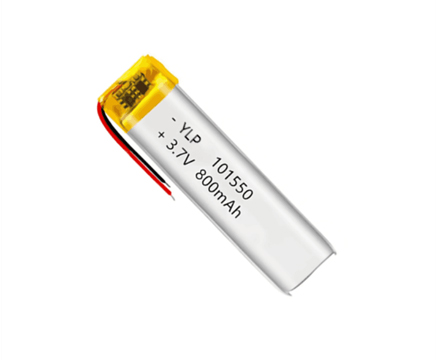
Applicable Conditions: Applicable Conditions: Single cells with capacity ≤5Ah, used in low-load devices with power ≤10W. If you are choosing between these two standard cylindrical formats, understanding the engineering trade-offs in 21700 vs 18650 batteries will help you determine the exact physical space requirements.
Typical Cases: Small flashlights, simple Bluetooth speakers, children’s toys, DIY electronic experimental devices.
Why No BMS Is Needed:
• No "cell balancing" requirement: The core pain point of battery packs is inconsistency between multiple cells, which does not apply to single-cell batteries.
• Device-specific design reduces risks: Such devices are usually paired with chargers matching the cell chemistry (e.g., 4.2V chargers for Li-ion batteries). Most cells also have built-in protection circuits (PTC thermistors, overcurrent fuses) to block basic risks like overcharging and short circuits.
• Cost and size constraints: BMS costs can account for 30%-50% of the total cost of small devices. Integrating a BMS would drastically reduce cost-effectiveness or even make it impossible to fit the device size.
Note: Even for single-cell batteries, always use chargers designed for the specific cell type. Never mix chargers (e.g., using a lead-acid battery charger for lithium batteries), as this risks overcharging and burning the battery.
Applicable Conditions: LiFePO4 (Lithium Iron Phosphate) cells, 1-2 cells in series, used in static scenarios with low cycle frequency (≤10 cycles/month).
Typical Cases: DIY backup batteries for routers, short-term outdoor camping power supplies (for phone charging only).
Why No BMS Is Needed:
• More stable chemistry: Compared to Li-ion batteries, LiFePO4 has a higher thermal runaway threshold (≈210℃ vs. 160℃) and greater tolerance to overcharging/over-discharging. Even slight voltage deviations rarely trigger safety incidents.
• Practical evidence: DIY enthusiasts in foreign communities have built 7.2V packs with 2 LiFePO4 cells. By "manually balancing cells + limiting charge to 3.6V per cell," these packs operated stably for 1 year (≤50 cycles) in indoor room-temperature environments.
Strict Constraints:
• Manual cell balancing before assembly: Voltage difference between all cells must be ≤50mV (achievable with a dedicated balancer).
• Strict charge/discharge parameters: Charge voltage ≤3.65V per cell, discharge voltage ≥2.5V per cell, discharge current ≤0.5C (e.g., max 5A for a 10Ah battery).
• Frequent manual monitoring: Check cell voltages weekly with a multimeter; rebalance every 3 months. Immediately stop use if voltage difference exceeds 100mV.
Applicable Conditions: Laboratory testing, product prototype verification, short-term demonstrations (non-long-term use), service life ≤7 days.
Typical Cases: New cell capacity testing, simple circuit function verification, temporary exhibition power supplies.
Why No BMS Is Needed:
• Short service life: No significant cell inconsistency or performance degradation occurs; the "barrel effect" (performance limited by the weakest cell) does not emerge.
• Full manual monitoring: During experiments, oscilloscopes, thermometers, and other instruments can monitor voltage and temperature in real time. Immediate power cutoff is possible if anomalies occur.
• Cost and efficiency considerations: Temporary scenarios avoid BMS development/purchase costs, simplifying testing and accelerating core function validation.
Risk Control Measures: Assign dedicated personnel to monitor the system. Set safety thresholds (e.g., cut power if Li-ion voltage exceeds 4.2V or temperature exceeds 45℃). Prohibit unattended operation.
Applicable Conditions: Small cost-sensitive devices, where users have basic lithium battery knowledge and can replace BMS with "dedicated chargers + physical protection + manual maintenance."
Typical Cases: Low-cost emergency lights (power ≤15W), simple solar systems (for LED lighting only).
Why No BMS Is Needed:
• Dedicated chargers provide voltage protection: For example, LiFePO4-specific chargers automatically stop charging when voltage reaches 3.65V, preventing overcharging.
• Physical protection adds safety redundancy: Self-resetting fuses (disconnect during overcurrent) and thermistors (trigger power cutoff at high temperatures) are connected in series.
• Manual intervention reduces degradation: Users follow instructions for regular charging (avoid long-term deep discharge) and check battery status quarterly.
Limitations: No cell balancing function. If slight inconsistency exists in the battery pack, capacity may drop by 20%-30% after long-term use (≥6 months), with no early warning for internal aging.
Exception scenarios are rare. In most commercial, large-scale, and long-term applications, lithium batteries must be equipped with a BMS—a consensus based on industry safety standards and practical experience. The following four scenarios absolutely require a BMS, except for extremely controlled experimental environments:
When a battery pack consists of 3 or more cells in series/parallel, a BMS is strongly recommended or mandatory. Omitting a BMS will lead to extremely high safety risks and performance losses, unless the system is in a fully controlled, short-term experimental or DIY scenario (with strict monitoring and protection measures) where low performance and high maintenance costs are acceptable.
Core Reasons:
• Unavoidable multi-cell inconsistency: Even cells from the same batch have minor differences in manufacturing processes and material uniformity. These differences widen during charging/discharging, creating the "barrel effect"—pack performance is limited by the weakest cell.
• Irreplaceable BMS balancing function: Using active balancing technology (up to 1A balancing current), BMS dynamically adjusts cell charge to keep voltage differences ≤10mV across all cells, maintaining pack capacity utilization above 95%. Without a BMS, a 3-cell Li-ion series pack may retain only 60% of its rated capacity after 50 cycles.
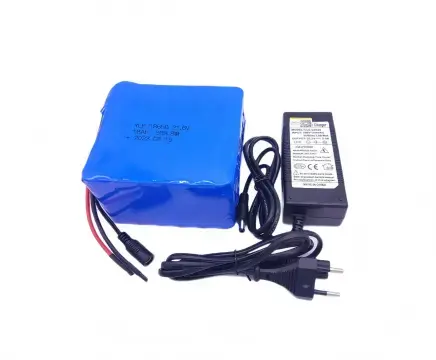
Yilai Technology Practice: Our BMS for multi-cell packs (e.g., 12V 5Ah, 24V 10Ah) enables dynamic cell balancing during charging/discharging, which extends cycle life by over 50% and prevents sudden capacity drops caused by inconsistency.
Custom Battery Engineering
Need a BMS Designed Around Your Battery Pack?
For commercial battery projects, the cell configuration, voltage, capacity, discharge current, communication protocol and protection system should be designed together. Yilai provides integrated battery pack and BMS development based on your device and application requirements.
Custom Lithium Battery Pack ManufacturerLithium batteries with capacity ≥20Ah or power ≥100W (e.g., 10kWh home energy storage batteries, 20V/4Ah power tools, electric vehicle battery packs) must have a BMS.
Core Risks:
• High-capacity batteries have high energy density. Overcharging releases enough energy to trigger thermal runaway (e.g., overcharging a 100Ah Li-ion battery releases energy equivalent to 10% of 1kg TNT).
• Inrush currents during high-power discharge (e.g., >10A when power tools start) can instantly burn cell separators, causing short circuits and fires.
Key BMS Functions:
• Real-time monitoring: High-precision sensors (voltage error ≤±1mV, current error ≤±1%) track operating parameters. The BMS cuts off circuits within 10ms during overcurrent or overheating.
• Dynamic adjustment: Adjusts charge/discharge power based on SOC (State of Charge). For example, use 1C current when SOC <30% (fast charging) and switch to 0.3C when SOC >80% to avoid accelerated aging from high currents.
Scenarios like medical equipment, public transportation, and emergency power supplies require high-reliability BMS, as battery failures could cause personal injury or significant property damage.
Scenario Requirements:
• Medical equipment (e.g., portable ventilators): BMS must achieve SOC error ≤3% to ensure doctors accurately judge runtime. It also needs dual-channel redundant protection to switch to backup power immediately if anomalies occur.
• Public transportation (e.g., electric buses): BMS must meet ISO 26262 functional safety certification and support multi-dimensional fault diagnosis to prevent sudden power loss during operation.
• Emergency power supplies (e.g., base station backup batteries): BMS must operate stably in a wide temperature range (-30℃ to 60℃) to ensure uninterrupted communication in extreme weather.
Compliance Requirements: Standards such as China’s GB/T 31485, North America’s UL2054, and Europe’s IEC62133 explicitly mandate BMS for lithium batteries in these scenarios. Products without BMS are prohibited from entering formal markets.
Products requiring long-term use (≥2 years), such as home energy storage, base station backup batteries, and shared device batteries, rely on BMS to extend life and reduce maintenance costs.
Cost of Omitting BMS:
• Deep discharge 3-5 times can cause permanent capacity loss. Batteries are nearly obsolete after 500 cycles, with replacement costs 3-5 times higher than BMS-equipped alternatives.
• No early warning for aging risks: Sudden battery failure may shut down equipment, causing indirect losses (e.g., regional communication outages from base station power loss).
BMS Value:
• Uses SOH (State of Health) estimation algorithms to monitor battery degradation in real time. Alerts for maintenance when SOH drops below 80%.
• Controls depth of discharge (≥20%), extending LiFePO4 battery cycle life to over 3000 cycles (10+ years) and reducing total lifecycle costs by 40%.
Even in exception scenarios, risks of lithium batteries without BMS do not disappear—they can only be mitigated through strict control. Accidents caused by omitting BMS are common; focus on the following hazards:
Lithium battery chemistry means overcharging, over-discharging, or short circuits can trigger thermal runaway. Even with a basic protection board, critical gaps remain:
• Protection boards lack temperature monitoring. Heat buildup in high-temperature environments (e.g., car interiors in summer) may cause thermal runaway.
• Protection board components age over time, potentially losing overcharge protection. Li-ion batteries face sharply increased fire risk when voltage exceeds 4.2V.
• Case Example: A user built a DIY power bank with 3 Li-ion cells without a BMS. Charger failure caused overcharging, and the batteries swelled and caught fire within 10 minutes, destroying desktop equipment.
Lithium batteries without BMS degrade 3-5 times faster than BMS-equipped ones:
• Multi-cell packs suffer from the "barrel effect," with actual usable capacity potentially dropping to 60% of rated capacity.
• Inability to precisely control charge/discharge currents accelerates electrolyte aging during fast charging. Capacity may drop by 20% after 100 cycles.
A core BMS value is providing SOC (remaining capacity) and SOH (health) data. Without a BMS:
• Capacity is estimated "by experience," risking sudden power loss in critical scenarios (e.g., emergency lights turning off mid-use, router backup batteries failing).
• Internal battery aging goes undetected. Using batteries with SOH <80% increases short-circuit and leakage risks.
For commercial sales or industrial applications, lithium battery packs without BMS cannot pass global safety certifications:
• China’s GB/T 31485 requires lithium battery packs to have quadruple protection (overcharging, over-discharging, overheating, overcurrent)—impossible without a BMS.
• EU CE and North American UL certifications explicitly assess BMS functionality. Products without BMS are banned from formal markets.
Follow this 4-step guide to clarify requirements, avoiding overinvestment while eliminating safety risks:
Decision Step | Core Considerations | Conclusions & Recommendations |
Evaluate Battery Scale | Number of cells, capacity, power | Single cell ≤5Ah: No BMS needed (use dedicated charger); ≥3 cells or capacity ≥20Ah: BMS mandatory |
Assess Application Scenario | Risk level, service life, commercial use | Toys/experiments (≤7 days): No BMS needed; medical/automotive/energy storage: BMS mandatory |
Check Maintenance Capability | Availability of manual monitoring, expertise | Average users: Prioritize BMS-equipped products; professional DIYers: Simplified management for 1-2 LiFePO4 cells (weekly monitoring required) |
Verify Compliance Needs | Certification requirements, market access | Commercial sales: BMS mandatory; personal use: Choose based on risk tolerance |
Returning to the original question—"Do I need a BMS for my lithium battery?"—many engineers and battery users also ask is bms necessary for lithium ion battery applications. The answer depends on battery structure, application environment, safety requirements, and whether the system requires advanced monitoring and protection functions. The answer can be summarized as:
Scenarios Without BMS: Single-cell small batteries, extremely controlled LiFePO4 use, short-term experiments (with basic protection and manual monitoring).
Scenarios Requiring BMS: Multi-cell packs (≥3 cells), high-power/high-capacity devices, safety-critical scenarios, long-term cycling applications (BMS is irreplaceable).
For average users and businesses, BMS is not an "extra cost" but a guaranteed investment in "safe operation, stable performance, and extended battery life." Yilai Technology’s self-developed BMS systems, featuring high-precision monitoring (voltage error ≤±1mV), fast response (risk cutoff ≤10ms), and wide temperature adaptability (-30℃ to 60℃), have served thousands of global lithium battery projects.
To customize a BMS solution or clarify scenario-specific needs, visit Shenzhen Yilai Technology Co., Ltd.’s official website (www.yilaipower.com) for consultation. Our professional team will safeguard your battery’s safety and performance.
Answer: Yes, but only under strict, non-commercial constraints. You can safely operate a lithium battery without a full BMS in low-risk scenarios, such as single-cell devices (≤5Ah, ≤10W) like small flashlights, or temporary laboratory prototypes under 100% continuous manual monitoring. However, even in these exceptions, a basic protection board or dedicated charger is highly recommended to mitigate overcharging risks.
Answer: No, not all lithium batteries feature a full BMS. Many small consumer electronics and low-power toys utilize a simplified, mass-produced "basic protection board" instead of a smart BMS to cut costs and save space. A comprehensive Battery Management System (BMS) with software algorithms is typically reserved for complex multi-cell packs, electric vehicles, and industrial energy storage systems.
Answer: For multi-cell LiFePO4 (Lithium Iron Phosphate) packs used in solar systems, RVs, or backup power, a BMS is absolutely mandatory. Although LiFePO4 chemistry is significantly more stable with a higher thermal runaway threshold (≈210°C) than ternary lithium, it is still highly susceptible to cell inconsistency. Without a BMS to provide active balancing, the "barrel effect" will rapidly degrade your pack's usable capacity and drastically shorten its overall cycle life.
Answer: Yes, a BMS is non-negotiable for all commercial and industrial lithium-ion applications. Global regulatory standards—including China's GB/T 31485, North America's UL2054, and Europe's IEC62133—explicitly mandate a BMS for market access. Any commercial battery pack operating without a BMS cannot pass these rigorous safety certifications and is legally prohibited from entering formal markets.
Answer: Omitting a BMS in multi-cell or high-capacity systems triggers major risks across four core dimensions:
Safety Hazards: Severe threat of unmitigated thermal runaway, battery swelling, and potential fire accidents due to undetected hot spots or charger failures.
Performance Drop: Unavoidable cell imbalance that causes the pack's usable capacity to plummet by 20%-40% within just 50 to 100 cycles.
Zero Visibility: Total lack of SOC (State of Charge) and SOH (State of Health) tracking, leading to unexpected device shutdowns and structural failure.
Answer: A dedicated charger can only replace a BMS in single-cell or extremely simple 1S/2S low-voltage setups where balancing is not a factor. A charger can stop the global charging process when a specific voltage threshold is reached, but it cannot monitor individual cell temperatures, detect internal short circuits, or manage dynamic cell balancing within a multi-cell battery pack.
 en
en
 English
  français
  Deutsch
  Español
  italiano
  português