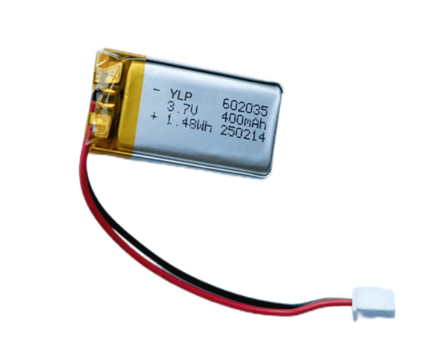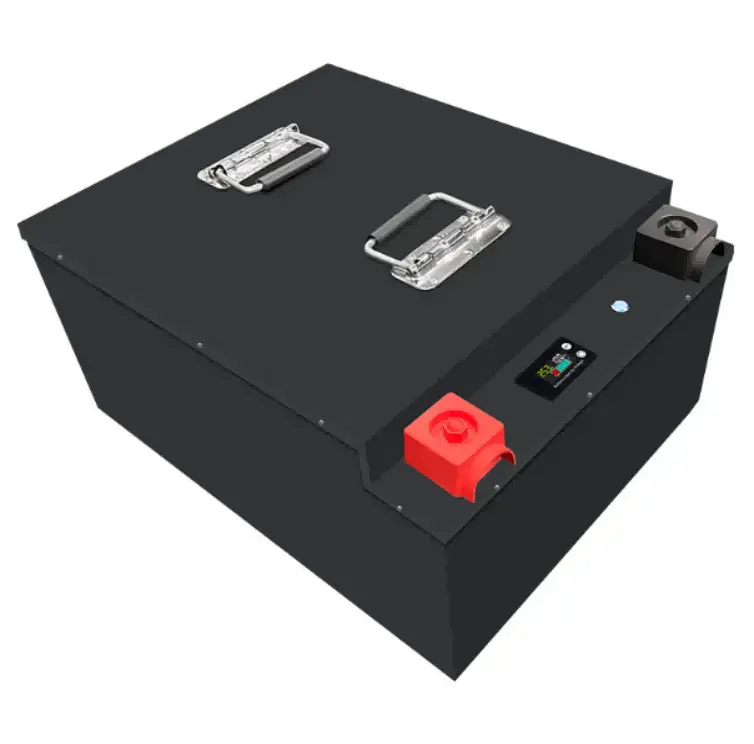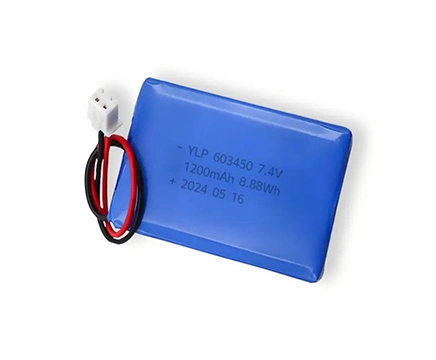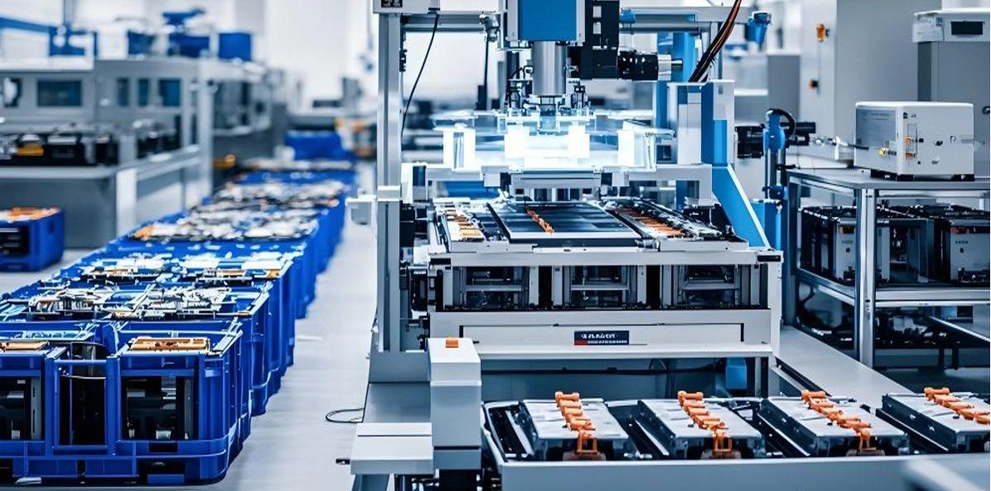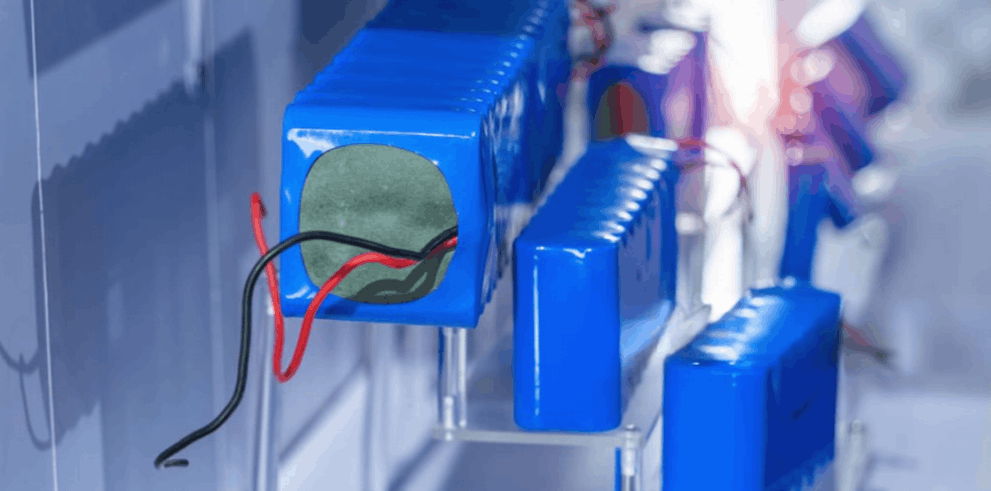


Amid the growing global focus on renewable energy, solar batteries have become a core solution for households and businesses to efficiently harness solar power. Unlike traditional energy storage options, they can capture, store, and release solar energy on demand—ensuring stable power supply even when sunlight is unavailable. This article breaks down the working principles, core components (including Battery Management Systems, BMS), selection criteria, and maintenance tips of solar batteries, while introducing how Yilai Technology supports your solar energy needs.
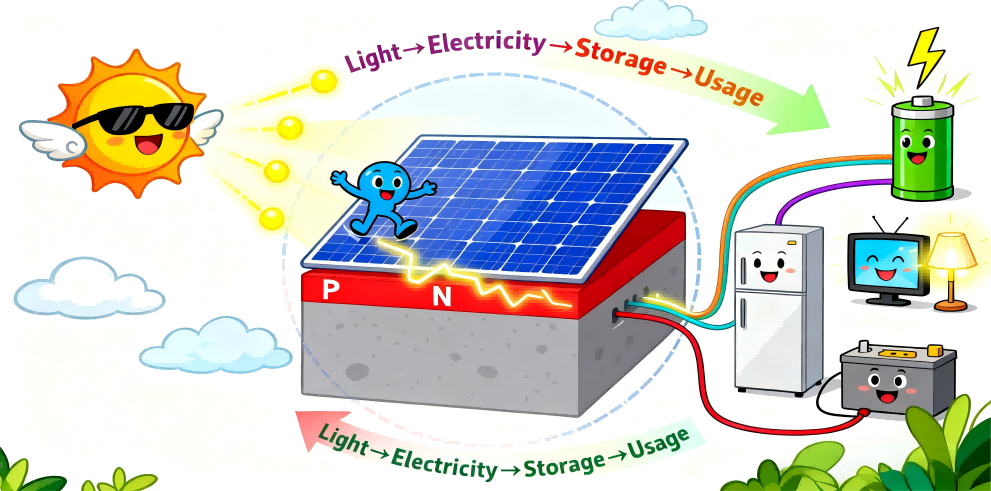
The operation of solar batteries centers on the photovoltaic effect—the physical process of converting light energy into electrical energy. This process can be simplified into 3 key steps, commonly understood as "Capture → Convert → Adapt":
The "energy inlet" of a solar system is the solar photovoltaic panel (referred to as "solar panel"), which contains dozens of tiny photovoltaic (PV) cells. These cells are primarily made of silicon— the same material used in computer chips—boasting excellent semiconductor properties.
When sunlight hits the solar panel, photons (particles of light) act like 'tiny hammers' — a vivid analogy for energy transfer, striking silicon atoms within the PV cells. This impact knocks electrons out of their atomic orbits, creating freely moving "free electrons"—the "raw material" for generating electricity.
Free electrons do not drift randomly. PV cells are designed with dedicated "conductive pathways" that guide electrons to flow in a single direction. Just as water converges into a stream, the directional flow of electrons forms direct current (DC)—the "raw electricity" output by solar panels, identical to the power type from a phone charger.
Most household and commercial appliances (e.g., lights, refrigerators, air conditioners) require alternating current (AC) to operate. Here, the inverter serves as a critical hub:
• DC power generated by solar panels is first sent to the battery storage unit (equipped with a Battery Management System, BMS) for storage;
• When electricity is needed, the inverter converts the DC power from the battery into AC power;
• The converted AC power can be directly used to power appliances.
For grid-tied systems, the inverter prioritizes using solar power directly, with excess power stored in the battery. Surplus electricity can also be fed back to the grid (some regions support "net metering" policies to offset electricity bills). For off-grid systems, the inverter draws power directly from the battery.
Solar panel output is highly affected by sunlight intensity (stronger at noon, weaker in the morning/evening). Direct charging of the battery without regulation can cause damage due to unstable current. The charge controller acts as the system’s "primary safety barrier":
• During intense sunlight, it adjusts charging speed to prevent battery "overcharging" (which can cause swelling or leakage);
• When power consumption is high and battery levels are low, it prevents "deep discharge" (e.g., discharging lithium-ion batteries below 20% or lead-acid batteries below 50%) to slow battery aging.
For medium-to-large solar energy storage systems (especially lithium-ion battery systems), the Battery Management System (BMS) is critical for ensuring safety and efficiency:
• Real-Time Monitoring: Precisely detects battery voltage, current, temperature, and State of Health (SOH) to prevent overcharging, over-discharging, or overheating of individual cells;
• Balancing Protection: Evens out charge differences between multiple cells (e.g., in lithium-ion battery packs) to prevent excessive wear on some cells and extend overall battery life;
• Fault Warning: Automatically cuts off the circuit or issues alerts when risks such as short circuits, leakage, or abnormal temperatures are detected, reducing safety hazards;
• Efficiency Optimization: Intelligently adjusts charging/discharging strategies based on electricity demand and solar power generation to maximize energy utilization (e.g., prioritizing direct solar use and storing surplus power).
Note: Lead-acid battery systems, due to their simple structure, mostly have basic BMS functions; lithium-ion battery systems require full-function BMS to ensure safe operation.
In the solar energy storage sector, lead-acid batteries and lithium-ion batteries are the most technologically mature and widely used types. Their performance, cost, and applicable scenarios vary significantly—selection should align with budget and energy needs. A detailed comparison is provided below:
Battery Type | Applicable Scenarios | Lifespan | Core Advantages | Core Disadvantages |
Lead-Acid Battery | Small off-grid homes, rural cabins, entry-level storage | 3-5 years | Low cost, simple maintenance, easy access to parts, mature technology | Heavy (hard to transport), requires regular water refilling (except maintenance-free models), short lifespan, low energy density |
Lithium-Ion Battery | Most households, businesses, EVs, medium-to-large storage | 10-15 years | Lightweight (wall-mountable), low maintenance, long cycle life, high energy density, BMS-enabled safety | High initial purchase cost, high compatibility requirements for charging equipment |
• Choose Lead-Acid for Limited Budget & Basic Needs: If you live in a small rural home, only need power for lighting and small appliances (e.g., routers, table lamps), or require a short-term transitional storage solution, lead-acid batteries are ideal—they have low initial investment and easily accessible parts.
• Choose Lithium-Ion for Long-Term Use & High Efficiency: For urban/suburban households, businesses, or scenarios requiring power for high-wattage appliances (e.g., refrigerators, air conditioners), lithium-ion batteries are superior. With a lifespan of over 10 years, high conversion efficiency, and intelligent BMS protection, they reduce long-term costs—especially LFP systems, which offer outstanding safety and stability.
A solar battery system is an "integrated system" relying on 4 key components working in synergy. The type of inverter directly affects power supply capability during power outages and requires careful distinction:
• Core Function: Convert sunlight into DC power—the "energy source" of the system;
• Selection Advice: Prioritize monocrystalline silicon solar panels (conversion efficiency: 18%-22%). They generate more power than polycrystalline panels and have a lifespan of 25-30 years, making them a one-time investment for decades of use;
• Installation Notes: In the Northern Hemisphere, install panels facing south, ensuring no obstruction from trees or tall buildings to maximize sunlight absorption. Clean dust from panels regularly (e.g., once a month) to avoid reducing power generation efficiency.
• Core Function: Convert DC power to AC power for daily use. Inverters are categorized into 3 types based on operation mode, with "backup inverters" being critical for households to handle power outages:
Inverter Type | Core Features | Applicable Scenarios | Works During Power Outages? | Switching Time (Off-Grid Mode) |
Grid-Tied Inverter | Only connects to the grid (no energy storage interface); prioritizes solar power for loads, feeds surplus to the grid | Grid-tied households/businesses with no backup power needs | No (disconnects from the grid for maintenance safety) | - |
Off-Grid Inverter | Only connects to battery storage (no grid connection); suitable for off-grid areas | Remote rural areas, off-grid cabins | Yes (relies on battery power) | 10-20ms (standard models), <10ms (high-end models) |
Hybrid (Grid-Tied/Off-Grid) Inverter | Connects to both the grid and battery; supports automatic "grid-tied → off-grid" switching | Households/businesses needing backup power (i.e., "backup inverters") | Yes (automatically switches to off-grid mode to use battery power during outages) | 20-40ms (standard models), <20ms (high-end models) |
• Key Conclusion: The "backup inverter" commonly referred to by users is essentially a hybrid (grid-tied/off-grid) inverter. When the grid is operational, it can feed surplus power to the grid (reducing electricity bills). During grid outages, depending on the model, it automatically disconnects from the grid (to prevent islanding effect) and switches to off-grid mode within 20-40ms (standard models) or <20ms (high-end models). This ensures "near-uninterrupted power" for critical loads (e.g., refrigerators, lights, routers), meeting the power continuity needs of most households and businesses.
• Two Main Types:
◦ PWM Controller: Low-cost (approximately $15-$45), suitable for small systems with low power demands (e.g., powering 1-2 rooms, ≤500W);
◦ MPPT Controller: Boasts conversion efficiency of 97%-99%, adjusts current in real time based on sunlight changes, and captures 10%-20% more energy. Ideal for medium-to-large household or commercial systems (≥1000W), it should to be used with BMS to further optimize efficiency.
• Key Parameters:
◦ Capacity (kWh): Measures energy storage capability. An average household uses approximately 5kWh daily—we recommend a 10kWh battery (stores 2 days of power) to handle outages or consecutive cloudy days. Businesses should calculate based on actual loads (e.g., workshop equipment, office power use), typically requiring capacities above 20kWh;
◦ Installation Type: Wall-mounted (thickness ≤15cm, space-saving for small homes) or floor-standing (high capacity, suitable for villas or businesses, expandable via stacking);
◦ Compatibility: Ensure battery voltage (12V/24V/48V) matches that of solar panels, inverters, and BMS. For example, a 48V inverter requires a 48V battery pack to avoid system failures due to voltage mismatch.
After selecting the right system, scientific use and maintenance can further maximize its value and reduce long-term costs. Below are practical recommendations:
• Lithium-Ion Batteries (with BMS): Recharge when remaining capacity drops to 20%. The BMS will automatically prevent deep discharge to avoid irreversible damage to electrode materials (e.g., lithium plating on graphite anodes);
• Lead-Acid Batteries: Recharge when remaining capacity drops to 50%. Over-discharging causes plate sulfation (permanent capacity loss)—this principle also applies to maintenance-free lead-acid batteries;
• Example: For a 10kWh lithium-ion battery, it is recommended to use a maximum of 8kWh per cycle (80% DoD) and recharge when 2kWh remains. This can extend the cycle life to over 2000 times.
• Optimal Operating Temperature: 20-25℃ (68-77℉). Within this range, battery charging/discharging efficiency is highest, and BMS can monitor conditions more accurately;
• High-Temperature Protection (>40℃/104℉): Install batteries in cool, well-ventilated areas (e.g., garages, equipment rooms) to avoid direct sunlight. For large systems, add cooling fans to prevent electrolyte evaporation in lead-acid batteries and cell degradation in lithium-ion batteries;
• Low-Temperature Protection (<0℃/32℉): In northern winter regions, use insulation sleeves (e.g., rock wool) for batteries. BMS may restrict or pause charging for lithium-ion batteries to prevent lithium plating, allowing only discharge.
• Lead-Acid Batteries: Check electrolyte levels monthly (for non-maintenance-free models) and top up with distilled water if low (never use tap water, as impurities affect performance). Clean terminals quarterly—wipe corrosion with a dry cloth and apply petroleum jelly to prevent oxidation;
• Lithium-Ion Batteries: Check battery State of Health (SOH) via the BMS backend quarterly. Contact the manufacturer for inspection if SOH drops below 80%. Clean ventilation openings of the battery cabinet to ensure proper BMS heat dissipation (avoid BMS malfunctions due to high temperatures);
• General Advice: Avoid long-term battery inactivity. If unused for over 3 months, maintain a charge level of 40%-60% and recharge every 3 months.
For users planning to install a solar battery system, optimize cost input and balance performance with budget through the following methods:
• Clarify Core Needs: Prioritize power supply for critical loads (e.g., refrigerators, lights, medical equipment) to avoid unnecessary costs from blindly pursuing large-capacity batteries;
• Choose Compatible Components: Match inverters and charge controllers to battery type and system power (e.g., PWM controllers for low-power systems, MPPT controllers for medium-to-high-power systems) to avoid "over-specifying" or "under-performance";
• Focus on Long-Term Benefits: Although lithium-ion batteries have higher initial costs, their long lifespan and low maintenance needs result in lower long-term costs. Choose based on intended usage period to avoid prioritizing short-term budget over long-term value.
A1: Lifespan varies by type: 3-5 years for lead-acid batteries, and 10-15 years for lithium-ion batteries. The key factors affecting lifespan are depth of discharge (DoD) and temperature. Avoiding deep discharge and maintaining an ambient temperature of 20-25℃ can significantly extend battery life.
A2: No manual operation is needed. High-quality hybrid inverters feature "millisecond-level automatic switching": During grid outages, standard models switch to off-grid mode within 20-40ms, while high-end models do so in <20ms—ensuring near-uninterrupted power for critical devices like refrigerators and routers. When the grid is restored, the inverter automatically switches back to grid-tied mode, prioritizing direct solar power use (reducing grid reliance).
A3: Choose based on usage needs:
• If your budget is under $750, you only need power for lighting/small appliances, and your intended usage period is less than 5 years, choose lead-acid batteries (e.g., a 12V 100Ah lead-acid battery costs around $120);
• If your budget is $1,500 or more, you need to power refrigerators/air conditioners, and you plan to use the system for 10+ years, opt for lithium-ion batteries (e.g., a 48V 200Ah LFP battery costs about $2,250) for better long-term value.
A4: Watch for these three warning signs:
• Significant Capacity Loss: A 10kWh battery that once powered your home for 2 days now only lasts 1 day, and BMS shows SOH below 70%;
• Abnormal Charging/Discharging Cycles: The battery now needs recharging twice as often as before, and charging time is more than double that of a new battery;
• Physical Damage: Battery case swelling or leakage (electrolyte leakage in lead-acid batteries, case deformation in lithium-ion batteries), or frequent overheating/short-circuit alerts from BMS.
• Prioritize Systems with BMS: Lithium-ion energy storage systems must be equipped with full-function BMS (supporting voltage balancing and temperature protection). Lead-acid battery systems should have at least basic overcharge/over-discharge protection to avoid safety risks;
• Confirm Inverter Type & Parameters: For households needing backup power, choose a "hybrid (grid-tied/off-grid) inverter" and check its switching time (prioritize models with <40ms) and maximum load capacity (e.g., a 3kW inverter can power 2 air conditioners);
• Choose Brands with Warranties: Select lithium-ion batteries with approximately 10 years of warranty and lead-acid batteries with over 3 years of warranty. Avoid "no-brand, no-warranty" products;
• Value Installation & After-Sales Service: Solar system installation involves professional tasks like wiring and BMS debugging—choose teams with professional qualifications. Have the manufacturer inspect the battery and BMS every 2 years to ensure long-term stable operation.
With over a decade of experience in custom lithium-ion batteries, Yilai Technology offers comprehensive solutions tailored to the core needs of solar systems: "high stability, long lifespan, and intelligent control":
• High-Efficiency Lithium-Ion Energy Storage Batteries + Full-Function BMS: Focusing on lithium iron phosphate (LFP) technology, our batteries achieve 90%-95% conversion efficiency and a 10-15 year lifespan. Our self-developed BMS supports precise monitoring of voltage/current/temperature, cell balancing protection, and fault warnings—suitable for both household and commercial scenarios. With a wide temperature range (-20℃ to 60℃), they adapt to extreme climates across northern and southern regions, maintaining ≥85% capacity retention in low temperatures;
• Compatible Hybrid Inverters: We provide 3kW-10kW hybrid (grid-tied/off-grid) inverters compatible with battery systems. High-end models feature switching times <20ms, ensuring near-uninterrupted power for high-wattage devices like refrigerators and air conditioners;
• Customized Designs: We offer wall-mounted (minimum thickness 5cm), floor-standing (maximum capacity 100kWh), and compact models. Battery size and BMS parameters can be adjusted based on installation space (e.g., small apartment balconies, commercial rooftops) to solve "space constraints";
• Global Compliance & Service: All products meet international certifications including UN38.3, IEC62133, CE, and RoHS. Our 24/7 technical support team provides installation guidance, BMS debugging, and after-sales support, with responses to fault troubleshooting within 24 hours.
Whether you aim for energy independence, reduced electricity bills, or support for "dual carbon" goals, Yilai Technology’s solar energy storage systems (including batteries, BMS, and inverters) deliver reliable, intelligent power solutions. Contact us today for a customized solar storage solution tailored to your needs.
 en
en
 English
  français
  Deutsch
  Español
  italiano
  português