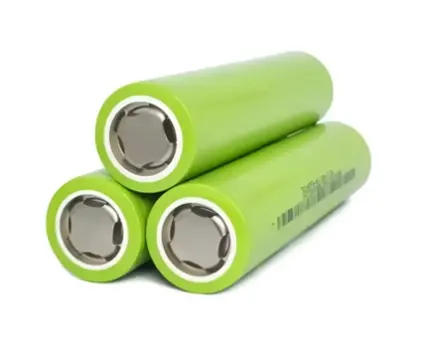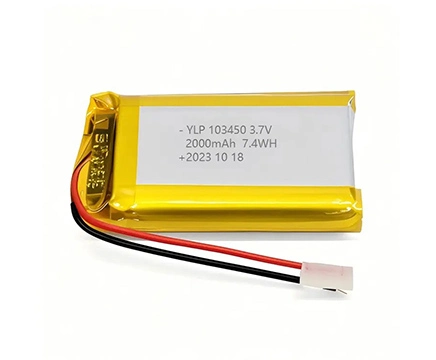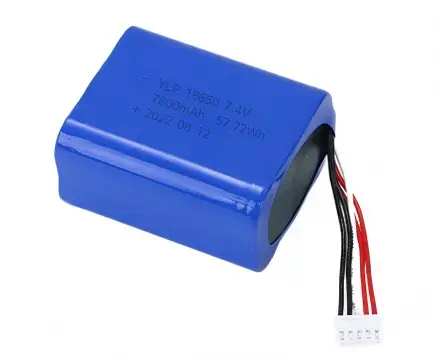


When selecting a core power source for equipment or energy systems, comparing sodium-ion and lithium-ion batteries is an indispensable step. Sodium-ion batteries are defined by "abundant resources, controllable costs, and strong safety adaptability," while lithium-ion batteries dominate the mainstream market with "high energy density, mature technology, and high-performance output." The two are not substitutes but complementary energy solutions.
.png "钠电和锂电(1).png")
• Choose sodium-ion batteries for large-scale energy storage, low-temperature environments, or cost-sensitive scenarios. They deliver stable performance under extreme conditions and reduce reliance on scarce resources like lithium and cobalt.
• Opt for lithium-ion batteries for high-power portable devices, high-performance electric vehicles (EVs), and compact electronics. They offer higher energy density and longer cycle life to meet high-load usage demands.
• Long-term cost considerations: Sodium-ion batteries have lower upfront investment and material costs; lithium-ion batteries may offer better lifecycle cost-effectiveness in high energy density demand scenarios.
• Environmental protection and recycling: Both battery types require professional disposal. Sodium-ion batteries feature simpler and lower-cost recycling processes as they contain no rare metals.
• Compatibility first: Always refer to equipment/system specifications to ensure matching voltage, power, and size, maximizing efficiency and safety.
.jpg "钠电和锂电(2).jpg")
Feature | Sodium-Ion Batteries | Lithium-Ion Batteries |
Operating Voltage | Medium (typical range: 2.8-3.6V), stable output, suitable for low-to-medium power needs | Higher (typical range: 3.0-4.2V), excellent for high-power output scenarios |
Cycle Life | 3,000 - 10,000 cycles (over 10,000 cycles for energy storage-grade models) | 5,000 - 15,000 cycles (higher for high-end power battery models) |
Second-Life Use | Favorable for second-life repurposing (e.g., from EVs to stationary storage) due to robust cycle stability and safety. | Established second-life market, especially for retired EV batteries, though repurposing requires rigorous screening and testing. |
Energy Density | 120 - 200 Wh/kg (rapid technological advancement; current advanced mass-production level: ~160-175Wh/kg) | 150 - 300 Wh/kg (over 250Wh/kg for high-end ternary lithium batteries) |
Cost | Lower upfront cost (20%-40% cheaper than comparable lithium-ion batteries) with significant cost reduction potential through economies of scale | Higher initial cost, highly susceptible to material price fluctuations |
Low-Temperature Performance | Excellent (≥90% capacity retention at -30℃, normal startup at -40℃) | Moderate (capacity may drop to 50%-70% at -20℃, usually requiring thermal management system support) |
Safety | High intrinsic safety, extremely low thermal runaway risk, thermal stability temperature ≥200℃, commonly using non-flammable electrolytes | Potential thermal runaway hazard, thermal stability temperature: ~150-200℃, requiring multiple physical and electronic safety protections |
Sodium-ion batteries are ideal when cost, safety, environmental adaptability, and rate capability take priority over extreme energy density, especially for:
• Large-scale energy storage (grid-side, industrial/commercial, residential): Leveraging low cost and long cycle life to reduce Levelized Cost of Storage (LCOS), suitable for long-duration energy storage (≥4 hours);
• Low-temperature equipment and systems (high-latitude regions, cold chain logistics): Normal operation at -40℃ without heating, saving thermal management costs and energy consumption;
• Low-to-medium power transportation (micro EVs, two-wheelers, electric ships): Meeting daily commuting and short-distance transportation needs with significant cost advantages;
• High-power demand scenarios (diesel generator starting power supplies, industrial power tools): Sodium-ion batteries typically offer superior rate capability (charging/discharging speed);
• Industrial and special environments (forklifts, mining machinery, backup power supplies): Resistant to vibration, temperature extremes, and dust, with outstanding safety;
• Remote areas and off-grid power supply (communication base stations, rural PV energy storage): Low maintenance requirements and easy resource accessibility.
Lithium-ion batteries remain the preferred choice for applications requiring high energy density, compact size, and long cycle life, especially for:
• Consumer electronics and portable devices (smartphones, laptops, drones): Extremely sensitive to volume and weight, demanding high energy density;
• High-performance electric vehicles (passenger cars, long-haul trucks): High energy density supports long driving range, with mature fast-charging technology;
• Fields with strict volume/weight constraints (aerospace, special equipment);
• Long-life energy storage applications: In certain customer-side energy storage scenarios requiring more than one charge-discharge cycle per day (high cycle frequency), lithium-ion batteries with long cycle life may offer better lifecycle cost-effectiveness.
Battery Type | Initial Investment Cost (USD/Wh) | Estimated Investment for 100MWh Energy Storage Project | Key Operation & Maintenance (O&M) Considerations |
Sodium-Ion | 0.10 - 0.20 (significant cost reduction potential with future economies of scale) | Approximately 10 - 20 million USD (varies by project scale and configuration) | Low O&M costs: High intrinsic safety, simple thermal management requirements; High recycling residual value: Simple processes, ~40% material residual value rate |
Lithium-Ion | 0.15 - 0.30 (mainstream range for lithium iron phosphate) | Approximately 15 - 30 million USD (varies by project scale and configuration) | Higher O&M costs: Regular inspection of BMS and thermal management systems required; Fluctuating recycling economics: Highly affected by prices of lithium, cobalt, and other metals |
• Sodium-ion batteries: Energy density of 120-200 Wh/kg, meeting medium-power needs. For example, sodium-ion two-wheelers achieve 100-150km per charge, and industrial/commercial energy storage systems can stably output power for 8-10 hours;
• Lithium-ion batteries: Energy density of 150-300 Wh/kg, suitable for high-power scenarios. For example, smartphones support all-day heavy use, high-performance EVs achieve 400-600km per charge, and drones offer 30-60 minutes of flight time.
• Sodium-ion batteries: 5-8 years lifespan, 2%-3% monthly self-discharge rate, retaining over 80% capacity after 5 years of storage—ideal for seasonal backup power and long-term inventory scenarios;
• Lithium-ion batteries: 8-10 years lifespan, 1%-2% monthly self-discharge rate, retaining over 85% capacity after 8 years of storage—suitable for long-term backup needs of high-value equipment (e.g., medical devices, emergency communication equipment).
• Temperature adaptability: Sodium-ion batteries maintain stable performance between -40℃ and 50℃ without additional temperature control equipment; lithium-ion batteries tend to degrade above 45℃ and experience sharp performance drops below -20℃, requiring heating or cooling systems which increase equipment complexity and cost;
• Operating condition adaptability: Sodium-ion batteries withstand harsh conditions such as vibration, impact, and dust, suitable for industrial and outdoor scenarios; lithium-ion batteries have higher environmental requirements, requiring protection against severe collisions, humidity, and excessive dust.
• 200MWh Sodium-Ion Energy Storage Power Station, Jiangsu, China: The world's first large-scale sodium-ion grid energy storage project with highly competitive Levelized Cost of Storage (LCOS) and a 4-year payback period. It meets the daily electricity demand of 200,000 households and adopts lithium-sodium synergy technology to balance long-duration storage and peak load;
• 3MWh Sodium-Ion Energy Storage Project, Colorado, USA: Utilizes passive cooling technology to reduce auxiliary energy consumption by 90%, with a lifecycle cost 20% lower than lithium-ion systems. It is compatible with wind and solar supporting energy storage to address new energy intermittency;
• 100MWh Industrial/Commercial Energy Storage Project, Germany, Europe: Provides peak-valley electricity arbitrage and emergency backup power services for automobile factories, reducing annual energy costs by 30%. It features a modular design of sodium-ion batteries for flexible capacity expansion.
• Chery iCAR 03 Sodium-Lithium Hybrid EV, China: Equipped with a hybrid system of 175Wh/kg sodium-ion batteries and lithium iron phosphate batteries, offering a pure electric range of 500km and over 90% low-temperature range retention rate. Mass-produced and exported to Southeast Asia and South America;
• Northern European Electric Snowmobile Project: Adopts sodium-ion batteries from Chaowei Group, achieving 120km range at -40℃ without heating devices. It replaces traditional fuel snowmobiles to reduce carbon emissions;
• Indonesian Sodium-Ion Two-Wheeler Project: Chaowei Group collaborates with local automakers to launch sodium-ion battery two-wheelers with 100km range per charge. 40% cheaper than lithium-ion two-wheelers, they are adapted to Southeast Asia's tropical climate with outstanding high-temperature resistance.
• Power Supply for Communication Base Stations in the Norwegian Arctic Circle: Adopts sodium-ion battery energy storage systems, operating stably for 5 years without failures at -35℃ with maintenance costs only 1/5 of lithium-ion systems;
• CSSC International Electric Ship, China: Integrates sodium-ion battery packs with IP68 waterproof rating and seawater corrosion resistance, achieving 200km range per charge—suitable for inland river and offshore short-distance transportation;
• Off-Grid Household Energy Storage in Rwanda, Africa: Funded by the UK Faraday Institution, it combines sodium-ion batteries with solar panels to provide stable power for off-grid households. Each system costs only 800 USD and has covered over 1,000 households.
• Simple composition: No rare metals such as cobalt, nickel, or lithium; main components include aluminum, copper, and sodium-based materials, eliminating the need for complex extraction processes in recycling;
• Lower cost and energy consumption: Recycling energy consumption and costs are 30%-50% lower than lithium-ion batteries, enabling economic recycling;
• Environmental safety: No toxic or harmful substances are generated during recycling, preventing soil and water pollution with high secondary utilization value.
• Complex processes: Requires hydrometallurgy, pyrometallurgy, and other technologies to extract rare metals such as lithium, cobalt, and nickel, resulting in high energy consumption and pollution risks;
• Higher costs: Recycling costs are approximately twice that of sodium-ion batteries, with unstable recycling economics affected by rare metal price fluctuations;
• Policy dependence: Relies on government subsidies for industrial development, with some recycling enterprises struggling to profit without subsidies.
Battery Type | Carbon Footprint (kg CO₂/Wh) | Resource Availability / Supply Risk | Environmental Impact of Mining | Waste Pollution Risk | Sustainability Rating |
Sodium-Ion | 0.2-0.3 | Low (seawater and salt mines are widely distributed) | Low (minimal ecological damage from sodium mining) | Low (no rare metal pollution) | High |
Lithium-Ion | 0.4-0.6 | High (lithium mines are concentrated and geopolitically sensitive) | High (lithium mining causes water depletion and soil erosion) | Medium (potential heavy metal pollution from cobalt and nickel leakage) | Medium |
• Sodium-ion batteries: Cathode material systems (layered oxides, polyanions, Prussian blue/white) are advancing rapidly. It is expected that mass-produced energy density will exceed 200Wh/kg by 2027, forming a stronger complement to lithium-ion batteries. With technological maturity and capacity expansion, the recycling system will be further improved, with closed-loop recycling rates expected to increase significantly, making them a green energy carrier with a "resource-production-recycling" cycle;
• Lithium-ion batteries: Continues to develop towards low-resource-dependence technologies such as cobalt-free and lithium-rich manganese-based materials. Meanwhile, recycling processes are being optimized to reduce costs, forming a complementary pattern with sodium-ion batteries for "high-energy demand + low-cost demand" scenarios.
○ You need large-scale energy storage, operation in extreme low-temperature environments, or have budget constraints;
○ The equipment has low energy density requirements (≤200Wh/kg) but high sensitivity to safety and cost;
○ The application scenario is outdoor, industrial, or off-grid with limited maintenance conditions;
○ High-power charging/discharging is required (e.g., starting power supplies, industrial tools).
○ You need to power portable devices or high-performance EVs, pursuing long range and small size;
○ The equipment has high energy density requirements (≥200Wh/kg) and needs continuous high-power output;
○ The application scenario is indoor, normal temperature environment with a sound maintenance system;
○ Long-life energy storage with high-frequency charging/discharging is required (e.g., customer-side energy storage with more than one cycle per day).
○ Sodium-ion batteries for base load storage, low-temperature operation, and peak power output; lithium-ion batteries for high-energy demand scenarios;
○ Suitable for complex scenarios such as data centers, microgrids, and new energy power stations, balancing cost, performance, and safety.
A1: No. The two are complementary: sodium-ion batteries excel in low-cost, low-temperature, large-scale energy storage, and high-power scenarios, while lithium-ion batteries remain irreplaceable in high-energy density, portable, and high-performance applications. A "sodium-lithium coexistence" energy pattern will form in the future.
A2: This is not a simple "shortcoming to be fixed" but a technological route differentiation. Sodium-ion battery energy density is improving rapidly, with expectations to exceed 200Wh/kg by 2027, covering most energy storage and light transportation scenarios. Meanwhile, ultra-high-performance fields requiring over 300Wh/kg will remain the domain of lithium-ion batteries.
A3: Currently, mainstream sodium-ion batteries support 1C-2C charging, reaching 80% capacity in 30 minutes; some fast-charging models support 3C-5C charging, reaching 80% capacity in 15-20 minutes. They offer excellent rate capability, meeting fast-charging needs in high-power scenarios.
A4: Both should be stored in a cool, dry environment (15-25℃) with 30%-50% charge, avoiding long-term storage at full charge or empty charge; sodium-ion batteries can be stored for up to 5 years without significant capacity loss, while lithium-ion batteries are recommended to be recharged every 6 months to prevent capacity degradation.
A5: Four major industrial clusters have formed globally: China, the United States, Europe, and Southeast Asia. China dominates in cathode materials, cell manufacturing, and application implementation, with enterprises such as CATL, Zhongke Haina, and Chaowei Group leading technological iteration; Europe and the United States focus on high-end material R&D and standard-setting; emerging markets such as Southeast Asia and Africa are accelerating application deployment, with continuous deepening of the global industrial chain layout.
Sodium-ion and lithium-ion batteries are not substitutes but precise matches based on scenario requirements. With their low cost, high safety, low-temperature resistance, and fast charging/discharging capabilities, sodium-ion batteries are opening up new tracks in large-scale energy storage, light transportation, and backup power supply; meanwhile, lithium-ion batteries continue to deepen their presence in high-energy density demand markets.
Contact our technical experts for a customized "sodium-lithium" hybrid system design, optimized through Lifecycle Cost Analysis (LCCA), to find your perfect balance.
 en
en
 English
  français
  Deutsch
  Español
  italiano
  português