

 en
en
 English
  français
  Deutsch
  Español
  italiano
  português
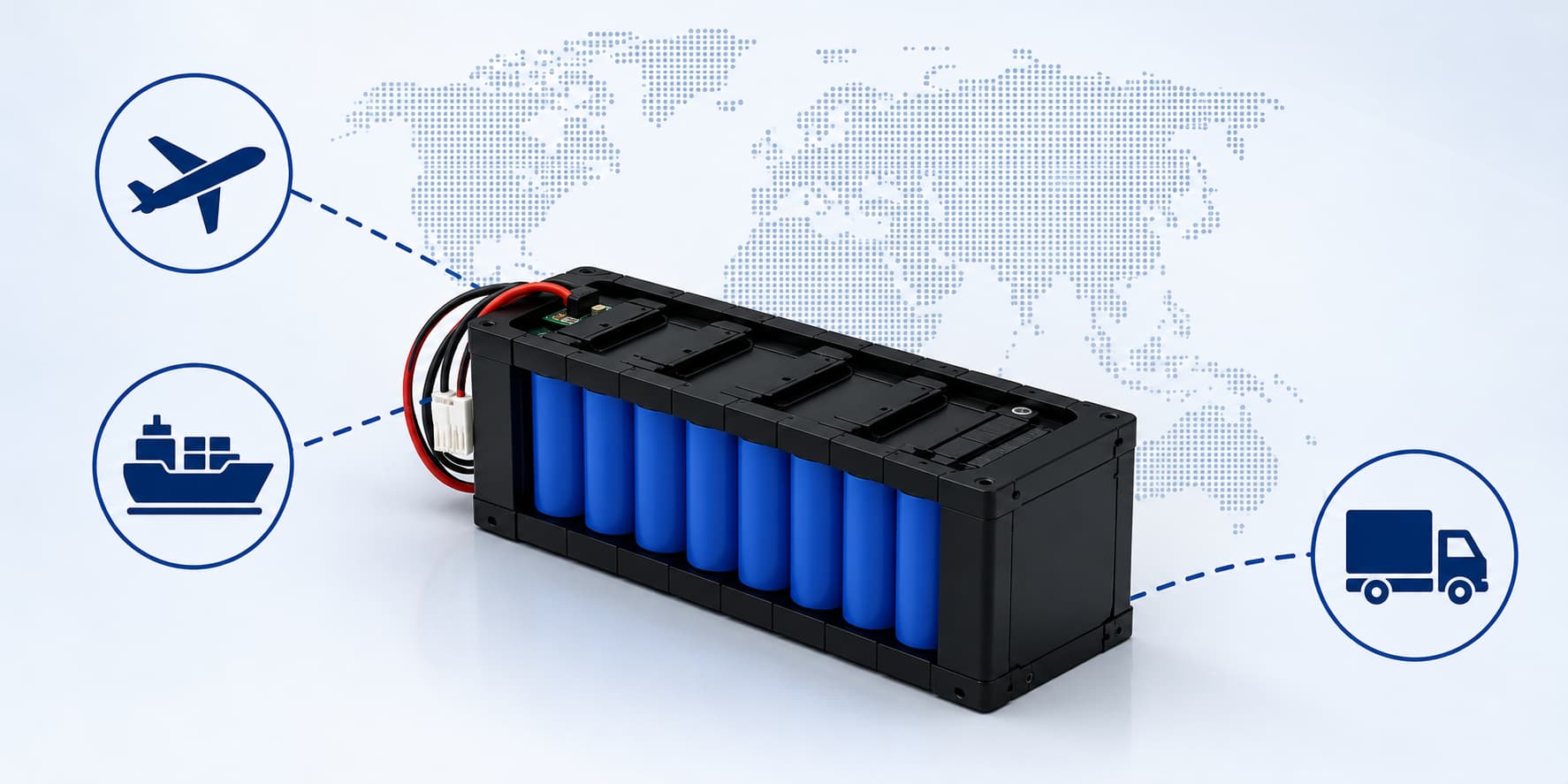
 UN38.3, IEC 62133 and UL 2054 address different parts of lithium battery compliance. UN38.3 focuses on whether a lithium cell or battery type has passed the transport-related tests required before normal commercial shipment. IEC 62133-2 evaluates the safety of portable sealed secondary lithium cells and batteries under intended use and reasonably foreseeable misuse. UL 2054 is a North American safety standard for household and commercial batteries used as power sources in products. A custom lithium battery pack may need one, two or all three, depending on its application, target market, shipping method and end-product requirements.
Key Takeaways
UN38.3 is primarily related to lithium battery transportation.
IEC 62133-2 is primarily a product-safety standard for portable rechargeable lithium cells and batteries.
UL 2054 is primarily used for household and commercial batteries in North American product-safety evaluations.
Passing UN38.3 does not mean a battery pack is IEC 62133-2 or UL 2054 certified.
Using a certified cell does not automatically certify the completed custom battery pack.
The applicable standard should be confirmed before cell selection, BMS design, enclosure development and prototype testing.
UN38.3 vs IEC 62133 vs UL 2054: Quick Comparison
| Standard | Primary Purpose | Typical Scope | Commonly Relevant To | Does It Replace the Other Standards? |
|---|---|---|---|---|
| UN38.3 | Transport testing | Lithium cells and battery types offered for transport | Air, sea, road and rail shipment of lithium batteries | No |
| IEC 62133-2 | Portable rechargeable lithium battery safety | Portable sealed secondary lithium cells and batteries | Portable electronics, instruments and battery-powered devices | No |
| UL 2054 | Household and commercial battery safety | Portable primary and secondary batteries used as product power sources | Products intended for the United States or other markets accepting UL evaluation | No |
The three requirements are not interchangeable. They may overlap in areas such as electrical abuse, mechanical stress and thermal risk, but their purposes, test programs and compliance pathways are different.

What Is UN38.3?
UN38.3 refers to subsection 38.3 of Part III of the United Nations Manual of Tests and Criteria. It establishes a series of tests used to determine whether lithium cells and batteries are suitable to be offered for transport under normal regulatory conditions.
The official text and current amendments are published by the United Nations Economic Commission for Europe.
UN38.3 applies to both:
Rechargeable lithium-ion cells and batteries
Non-rechargeable lithium-metal cells and batteries
For custom rechargeable battery projects, the requirement normally concerns the specific lithium-ion or LiFePO4 cell or battery-pack type that will be shipped.
What Does UN38.3 Evaluate?
The UN38.3 test sequence evaluates whether the cell or battery can withstand transport-related environmental and mechanical conditions. The test program includes:
T1: Altitude simulation
T2: Thermal test
T3: Vibration
T4: Shock
T5: External short circuit
T6: Impact or crush
T7: Overcharge
T8: Forced discharge
Not every test applies in the same way to every cell and battery configuration. The applicable sequence depends on whether the test article is a cell or battery and whether it is rechargeable or non-rechargeable.
Is UN38.3 a Product Safety Certification?
No. UN38.3 should not be presented as a complete product-safety certification. It addresses transport qualification for a lithium cell or battery type. It does not replace standards that evaluate the battery during normal use inside an electronic, medical, industrial or commercial product.
A battery that has passed UN38.3 may still require IEC, UL, national or end-product safety evaluation before the finished product can be sold in a particular market.
Does Passing UN38.3 Automatically Allow Any Shipment?
No. Passing the tests is only one part of lithium battery transport compliance. The shipper must also determine the correct shipping classification, packaging instruction, marking, labeling, documentation and state-of-charge requirements.
Transport requirements may vary according to whether batteries are:
Shipped separately
Packed with equipment
Installed in equipment
Shipped by passenger aircraft, cargo aircraft, sea, road or rail
Above or below specified watt-hour thresholds
The IATA lithium battery guidance provides additional information for air shipment. Buyers and shippers should always check the current applicable dangerous-goods regulations and carrier requirements before shipping.
What Documents Should a Buyer Request?
Depending on the project and shipment, a buyer may request:
UN38.3 test report
UN38.3 test summary
Battery specification
SDS or MSDS
Transport classification information
Cell and battery model identification
Manufacturer and test-laboratory information
The model number, electrical configuration and manufacturer shown in the documents should match the battery type being purchased and shipped.
What Is IEC 62133-2?
IEC 62133-2 is an international safety standard for portable sealed secondary lithium cells and batteries containing non-acid electrolyte. It addresses safe operation under intended use and reasonably foreseeable misuse.
The current consolidated publication listed by the International Electrotechnical Commission is IEC 62133-2:2017+A1:2021.
The standard is commonly considered for rechargeable lithium batteries used in portable applications such as:
Portable medical or diagnostic equipment
Handheld industrial instruments
Consumer electronics
Monitoring and communication devices
Wearable products
Portable testing equipment
Small battery-powered appliances
What Does IEC 62133-2 Evaluate?
IEC 62133-2 includes requirements related to cell and battery design, manufacturing controls, markings, instructions and safety testing.
Depending on whether the test article is a cell or battery, the evaluation may address areas such as:
Continuous charging at constant voltage
External short circuit
Free fall
Thermal abuse
Crush
Overcharging
Forced discharge
Mechanical testing
Battery protection functions
Cell design and assembly controls
The exact test plan should be defined by the accredited laboratory according to the product configuration and applicable edition of the standard.
Is IEC 62133-2 Required for Every Custom Battery Pack?
No. IEC 62133-2 is primarily intended for portable sealed rechargeable lithium cells and batteries. A large industrial battery, stationary storage battery, vehicle battery or battery used in another specialized application may fall under a different standard.
For example:
Industrial lithium batteries may require evaluation against IEC 62619.
Road-vehicle batteries may fall under vehicle-specific requirements.
Light electric vehicle batteries may require UL 2271 or another market-specific standard.
The complete electronic product may need an end-product safety standard in addition to battery testing.
The applicable standard depends on the finished product, battery configuration, operating environment and target market—not simply on the fact that the battery uses lithium-ion cells.
Does an IEC 62133-2 Certified Cell Make the Battery Pack Certified?
No. A certified cell can simplify cell selection and may support the battery-pack evaluation, but the final battery assembly introduces additional components and risks.
The completed pack may include:
Multiple cells connected in series or parallel
A PCM or BMS
Wiring and connectors
Temperature sensors
Fuses
Insulation materials
A plastic or metal enclosure
A charging interface
These components and their integration may need to be evaluated as part of the final battery configuration.
What Is UL 2054?
UL 2054 is the Standard for Household and Commercial Batteries. Its scope includes portable primary and secondary batteries used as power sources in products.
The official UL 2054 standards page describes batteries consisting of a single electrochemical cell or multiple cells connected in series, parallel or both.
UL Solutions also identifies UL 2054 among the standards used in its battery safety testing and certification services.
What Is the Main Purpose of UL 2054?
UL 2054 is intended to reduce risks associated with batteries used as power sources in household and commercial products, particularly risks related to fire and explosion.
The evaluation may include requirements relating to:
Electrical tests
Mechanical tests
Abnormal charging
Short-circuit conditions
Overcurrent conditions
Temperature exposure
Enclosure and component construction
Markings and instructions
The exact test and construction requirements should be confirmed with the certification body for the specific battery design.
Is UL 2054 the Same as UL 1642?
No. UL 1642 and UL 2054 are related but are not the same standard.
| Standard | Typical Focus |
|---|---|
| UL 1642 | Lithium cells |
| UL 2054 | Household and commercial battery assemblies used as product power sources |
Using UL 1642 recognized cells can support a battery-pack project, but the completed battery assembly may still require its own evaluation.
Is UL 2054 Appropriate for Every US Battery Product?
No. Product-specific standards may apply instead of, or in addition to, UL 2054.
Examples include:
UL 2271 for batteries used in light electric vehicle applications
UL 2056 for power banks
UL 1973 for stationary and motive auxiliary power batteries
End-product standards for medical, information-technology, household or industrial equipment
A certification laboratory or the authority responsible for the target market should confirm which standard applies to the final product.
Detailed Comparison for Custom Battery Pack Buyers
| Comparison Point | UN38.3 | IEC 62133-2 | UL 2054 |
|---|---|---|---|
| Primary objective | Transport qualification | Portable rechargeable lithium battery safety | Household and commercial battery safety |
| Main issuing organization | United Nations | International Electrotechnical Commission | UL Standards & Engagement |
| Typical market relevance | International transport | International portable-product markets | United States and markets accepting UL evaluation |
| Applies to cells | Yes | Yes | Cell requirements may be considered; UL 1642 is commonly associated with lithium cells |
| Applies to battery packs | Yes | Yes, within scope | Yes, within scope |
| Focuses on shipment | Yes | No | No |
| Focuses on normal product use | Not as a complete product-safety standard | Yes | Yes |
| Automatically covers the end product | No | No | No |
| Should be considered before prototype design | Yes | Yes | Yes |
Which Standard Does Your Custom Battery Pack Need?
The required compliance path depends on four main questions.
1. Will the Lithium Battery Be Shipped?
If a lithium cell or battery type will be offered for normal commercial transport, UN38.3 is usually one of the first requirements to evaluate.
The shipping method and battery configuration must also be reviewed to determine applicable packaging, labeling and documentation rules.
2. Is the Battery Used in a Portable Product?
If the battery is a sealed rechargeable lithium battery used in portable equipment, IEC 62133-2 may be relevant.
However, the equipment category and national market requirements must still be confirmed.
3. Is the Product Intended for the US Market?
For a household or commercial product intended for the United States, UL 2054 or another UL battery standard may be requested by the customer, retailer, certification body or end-product standard.
Do not select UL 2054 solely because the product contains a lithium battery. First determine whether a more specific standard applies.
4. Does the Finished Equipment Have Its Own Safety Standard?
Battery compliance does not normally replace end-product compliance. A medical device, industrial machine, power tool, household appliance or information-technology product may need its own complete safety evaluation.
The battery requirements may be included within, referenced by or evaluated alongside the end-product standard.
Example Compliance Scenarios
Portable Medical Monitoring Device
A portable medical monitor using a custom rechargeable lithium battery may require:
UN38.3 for battery transportation
IEC 62133-2 or UL 2054, depending on the target market and certification pathway
Medical-device end-product safety evaluation
Applicable electromagnetic compatibility and market documentation
Industrial Robot Battery Pack
A rechargeable battery pack for a mobile robot may require:
UN38.3 for transportation
IEC 62619 or another industrial battery standard
Robot or machinery safety evaluation
Additional vibration, communication and environmental validation
Consumer Handheld Device
A custom lithium polymer battery for a handheld consumer device may require:
UN38.3 for shipping
IEC 62133-2 for portable battery safety
UL evaluation when targeting the United States
End-product safety and regulatory compliance
Light Electric Vehicle Battery
A light electric vehicle battery is unlikely to rely on UL 2054 alone. UL 2271 or other vehicle-specific requirements may be more appropriate, together with transport and end-product standards.
Why Compliance Must Be Planned Before Battery Design
Certification should not be treated as a final administrative step after the battery has already been designed.
The selected compliance path can affect:
Cell model and cell supplier
Series-parallel configuration
BMS architecture
Protection thresholds
Fuse and protective-component selection
Wire, connector and busbar ratings
Insulation materials
Enclosure construction
Charging system
Labels and user instructions
Number of test samples
Development cost and lead time
Late changes to the required standard can lead to component replacement, enclosure redesign, new prototypes and repeated testing.
Can an Existing Certified Battery Be Modified?
Changes to a certified battery may affect the validity or scope of its existing test report or certification.
Potentially significant changes include:
Changing the cell model
Changing the cell manufacturer
Increasing the series or parallel cell count
Changing the BMS
Changing protection thresholds
Changing the enclosure
Changing insulation materials
Changing connectors or wiring
Increasing charging or discharge current
The test laboratory or certification body should review proposed changes and determine whether document updates, additional testing or full retesting are required.
What Compliance Information Should Be Included in a Battery RFQ?
When requesting a custom battery pack quotation, include the following:
Target countries and regions
Equipment category and intended use
Whether the product is portable, stationary or vehicle-mounted
Whether the battery will be shipped separately, with equipment or inside equipment
Required standards specified by the customer or certification body
Existing cell certificates or preferred cell models
End-product certification plan
Required test reports and compliance documents
Prototype and certification sample quantities
Target certification and production dates
Certification requirements should be submitted together with voltage, capacity, current, dimensions, temperature and BMS requirements. For a complete checklist, review how to prepare a custom lithium battery pack RFQ.
How Yilai Supports Custom Battery Compliance Projects
Yilai can review battery requirements and provide project-based support from initial cell selection through prototype development and production preparation.
Support may include:
Reviewing target-market and application requirements
Selecting cells with suitable existing documentation
Evaluating battery configuration and BMS design
Preparing battery specifications and drawings
Producing certification test samples
Coordinating project-specific testing with laboratories
Preparing available technical and transport documentation
Implementing approved materials and designs in production
Maintaining batch and production traceability records
The availability of a certificate or test report must be confirmed for the exact battery model. Certification support should not be interpreted as meaning that every customized battery configuration is already certified.
Common Compliance Mistakes
Assuming UN38.3 Covers Product Safety
UN38.3 addresses transport testing. It does not replace IEC, UL or end-product safety evaluation.
Using a Cell Certificate for a Different Battery Pack
A cell certificate cannot automatically be used as proof that a multi-cell battery pack is certified.
Selecting the Standard After Prototype Approval
The standard may affect cells, BMS, enclosure, components and sample quantities. It should be discussed before the design is finalized.
Using UL 2054 for Every US Battery Project
Some applications have more specific UL or end-product standards. The correct scope must be confirmed first.
Ignoring Configuration Changes
Changing cells, BMS, wiring or enclosure after testing may require a technical review and additional evaluation.
Confusing a Test Report with a Certification Mark
A laboratory test report, CB report, certificate and authorization to use a certification mark are different documents. Buyers should confirm exactly what was issued and what model it covers.
UN38.3 vs IEC 62133 vs UL 2054 FAQ
Does a custom lithium battery pack always need UN38.3?
A lithium battery type offered for normal commercial transport generally needs to meet the applicable UN38.3 test requirements. Special provisions may apply to prototypes, damaged batteries or other exceptional shipments.
Can UN38.3 replace IEC 62133-2?
No. UN38.3 addresses transport qualification, while IEC 62133-2 addresses safety requirements for portable sealed rechargeable lithium cells and batteries.
Can IEC 62133-2 replace UL 2054?
Not automatically. Acceptance depends on the target market, product category, certification scheme and applicable end-product standard.
Does a UL 1642 cell make a battery pack UL 2054 certified?
No. A UL 1642 cell may support the battery-pack evaluation, but the completed pack, including its BMS, wiring, enclosure and protective components, may still require evaluation.
Does every industrial battery need IEC 62133-2?
No. IEC 62133-2 focuses on portable sealed secondary lithium cells and batteries. Industrial battery applications may fall under IEC 62619 or another application-specific standard.
Who should confirm the final compliance route?
The compliance route should be confirmed with the responsible certification body, accredited laboratory, end-product compliance specialist or authority for the target market.
Planning a Certified Custom Battery Pack?
```Send Yilai your application, target market, required voltage and capacity, current demand, battery dimensions, BMS functions, shipping configuration and expected certification standards. Our engineering team can review the project requirements and help define the next steps for cell selection, battery design, prototype testing and documentation.
Explore Custom Battery Solutions Discuss Your Compliance Requirements
```