

The 18650 battery is one of the most widely used rechargeable lithium-ion batteries in modern electronic devices. However, choosing the right one among numerous brands, capacities, and models while ensuring safe use has become a key challenge. This definitive guide details the 18650 battery’s working principle, 3-step selection method, in-depth comparison with international and Chinese brands (such as Panasonic, Samsung, and EVE Energy), and answers all common questions—serving as an authoritative reference for a comprehensive understanding of 18650 lithium-ion batteries.

The "18650" is a standardized cylindrical lithium-ion battery with dimensions: 18mm in diameter and 65.0mm in length.Batteries with a built-in protection circuit (PCB) can have an extended length of approximately 66mm to 69mm.It features a nominal voltage of 3.7V (discharge voltage range: 2.5V–4.2V).
Its core advantages include high energy density (200–300 Wh/kg), long cycle life (300–1000 charge-discharge cycles), and universal compatibility—making it the preferred choice for high-demand scenarios.
The 18650 operates based on reversible ion movement:
• Charging: Lithium ions migrate from the cathode (lithium-based compounds such as Lithium Cobalt Oxide/LCO, Lithium Iron Phosphate/LFP, or Nickel Manganese Cobalt/NMC) to the graphite anode, converting electrical energy into chemical energy for storage.
• Discharging: Lithium ions flow back to the cathode, releasing electrons to power external devices.
This cycle enables reusable power, outperforming disposable batteries in both cost and sustainability.
Eliminate guesswork and focus on three key factors to quickly match the battery to your needs:
Capacity (measured in mAh) directly determines device usage duration. Choose based on your needs:
• Low Capacity (1800–2500mAh): Suitable for low-rate devices such as remote controls, small flashlights, and portable speakers.
• Mid-Range Capacity (2500–3000mAh): Compatible with mid-rate devices like laptops, Bluetooth headphones, and daily-use LED flashlights.
• High Capacity (3000–3600mAh): Ideal for high-rate devices including power tools, e-vehicle accessories, and high-performance flashlights.
Discharge rate is expressed as C-rate (1C = battery nominal capacity in Ah). Classification based on market reality (taking a mainstream 2500mAh cell as an example, 1C = 2.5A):
• Low C-Rate: ≤2C (≤5A for 2500mAh cells). Suitable for daily electronic devices such as laptops, Bluetooth speakers, and small flashlights.
• Mid C-Rate: 2C–6C (5A–15A for 2500mAh cells). Applicable to power tools, high-power flashlights, and e-scooter accessories.
• High C-Rate: >6C (>15A for 2500mAh cells). Designed for scenarios like drones, high-performance models, and vaping devices.
The temperature performance of 18650 batteries varies by chemistry system, with precise details as follows:
• Lithium Cobalt Oxide (LCO):
◦ Discharge Performance: Optimal range is 0℃–60℃. Most commercial LCO cells retain over 60% of their capacity at -10℃ (depending on electrolyte and cell design).
◦ Key Note: Low temperatures significantly increase internal resistance, reduce voltage, and limit available capacity.
◦ Charging Taboo: Never charge below 0℃, as this can cause lithium plating. This leads to irreversible capacity loss and poses a serious safety risk due to the growth of lithium dendrites, which can penetrate the separator and cause internal short circuits.
• Lithium Iron Phosphate (LFP):
◦ Discharge Shortcoming: Inferior low-temperature performance compared to LCO—capacity is only 60%–75% at -10℃ and drops to 40%–50% at -20℃.
◦ Charging Advantage: Some models support charging at -10℃–0℃ (requires a dedicated low-temperature charger).
◦ Safety Highlight: Thermal runaway temperature >250℃ (vs. 150–200℃ for LCO), suitable for high-safety demand scenarios.
• Nickel Manganese Cobalt (NMC):
◦ Comprehensive Performance: Superior cycle life and power characteristics compared to LCO, with low-temperature capacity similar to LCO (over 60% at -10℃).
Your Requirement | Recommended Battery Features | Reference Models |
Longest Runtime (e.g., long-distance lighting) | High capacity (≥3300mAh), standard discharge | Panasonic NCR18650B |
High Power Output (e.g., power tools) | High C-rate (continuous discharge ≥15A) | Samsung 30Q, Sony VTC6 |
Balanced Performance (daily electronic devices) | Balanced capacity and C-rate (2500–3000mAh) | LG MJ1, EVE Energy INR18650-35E |
High Safety/Heat Resistance | Lithium Iron Phosphate (LFP) system | BYD LFP Series, EVE Energy INR18650-20P |
To fully understand the value of 18650 batteries, compare them with traditional battery types (disposable and other rechargeable alternatives):
Comparison Dimension | 18650 Lithium-Ion Battery | AA Alkaline (Disposable) | CR123A (Disposable) | NiMH Rechargeable (AA) |
Nominal Voltage | 3.7V | 1.5V | 3.0V | 1.2V |
Capacity Range | 1800–3600mAh | 1800–2800mAh | 1200–1500mAh | 1500–2500mAh |
Rechargeable | Yes (300–1000 cycles) | No | No | Yes (200–500 cycles) |
Energy Density | High (200–300 Wh/kg) | Low (50–70 Wh/kg) | Medium (100–150 Wh/kg) | Medium (80–120 Wh/kg) |
Lifetime Cost | Low (cost-effective long-term) | High (repeated replacement) | High (repeated replacement) | Medium |
Note: Batteries with different nominal voltages have varying energy output capabilities. Capacity (mAh) cannot be directly compared for actual usage duration; refer to energy density (Wh/L or Wh/kg) instead.
• The 18650 outperforms disposable AA and CR123A batteries in energy density, reusability, and long-term cost-effectiveness.
• Compared to NiMH rechargeable batteries, it offers higher voltage, greater energy density, and longer cycle life—making it more suitable for high-power devices.
• Traditional disposable batteries have a low upfront cost but are far more expensive over time, while the 18650’s one-time investment pays off with repeated use.
Different devices require specific discharge rates. Use the table below to quickly match batteries to loads (based on a 2500mAh cell, 1C = 2.5A):
Application Band | Discharge Rate/Current Range | Typical Devices | Recommended Battery Specifications |
Low-Power Band | ≤2C (0.2–5A) | Remote controls, sensors, mini flashlights | 1800–2500mAh; ≤2C discharge; standard temperature range |
Daily-Use Band | 2C–4C (5–10A) | Laptops, Bluetooth speakers, digital cameras | 2500–3000mAh; 2C–4C discharge; universal compatibility |
Mid-Power Band | 4C–6C (10–15A) | High-brightness LED flashlights, portable power banks | 3000–3300mAh; 4C–6C discharge; high energy density |
High-Power Band | 6C–8C (15–20A) | Cordless screwdrivers, e-scooter accessories | 3300–3600mAh; 6C–8C discharge; high-rate grade |
Extreme-Load Band | >8C (20–30A) | Heavy-duty drills, vaping devices | 3000–3600mAh; >8C discharge; LFP/NMC or high-performance LCO |
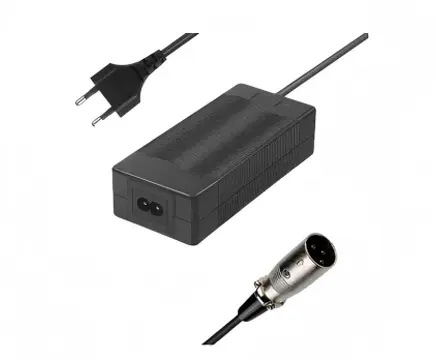
Poor-quality or mismatched chargers can damage batteries and pose safety hazards. Follow this guide for charger selection:
• LCO/NMC Batteries: Choose a standard 3.7V lithium-ion charger with temperature monitoring (prevents charging below 0℃).
• LFP Batteries: For low-temperature use, select a dedicated LFP low-temperature charger (supports charging at -10℃–0℃).
• Avoid NiCd/NiMH-Only Chargers: These lack the voltage regulation required for lithium-ion batteries.
To prevent battery damage or safety risks, chargers must have the following functions:
• Overcharge Protection: Charges the battery to 4.2V, then switches to constant-voltage trickle charging and automatically stops when the current drops to approximately 0.05C.
• Overdischarge Protection: Prevents voltage from dropping below 2.5V (for chargers with discharge functionality).
• Short-Circuit Protection: Shuts down immediately upon detecting a short circuit.
• Over-Temperature Protection: Automatically pauses charging if the battery or charger temperature exceeds 60℃.
• Temperature Sensing (LCO-Specific): Refuses charging if the battery temperature is below 0℃ to avoid lithium plating.
Charging current directly affects battery life (C = battery capacity in Ah):
• Example 1: 3000mAh (3Ah) battery → Compatible with 1.5A (0.5C)–3A (1C) chargers.
• Example 2: 1800mAh (1.8Ah) battery → Compatible with 0.9A (0.5C)–1.8A (1C) chargers.
• Avoid Fast Charging (>2C): Generates excessive heat, reducing cycle life by 20%–30%.
Verify charger compatibility after first use:
• The battery should feel warm (not hot) during charging (normal temperature: 30℃–40℃).
• Device runtime should meet expectations (consistently short runtime may indicate a faulty charger or counterfeit battery).
• No abnormalities: No sparking, unusual odors, or sudden shutdowns during charging.
Brands are categorized by origin for global users, with clear strengths and application scenarios. All brands comply with international safety standards (UL2054/IEC62133):
• Panasonic (Japan): Industry benchmark after acquiring Sanyo. Offers stable performance, low self-discharge, and cycle life exceeding 1000 times.
◦ Core Models: NCR18650GA (3350mAh, LCO system, general-purpose), NCR18650B (3400mAh, LCO system, high-capacity).
◦ Price Range: 8–15 per cell. Suitable for laptops, medical devices, and high-end equipment.
• Samsung SDI (South Korea): High energy density and excellent quality control.
◦ Core Models: 35E (3500mAh, LCO system, mid-rate discharge), 30Q (3000mAh, NMC system, 15A continuous / 20A peak).
◦ Price Range: 7–13 per cell. Applicable to power tools, flashlights, and drones (note the peak current limits).
• LG Chem (South Korea): Top-tier safety and long cycle life. A favorite for high-power applications.
◦ Core Models: HG2 (3000mAh, NMC system, 20A discharge), MJ1 (3500mAh, LCO system, 10A discharge).
◦ Price Range: 6–12 per cell. Ideal for cordless drills and industrial equipment.
• Sony (Japan): Exceptional cycle life and multiple safety mechanisms. Suitable for high-frequency charging scenarios.
◦ Core Model: VTC6 (3000mAh, NMC system, high-rate).
◦ Price Range: 9–16 per cell. Recommended for professional devices and vaping gear.
• Lishen (China): State-owned enterprise with leading domestic technology. Supplies aerospace and military sectors.
◦ Core Models: LR1865LA (3350mAh, LCO system), LR1865SK (15A high-rate, NMC system).
◦ Price Range: 3–6 per cell. Great for cost-sensitive industrial sensors and power banks.
• EVE Energy (China): Tesla supplier with strong LFP and NMC technology.
◦ Core Models: INR18650-35E (3500mAh, NMC system), INR18650-20P (2000mAh, LFP system, high-rate).
◦ Price Range: 4–7 per cell. Balances performance and affordability for consumer electronics.
• BAK Battery (China): Established manufacturer widely used in consumer electronics.
◦ Core Model: N18650C (3350mAh, LCO system).
◦ Price Range: 3–5 per cell. Suitable for budget devices and daily-use equipment.
• BYD (China): Leading LFP technology, a cost-effective choice for mainstream users.
◦ Price Range: 2–4 per cell. Applicable to entry-level flashlights, low-power devices, and high-safety demand scenarios.
• Critical Applications (e.g., medical, industrial tools): Prioritize international brands like Panasonic and Sony for uncompromised stability.
• Cost-Effectiveness & Safety: Chinese brands such as EVE Energy (LFP/NMC technology) and BYD (LFP technology) are excellent choices for cost-sensitive and high-safety scenarios.
• Avoid Pitfalls: Be wary of products priced far below market value—these are likely counterfeit or refurbished cells with serious safety hazards.
Even with proper selection, issues may arise. Here’s how to respond:
• Cause: Overcharging, short circuit, lithium plating from LCO low-temperature charging, or internal damage.
• Emergency Measure: Stop use immediately! Place the battery in a fireproof container (e.g., ceramic bowl), disconnect from devices. Do not pierce or squeeze—bulging batteries may catch fire. Dispose of at a hazardous waste recycling facility.
• Cause: Counterfeit capacity, over-discharging, accelerated aging from high-rate use (e.g., long-term peak discharge of Samsung 30Q), or lithium plating.
• Emergency Measure: Test capacity with a battery tester. Consider replacing the battery if its measured capacity falls below 70% to 80% of its original rated value. For genuine batteries, avoid over-discharging—charge promptly when the device indicates low power or voltage drops to 2.8V–3.0V. Never let voltage stay below 2.5V for extended periods.
• Cause: Mismatched charger, excessive device load, battery malfunction, or battery aging (increased internal resistance from improper use).
• Emergency Measure: Unplug immediately and allow to cool (do not touch with bare hands if excessively hot). Check charger compatibility and device load. Replace the battery if overheating recurs.
• Cause: Overcharging, physical damage, or expired lifespan.
• Emergency Measure: Handle with gloves. Wipe corrosion with a dry cloth (avoid contact with electrolyte). Dispose of safely—do not reuse.
No. Mixing capacities causes uneven charging/discharging, leading to overheating, reduced runtime, or battery damage. For devices requiring multiple cells, always use identical batteries (same brand, capacity, and age).
Store at 30%–50% charge in a cool, dry place (15℃–25℃). It retains approximately 80% capacity after 1 year, 60% after 3 years, and 40% after 5 years. Avoid long-term storage in fully charged or fully discharged states.
Only applicable to unprotected cells (used with external safety circuits). Soldering protected 18650 batteries may damage the internal protection module (responsible for overcharge/short-circuit protection). Spot welding is recommended for protected cells.
No. AA/AAA batteries have lower voltage (1.5V for alkaline, 1.2V for NiMH) and smaller dimensions (14×50mm for AA, 10×44mm for AAA) compared to 18650 (3.7V, 18×65mm). Forcing an 18650 into an AA/AAA-compatible device will damage the circuitry.
18650 batteries contain lithium and are classified as hazardous waste—do not dispose of in regular trash. Recycle at designated battery recycling centers, electronics retailers, or manufacturer take-back programs. Most local waste management facilities also accept lithium-ion batteries.
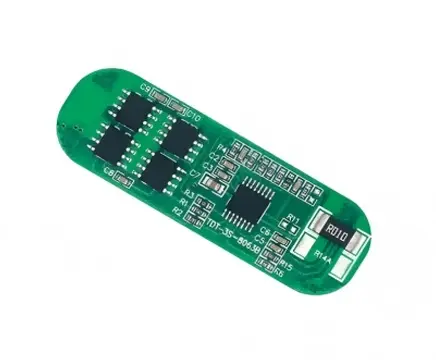
• Protected 18650: Built-in circuit board prevents overcharging, overdischarging, short circuits, and overheating. Safer for consumer electronics and daily use.
• Unprotected 18650: Lacks safety features. Typically used in industrial equipment with external safety controls. Not recommended for beginners or average consumers.
Mild warmth (30℃–40℃) is normal during discharge, especially for high-rate devices. However, if the battery becomes too hot to touch (above 50℃) or heats up rapidly, stop use immediately—it may be due to battery aging (increased internal resistance from previous improper use), excessive device load, or battery malfunction.
• Check Appearance: Genuine batteries have neat welds and clear printing. Avoid batteries with scratches, rust, or inconsistent labels.
• Weigh the Battery: Standard 18650 batteries weigh approximately 45–48 grams. Underweight batteries may be shoddy.
• Test Capacity and Internal Resistance: Use a professional battery tester. Batteries with significantly lower capacity or higher internal resistance than labeled are inferior or old.
• Purchase Channel: Choose officially authorized dealers or reputable merchants.
• Cost-Effective: Reusable 300–1000 times, eliminating recurring costs of disposable batteries for long-term savings.
• Space-Saving: High energy density enables compact device design without compromising runtime.
• Universal Compatibility: Standardized size and voltage fit thousands of consumer and industrial devices.
• Eco-Friendly: Reduces electronic waste compared to disposable batteries, with most models recyclable.
• Flexible Chemistry Systems: LCO/NMC for balanced performance, LFP for high safety/low-temperature charging—adapting to diverse needs.
 en
en
 English
  français
  Deutsch
  Español
  italiano
  português