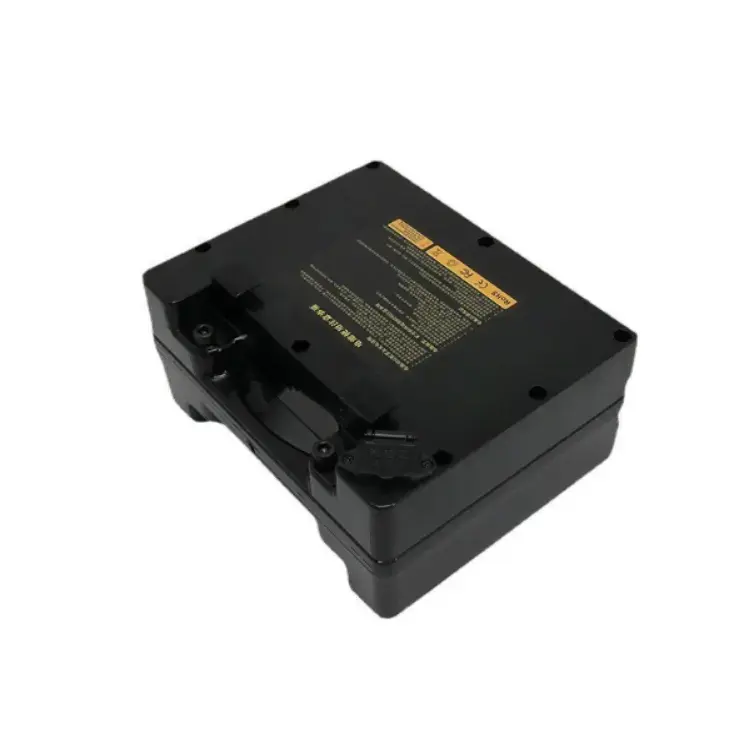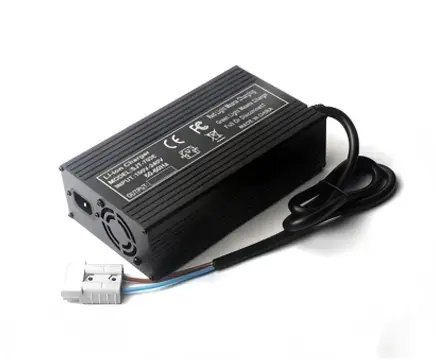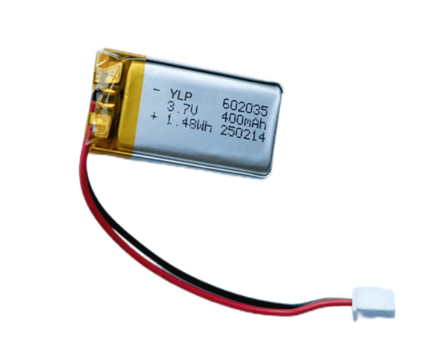


As the core tool for waterborne transportation and operations, a vessel’s propulsion system requires high reliability, endurance, and environmental performance. With the maturation of lithium-ion battery technology, its application in the maritime sector—including electric vessels, hybrid vessels, and shipboard bakup power systems—has become increasingly widespread. This article provides professional guidance on selecting lithium-ion batteries for ship operators, considering vessel operational characteristics, battery types, key parameters, selection criteria, and maintenance strategies.
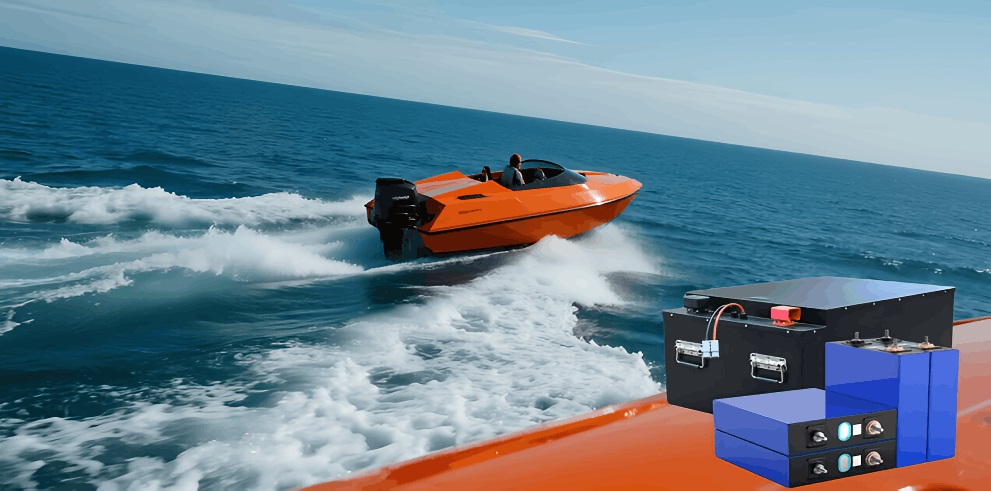
Electric Vessels: Small yachts, sightseeing boats, fishing boats, etc., using lithium-ion batteries as the sole power source to achieve zero emissions and low-noise navigation.
Hybrid Vessels: Large cargo ships and passenger ships equipped with auxiliary power systems that work in conjunction with diesel engines, reducing fuel consumption and carbon emissions.
Shipboard Backup Power: Provides emergency power for lighting, communication equipment, and navigation systems to ensure safe vessel operations.
| Battery Type | Core Advantages | Limitations | Typical Applications |
|---|---|---|---|
| Lithium Iron Phosphate (LFP) | High safety (puncture resistant), high-temperature tolerance (-30℃ to 60℃), long cycle life | Lower energy density (140–180 Wh/kg) | Large ship propulsion, backup power |
| Nickel Cobalt Manganese / Nickel Cobalt Aluminum (NCM/NCA) | High energy density (200–260 Wh/kg), good low-temperature performance (-20℃ efficiency 90%) | Prone to thermal runaway at high temperature, high cost | High-speed yachts, hybrid vessels |
| Lithium Polymer (Li-Po) | Flexible, customizable, lightweight (50% lighter than lead-acid batteries) | Low structural strength, requires strict anti-compression measures | Small electric vessels, specialized vessels |
Small electric vessels (≤10 tons): Typically use a 48V–96V low-voltage platform paired with lithium iron phosphate (LiFePO₄) batteries (e.g., 100 kWh capacity), achieving a range of 50–100 km, suitable for propeller power ≤50 kW.
Medium-sized hybrid vessels (10–100 tons): Employ a 200V–400V medium-voltage platform, where NCM/NCA lithium-ion batteries work in conjunction with diesel engines. Peak power supports vessel acceleration or climbing, with battery capacities ranging from 200–500 kWh.
Large vessels for backup power: Utilize a 12V–48V independent power system. LiFePO₄ battery packs (e.g., 50 kWh) provide stable, continuous power to ensure emergency equipment operation ≥24 hours.
Range formula:
Range (km)=Average Vessel Power (kW)Battery Capacity (kWh)×Energy Conversion Efficiency (0.7–0.8)×Speed (km/h)
Note: Factors such as hydrodynamic resistance, load, and wind speed must be considered. Actual range is typically 60–80% of the theoretical value.
Selection recommendations:
Sightseeing vessels (4 hours daily operation): Use a 200 kWh LiFePO₄ battery to support 8 hours of range (including reserve capacity).
Fishing vessels (offshore operation): Equip with battery packs ≥500 kWh, combined with solar charging systems, to extend offshore operation time.
Certification requirements:
Compliance with IEC 62619 (industrial battery safety standard), DNV GL (classification society certification), and IMO FTPC Part 1 (fire protection test).
Battery compartments must comply with the International Fire Safety Systems Code (FSS Code) and be equipped with gas-based fire suppression systems.
Structural protection:
IP68 waterproof enclosures made of corrosion-resistant materials (e.g., 316L stainless steel) to withstand high humidity and salt spray.
Battery packs must be vibration-proof and securely fixed to prevent cell displacement or short circuits caused by vessel motion.
Cooling solutions:
Large vessels: Use liquid cooling systems (e.g., ethylene glycol circulation) to maintain cell temperatures between 25°C–40°C, with a maximum temperature differential ≤5°C.
Small vessels: Employ passive cooling (aluminum casing + thermal grease) to ensure that temperature rise remains <15°C during 4 hours of continuous operation.
BMS functions:
Support CAN bus communication for integration with the vessel’s main control system, allowing real-time adjustment of output power.
Include overcurrent protection (response time <10 ms) and leakage detection (insulation resistance >100 kΩ), among other safety functions.
Charging and Discharging Management
Charging guidelines:
Use marine-specific chargers that support shore power connection; charging voltage deviation ≤ ±1%.
Avoid high-temperature charging; if ambient temperature exceeds 35°C, charging power is automatically reduced to 50%.
Discharging strategy:
During daily operation, maintain battery state of charge (SoC) between 20%–80%, avoiding deep discharge (LiFePO₄ single cell voltage <2.8V, NCM/NCA <3.0V).
For backup power systems, perform a quarterly charge-discharge test to ensure capacity ≥90% in emergencies.
Routine Maintenance and Testing
Visual inspection:
Monthly check of battery casing for corrosion or deformation, inspect connectors for looseness, and examine cable insulation for damage.
Performance testing:
Measure internal resistance of the battery pack annually; replace if single-cell internal resistance increases >20%.
Conduct capacity tests every two years; if actual capacity <80% of nominal, reassemble or replace the battery pack.
Software updates:
Regularly update BMS firmware to optimize battery management strategies and extend cycle life.
Storage and Transportation Safety
Long-term storage:
Disconnect the load after full charge; top up to 100% monthly.
Store in environments with humidity <60% and temperature 5°C–25°C, avoiding direct sunlight.
Transportation requirements:
Battery packs must be secured in vibration-proof wooden crates, marked with "Dangerous Goods" labels.
For maritime transport, declare as "Lithium-ion battery pack" (UN3090/UN3091) in compliance with the International Maritime Dangerous Goods (IMDG) Code.
Safety Operating Guidelines
Thermal runaway prevention and emergency response:
Thermal runaway warning: BMS continuously monitors cell temperatures; if temperature exceeds 60°C, output is automatically cut off and audible/visual alarms are triggered.
Fire suppression: Battery compartments must be equipped with heptafluoropropane (HFC-227ea) fire suppression systems; water-based extinguishers are prohibited (risk of electrolyte leakage).
Environmental protection and compliance:
End-of-life battery disposal: Hand over to professional recycling organizations; do not discard or dump in the ocean to prevent heavy metal pollution.
Emission management: Lithium-ion battery-powered vessels must comply with the Ship Energy Efficiency Management Plan (SEEMP) and regularly report energy consumption data.
Material and System Innovation
Solid-state batteries: Expected commercial use by 2030, energy density >500 Wh/kg, no leakage risk, supports >2000 km range.
Hydrogen hybrid systems: Combine Li-ion with hydrogen fuel cells for rapid energy replenishment for long-range vessels.
Intelligent Systems and Standardization
Remote operations platform: satellite monitoring of fleet battery status, predictive maintenance, reduced costs.
Standardized interfaces: universal fast-charge protocols and mechanical interfaces for cross-brand compatibility.
Q1: Which is better for my vessel, LFP or NCM/NCA?
A: LFP: safer, longer lifespan (>3000 cycles), ideal for large ships or backup power. NCM/NCA: high energy density, good low-temp performance, suitable for high-speed yachts or hybrid vessels, but requires strict thermal management.
Recommendation: Prefer LFP unless extreme range or low-temp performance is required.
Q2: How should end-of-life ship Li-ion batteries be handled?
A: Do not discard or dump in oceans. Use certified recycling facilities or manufacturer take-back programs.
Q3: Can ship Li-ion batteries be paired with solar/wind energy?
A: Yes, ensure voltage compatibility via DC-DC converters; BMS must support hybrid input.
Q4: Do Li-ion batteries perform poorly in low temperatures?
A: Yes, efficiency drops (<0℃: 10–20% for NCM, more for LFP). Solutions: low-temp cells, battery heating, insulation, avoid high-current discharge when cold.
Q5: Are Li-ion batteries damaged by rough seas?
A: Risk of cell displacement or short circuits. Mitigation: shock-resistant battery design, secure mounting, avoid bow placement, IEC 60068-2-6 vibration testing.
Q6: What is the initial investment and payback?
A: LFP: 1000–1500 RMB/kWh, NCM: 1200–1800 RMB/kWh; diesel replacement with 30% fuel savings yields 3–5 year payback.
Small electric yachts: 48V/100 kWh LFP, IP68, shore fast charge (4h), 80 km range.
Offshore vessel backup: 24V/50 kWh LFP, DNV GL certified, -20℃ start, ≥72h emergency power.
Hybrid cargo ships: 384V/500 kWh NCM, liquid cooling, 1.2 MW peak, 30% fuel savings.
Choose YLP for safe, efficient lithium-ion solutions to enable green maritime innovation and a sustainable future.
 en
en
 English
  français
  Deutsch
  Español
  italiano
  português