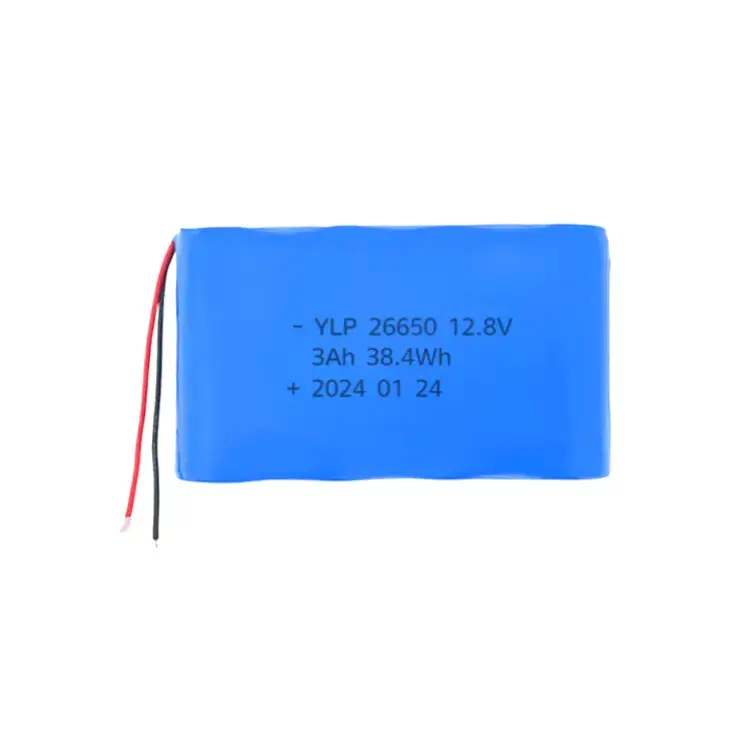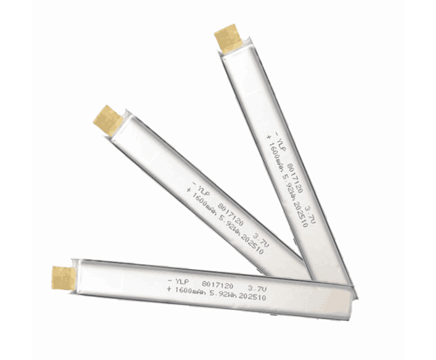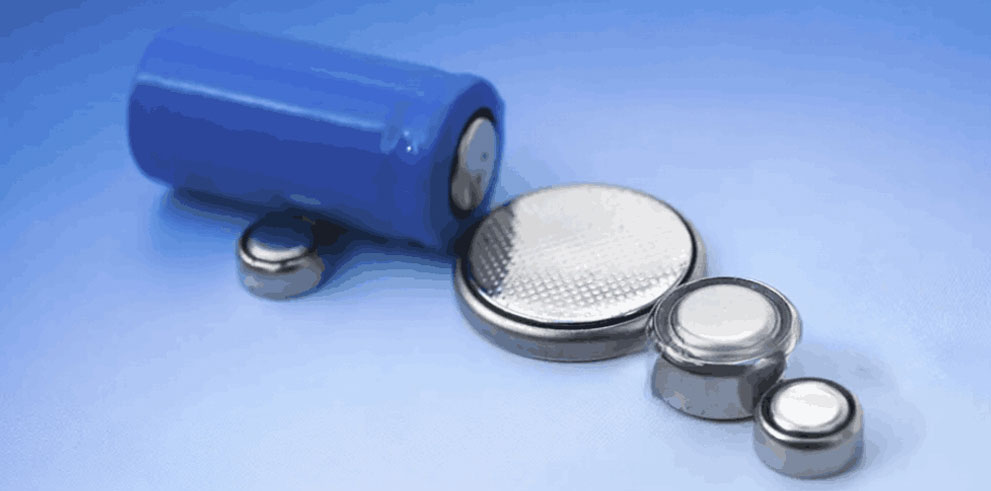


Western Europe is sweltering under record heat recently. That make me recall a co-work developing product – a handheld cooling fan. Half year ago, we develop this product together with our customer. Now this fans already becomes a hot-sell product in in e-commerce platforms. And we do see quite some ‘copy’ products as well. Here we would like to share our experience on defining the battery for that fan.
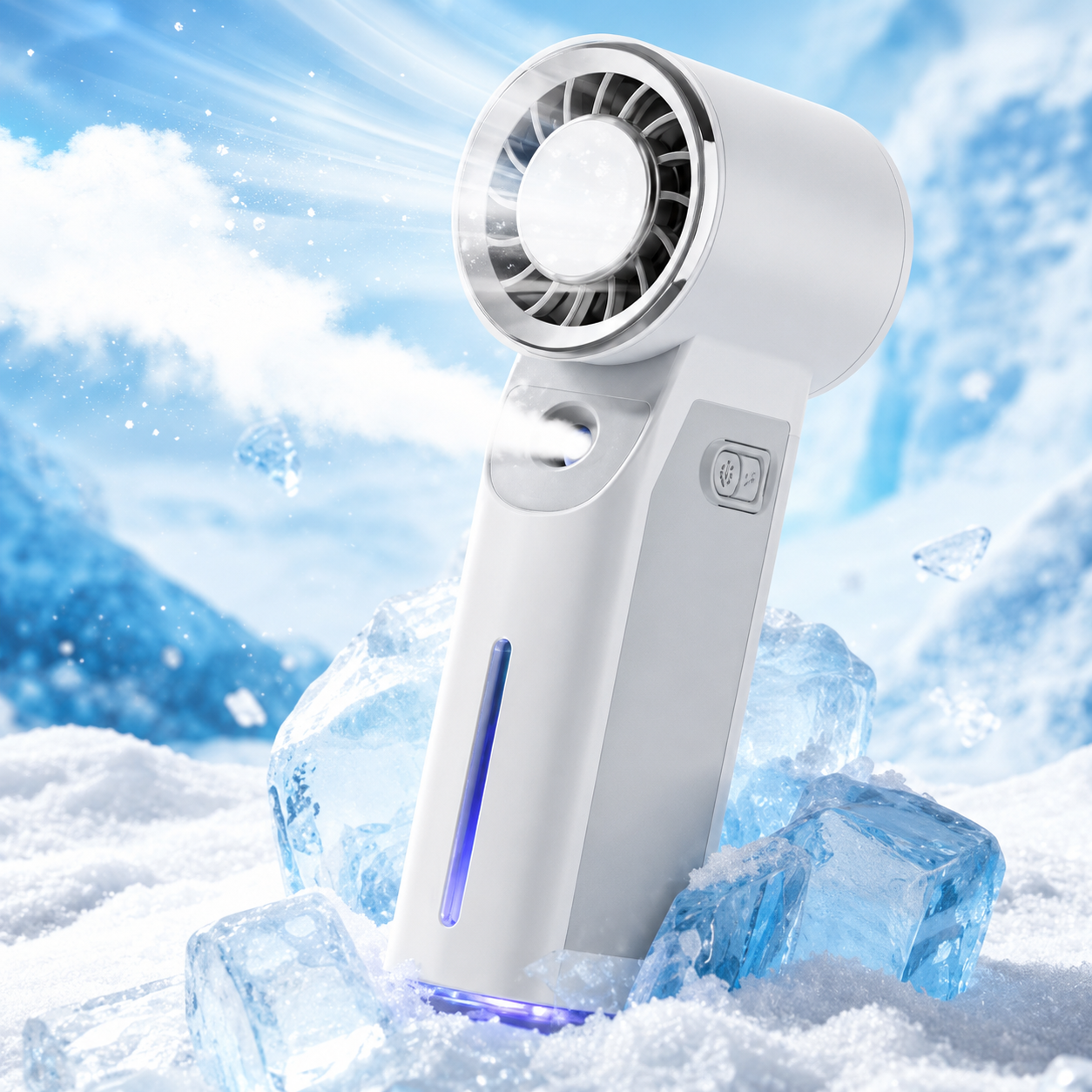
That is a fan designed with high-speed brushless motor. There will be a rush current when start-up the fan. The rush current is around one second and it will not frequently pop-up. On the battery design, this rush current can be handled by the PCM circuit and the cell also can withstand the current shock, which is also why engineers often discuss do all lithium batteries have a bms when designing safe lithium battery packs. From the battery pack design, a single 21700 4000mah li-ion cell can avoid the current balance issue on cell parallel connection, which ensure more stable current output to the brushless motor. From the fan electrical design point of view, it seems that the single cell battery pack is the optimal solution to provide power. We proposed this solution to our customer at the beginning.
When looking at the mechanical design of the whole fan, there is a small cool water tank on the handle part of the fan. A lithium battery pack with single 21700 cell has a minimum 21mm diameter. When applying the 21700 lithium battery to the fan, it will occupy a big amount of the water tank space – the key function of the fan, and then lead to smaller size water tank or bigger size of the handle part of the fan. To get the optimization on the size, appearance and the water tank capacity, finally customer decide to use 2pcs 18650 2000mah cell in parallel connection to provide 3.7V 4000mah power to the fan. For readers comparing battery formats, understanding 18650 vs aa helps explain why 18650 cells are commonly selected for high-power portable devices.
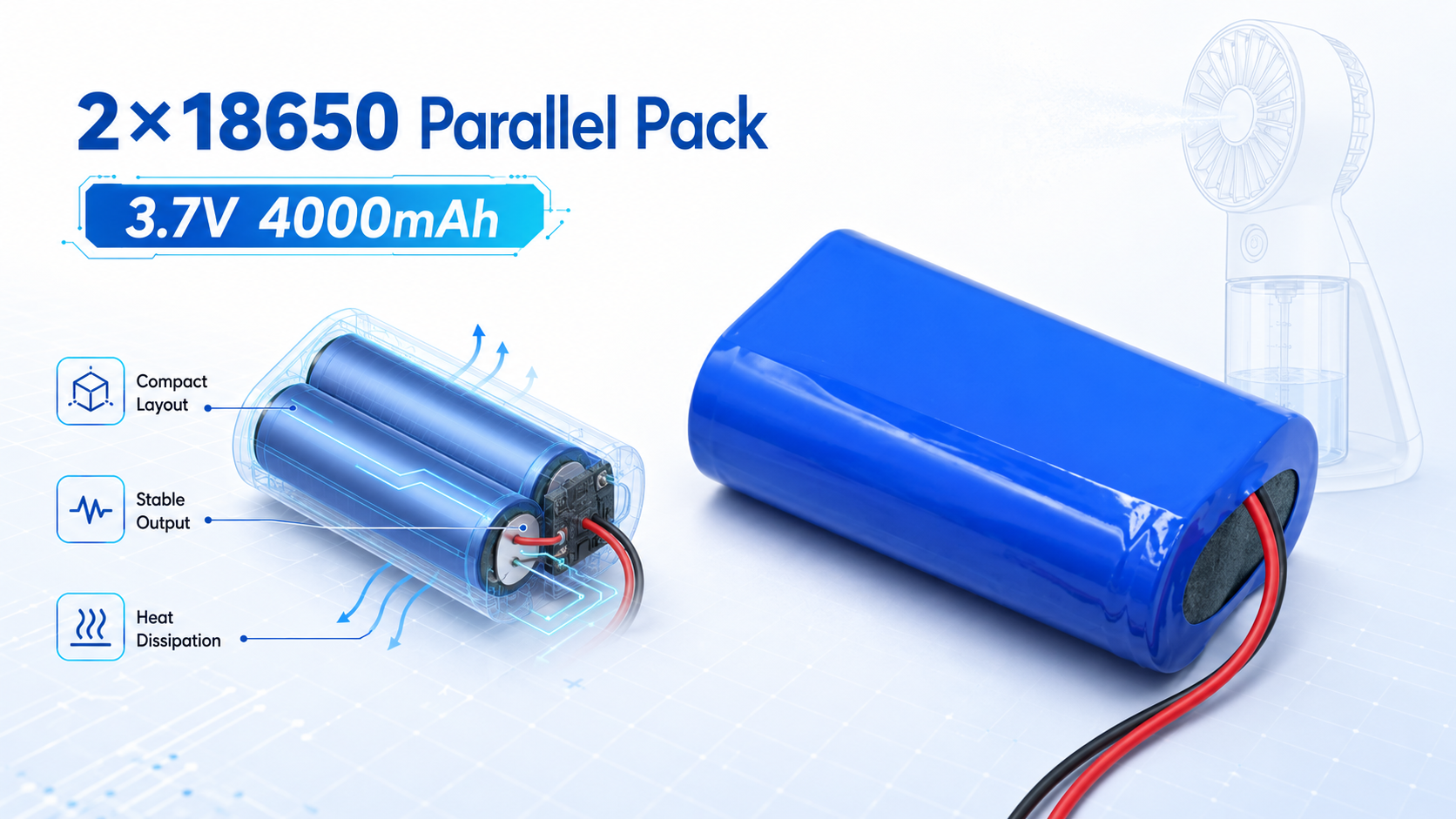
Two pieces 18650 cells put at the side of the water tank, it can make the water tank keep the biggest capacity. This compact layout follows many of the same design principles used in a 6s6p battery pack for stable power output. The parallel connection li-ion cell current balance issue on was solved by,
1. Strictly capacity binning to limited the deviation of the cell voltage and internal resistance.
2. Two MOS in parallel connection on the PCM to ensure the battery pack can withstand higher peak current shock when start-up the fan.
3. Wider and thicker nickel stripe with multiple welding spots to reduce the contact resistance and lower down temperature of the junction points.
4. As optimized gap between two cells reserved to dissipate heat from the cell when the fan working.
This pack solution provides 6~8 hours 500~700mA continuously current output to the fan in varying ambient temperature applications with no power cut-off and stable wind output. Similar engineering experience is also applied when developing lithium polymer battery china solutions for portable electronics. UN38.3 and MSDS report are available for shipment. So far, we got quite good feedback from the fan distributor and the end users after the fan selling abroad.
Looked back to the battery design, we need to take the lithium battery in field application restriction as the first priority, like mechanical size, rather than not only think about the best cell performance. Only an optimized performance and mechanical size design is the best design. We had quite some released 18650 or 21700 lithium battery pack on production for handheld fan application. In case you have any request on the fan battery, feel free to contact us if you are looking for reliable bulk battery suppliers for customized battery pack solutions.
 en
en
 English
  français
  Deutsch
  Español
  italiano
  português